Seoul’s Investment Law Seen as Key to Easing Trade Tensions with Washington
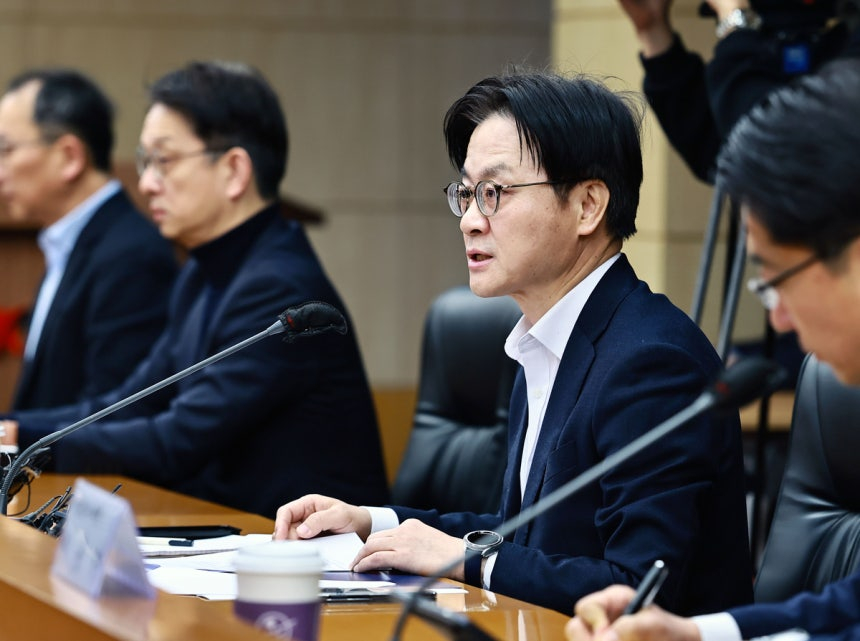
SEJONG — South Korea’s industry minister stated on Monday that the US may reconsider its proposed tariff hike on Korean goods if the South Korean parliament passes a bill in March, designed to expedite Korean investment within the United States.
“Once the strategic investment act for the US passes the National Assembly in March, we believe there is a high possibility that the tariff increase will be put on hold,” Minister of Trade, Industry and Energy Kim Jung-kwan said at a press briefing. The minister’s statement offers insights into the ongoing trade negotiations between South Korea and the United States.
Kim indicated that US President Donald Trump had explicitly connected the tariff issue to investment levels, signaling that duties could potentially escalate from the currently agreed 15 percent to 25 percent if Korea does not accelerate its investment efforts in the US. Seoul, according to Kim, is actively focused on addressing this specific concern raised by the US administration.
“Of course, new issues can always emerge, and outcomes are hard to predict,” Kim cautioned. “But passing the law is our top priority, as the president made clear that it is tied to the tariff increase.” The swift passage of this investment legislation is therefore deemed crucial for maintaining stable trade relations.
Kim further added that the apparent lack of formal action from Washington since mid-January suggests that Seoul’s proactive efforts may already be yielding some positive results in influencing the US stance.
According to the minister, the resurfacing tariff threat underscores a sense of frustration within the US regarding Korea’s perceived lag compared to Japan in terms of advancing tangible investment projects in the American market. This highlights the competitive landscape influencing trade relations.
“The US side appeared frustrated that Korea still needed to pass legislation before moving ahead, while Japan was already discussing specific investment projects without such a legal hurdle,” he elaborated, drawing a direct comparison between the two countries’ approaches.
Kim conveyed that he personally explained the situation directly to US Commerce Secretary Howard Lutnick, emphasizing that the apparent delay was not the result of intentional obstruction or negligence.
“I told him that budget issues in December and ministerial confirmation hearings in January made it difficult to move faster,” he clarified, citing specific circumstances that contributed to the timeline.
Kim also mentioned that the government is proactively developing contingency plans to address potential outcomes stemming from the US Supreme Court’s forthcoming review of reciprocal tariffs implemented under the International Emergency Economic Powers Act.
Regarding Korea’s initial major investment endeavor in the US, Kim acknowledged that nuclear power had been considered as a potential option, although no definitive decisions or agreements have been reached at this stage.
Addressing concerns raised by the US concerning Seoul’s regulatory actions targeting e-commerce giant Coupang, Kim clarified that this issue is being managed separately and distinctly from the broader negotiations surrounding tariff matters. He did concede, however, that US officials have consistently raised the Coupang issue in discussions.
“We are explaining our position by emphasizing the sensitivity of personal data,” Kim stated. “If personal data equivalent to 80 percent of the US adult population were transferred overseas, how would the US respond?” This comparison aimed to illustrate the Korean perspective on data security.
“When we explained it from that perspective, the US side seemed to better understand,” he added. “The US is actually much stricter on personal data issues, so we are focusing on that point.” Highlighting the emphasis on stringent data protection laws is a key aspect of Korea’s approach to this issue.