By Woo Jae-yeon
“Samakdo” chillingly portrays the insidious way cults gain complete control over individuals, cultivating blind and unwavering faith.
The film’s setting – an unassuming, ordinary village where seemingly innocent residents tend to their land – ironically enhances the plausibility and unsettling nature of the unfolding events.
News reports of cults’ destructive impact are common, and those affected are not always extremists; they can easily be our neighbors, colleagues, and friends.
Directed by Chae Ki-jun, “Samakdo” revolves around Samseondo, a dangerous cult originating in Japan that spreads to South Korea during the Japanese colonial era.
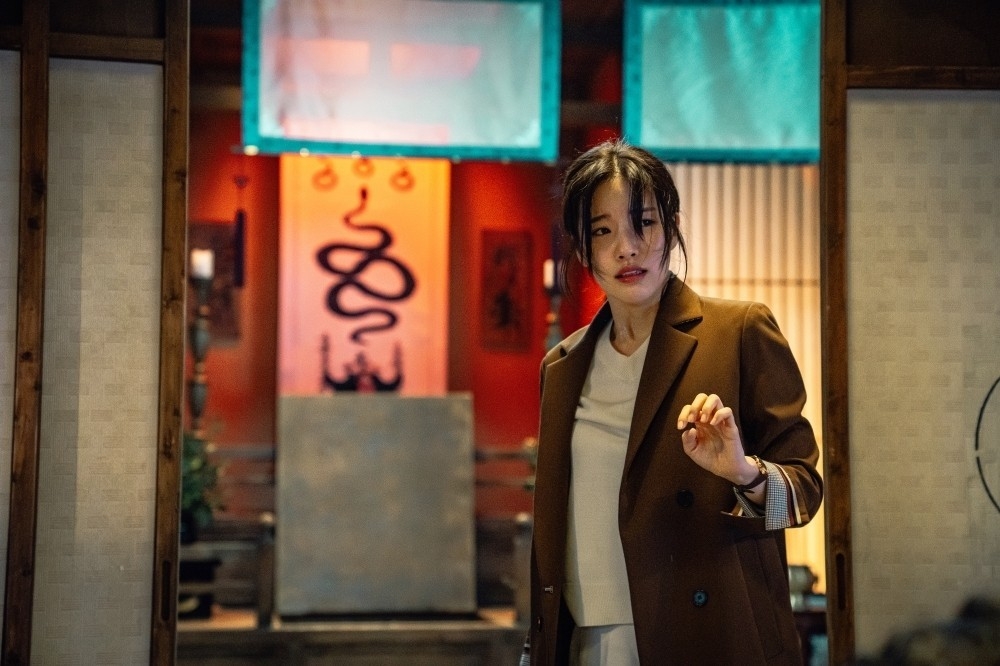
Investigative journalist Chae So-yeon (Jo Yun-seo) becomes entangled in the story when Japanese TV reporter Mr. Matsuda (Kwak Si-yang) informs her that the cult, believed to have disappeared in Japan, is secretly active within a small rural community.
Matsuda urges So-yeon to visit the village with him to verify his claims, believing a ritual performed by Japanese shamans is imminent – a secret ceremony aimed at preventing an ominous prophecy from coming true.
Haunted by her own past experiences with a cult since childhood, So-yeon accepts the offer, embarking on a perilous investigation.

“Samakdo” shares elements with acclaimed Korean occult films like “The Wailing” and “Exhuma,” incorporating folk horror to create a visceral and unforgettable experience.
Despite its intriguing premise and imaginative storytelling, the film doesn’t fully realize its potential. The cast’s performances can be inconsistent, and the ending, while bold, may leave some viewers unsatisfied.
However, what sets “Samakdo” apart is its historical context. Considering Japan’s significant influence over Korea during the 1910-1945 colonial rule, the idea of such a cult taking root in Korea feels plausible, adding to the film’s chilling effect.
“Samakdo” premiered in domestic theaters on Wednesday.