
LG Group is strategically converging its affiliates’ expertise to establish a dominant position in the burgeoning humanoid robot component market. This approach mirrors the successful “One LG” strategy the conglomerate has previously deployed in sectors like automotive parts and AI data centers, offering integrated solutions to major clients.
While the “One LG” label isn’t yet formally applied to robotics, the framework is clearly taking shape. With at least five LG affiliates now actively developing products specifically for humanoid robots, LG is poised to offer comprehensive bundled subsystem packages to global robot manufacturers, rather than individual parts. This integrated strategy aims to simplify procurement and enhance overall system compatibility for next-generation humanoid designs.
This strategic focus aligns with the cost structure of humanoid robots, where actuators typically account for an estimated 40 to 60 percent of the total bill of materials. Batteries are another critical component due to energy density requirements, followed closely by advanced sensing systems. LG affiliates hold strong, established positions in adjacent industries for each of these complex manufacturing layers, positioning them as key suppliers in the humanoid robotics ecosystem.
LG Electronics is at the forefront of this initiative. CEO Lyu Jae-cheol confirmed in March that the company expects to have mass-production capacity for its advanced Axium actuator line ready by the end of the year. This move is bolstered by their extensive experience in appliance motor operations, which currently produce an impressive 45 million units annually.
Concurrently, LG Innotek has initiated early production of sophisticated composite sensing modules for humanoid robots. These modules integrate essential technologies such as cameras, lidar, and radar, and are already being supplied to leading humanoid robot developers like Boston Dynamics and Figure AI. CEO Moon Hyuk-soo projects that large-scale production of these critical sensing solutions will commence around 2027 to 2028.
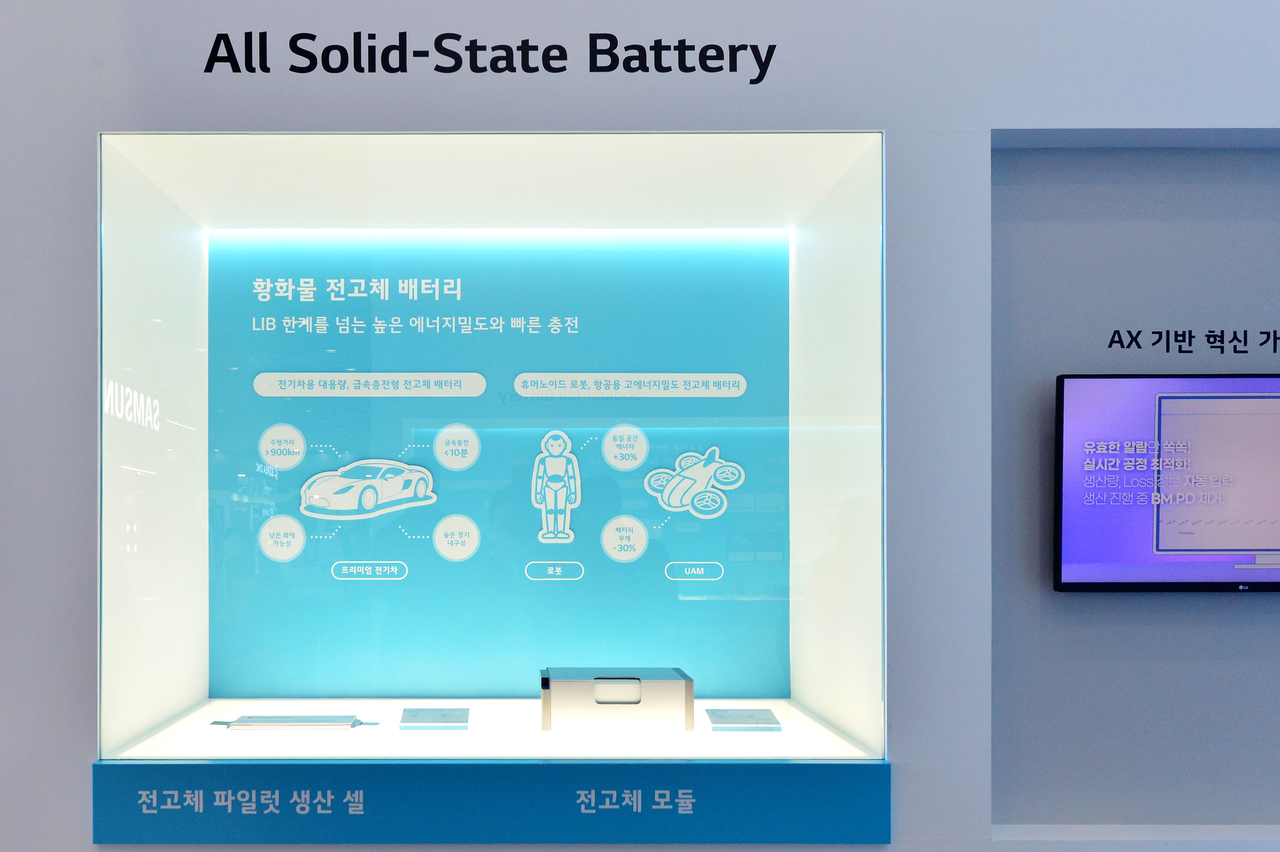
Beyond actuators and sensing systems, LG Energy Solution is making significant strides in advanced battery technology for humanoid robots. At the InterBattery 2026 exhibition in Seoul last March, the company showcased sulfide-based all-solid-state battery cells engineered specifically for humanoid applications. Their ambitious dual-track plan outlines the development of graphite-anode solid-state cells for electric vehicles by 2029, followed by anode-free solid-state cells optimized for robots by 2030.
The innovative anode-free design is crucial for maximizing energy density per unit volume, a primary concern for humanoid robots that must integrate batteries within a human-shaped torso alongside numerous motors and circuit boards. This compact, high-performance power solution is vital for enabling complex robotic movements and sustained operation.
Reports indicate that LG Energy Solution is currently in discussions with six or more global robotics firms for potential supply partnerships, though specific clients have not yet been publicly disclosed. Their existing NCMA cylindrical cells are already available in variants tailored for diverse robotic workloads, with some optimized for continuous operation and others designed for the high burst power demanded by activities such as walking, lifting, and maintaining balance.
LG Display and LG AI Research complete the comprehensive group’s offering for humanoid robotics. LG Display has demonstrated a 7-inch flexible OLED panel specifically for robot faces, leveraging its advanced curved plastic OLED technology currently supplied for sophisticated automotive dashboards, such as those found in Mercedes-Benz vehicles.
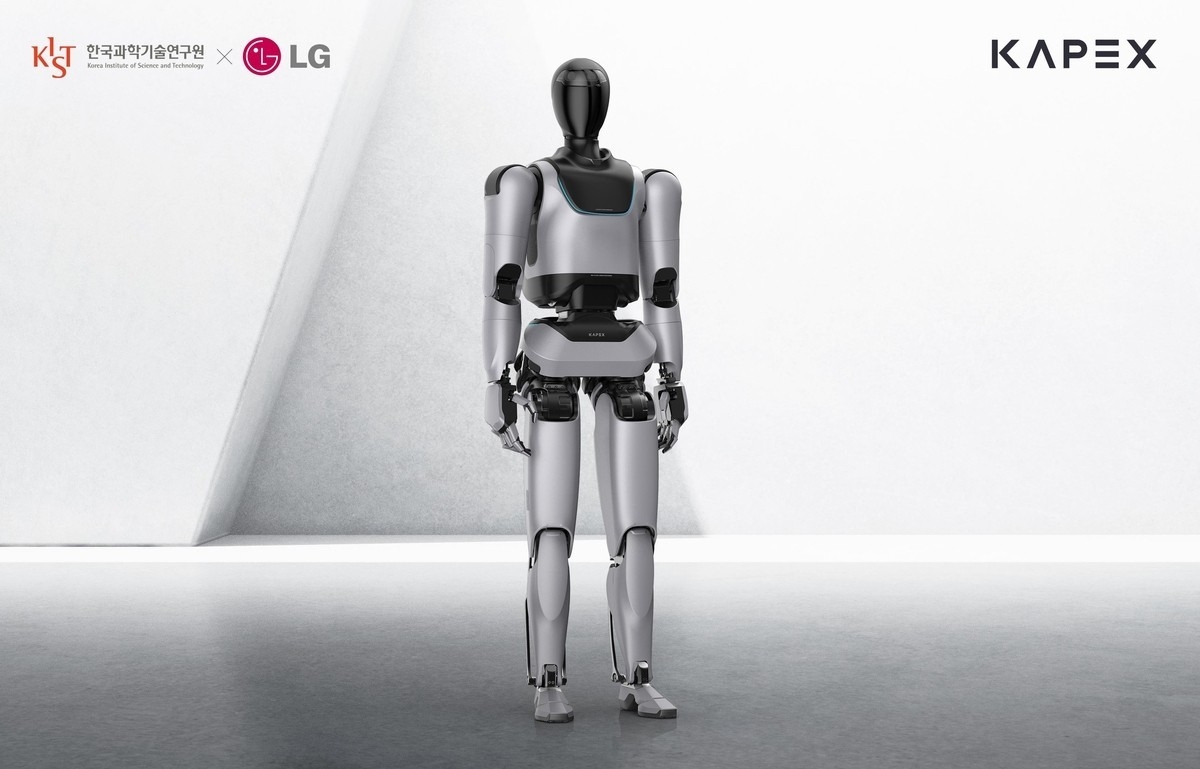
Additionally, LG AI Research is developing Exaone 4.5, a cutting-edge vision-language model. This advanced AI is intended to serve as the cognitive layer for KAPEX, a next-generation humanoid robot being co-developed in collaboration with LG Electronics and the esteemed Korea Institute of Science and Technology.
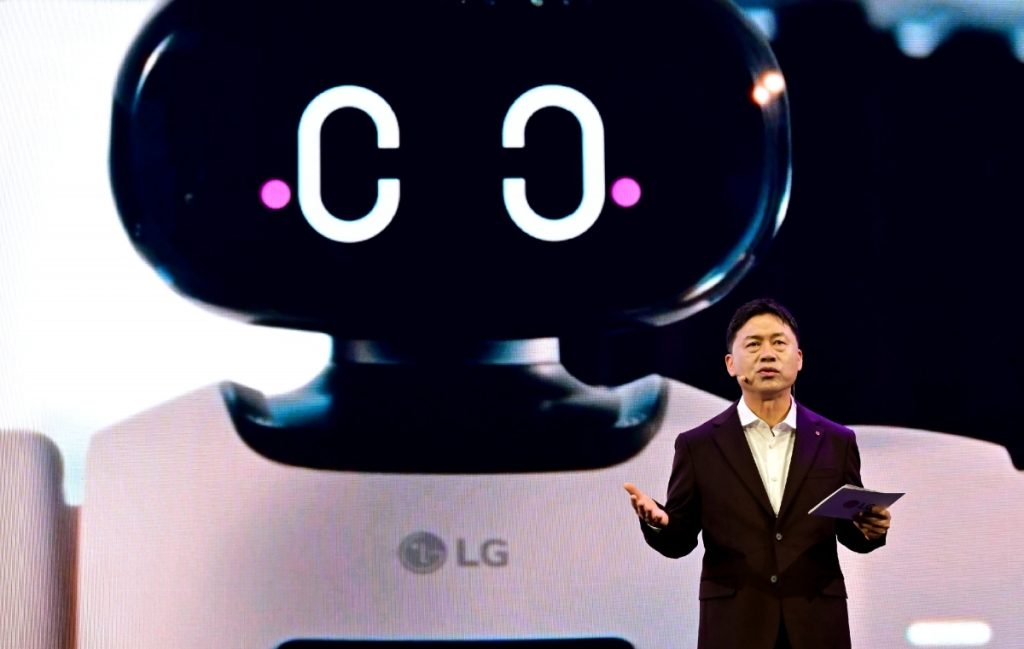
While LG Electronics maintains its own home robot platform, CLOiD, the LG Group’s immediate commercial focus is firmly on the supplier tier for humanoid robot components. By positioning its affiliates as integrated component vendors, LG aims to offer global robot manufacturers a comprehensive suite of solutions, including actuators, vision modules, specialized batteries, and displays, all from a single corporate group. This broad scope gives LG a significant competitive advantage over vendors specializing in only one component category.
The effectiveness of this cross-affiliate bundling model is well-established through previous successes. In November 2025, CEOs from LG Electronics, LG Display, LG Energy Solution, and LG Innotek jointly hosted Mercedes-Benz Chairman Ola Kallenius in Seoul, presenting an integrated portfolio of automotive components. Similarly, just three months prior, LG affiliates secured a 100 billion won ($66.3 million) AI data center project in Jakarta by packaging cooling, power solutions, and facility management under one cohesive proposal.
Despite these successful precedents, replicating such results in the highly competitive humanoid robotics sector remains a nascent endeavor. LG Electronics has yet to ship its actuators to external clients, and LG Innotek CEO Moon acknowledges that substantial robotics revenue is still an estimated three to four years away. Nevertheless, industry insiders are optimistic. “Nothing has been formalized yet, but the pieces are clearly being arranged to make robotics the next major growth engine for LG,” commented an industry official.
mjh


