
Indonesia Strengthens Partnership with Korea for Comprehensive EV & Battery Supply Chain Development, Moving Beyond Nickel
Renowned globally as the leading nickel producer, Indonesia is now strategically focused on establishing a robust, end-to-end domestic electric vehicle (EV) and battery supply chain.
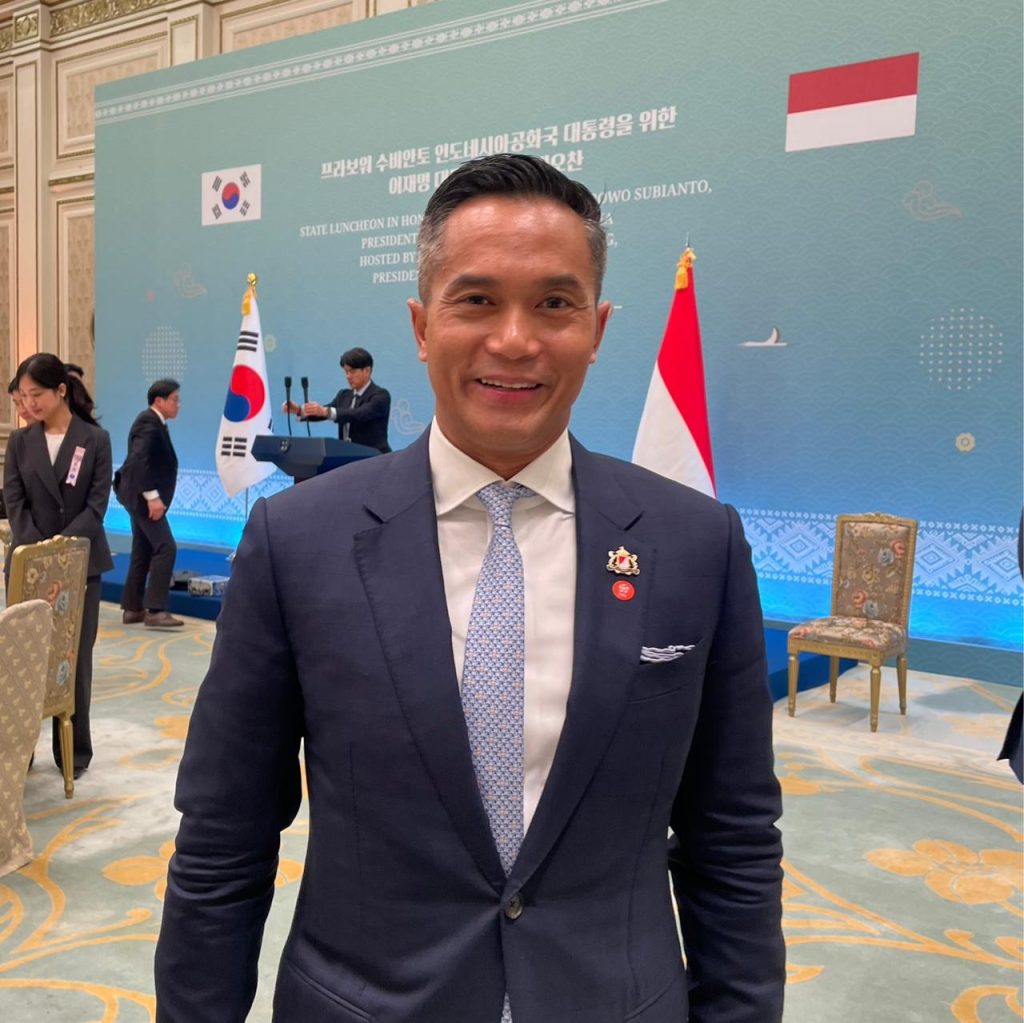
In this ambitious endeavor, South Korea is rapidly becoming a pivotal strategic partner, a sentiment underscored by Anindya Novyan Bakrie, Chairman of the Indonesian Chamber of Commerce and Industry (Kadin).
“Korea’s role will be instrumental to Indonesia’s long-term strategy in this sector,” Bakrie affirmed in an interview with The Korea Herald. Bakrie, also CEO of Bakrie & Brothers, a key entity within the historic Bakrie Group conglomerate, was part of the high-level business delegation accompanying Indonesian President Prabowo Subianto during his recent state visit to Seoul, highlighting the deepening bilateral ties.
He elaborated, “Over the next decade, Korea’s strategic importance to Indonesia is paramount. We are moving beyond merely exporting nickel; our goal is to construct a complete, integrated domestic EV and battery industry.”
Korean companies are recognized as crucial partners, contributing essential technology, process expertise, and vital access to end markets. This collaboration is key as Indonesia, rich in minerals, aims to develop a comprehensive EV battery value-chain ecosystem, spanning refining, cathode production, battery cell and pack manufacturing, and efficient recycling solutions.
A flagship example of this robust partnership is HLI Green Power, a 50:50 joint venture between Hyundai Motor Group and LG Energy Solution. This pioneering initiative launched Indonesia’s first-ever battery cell plant in 2024, featuring an impressive annual production capacity of 10 gigawatt-hours.
Bakrie hailed this venture as “the most transformative” investment by Korean enterprises, fundamentally shifting Indonesia’s economic narrative from a raw-materials exporter to a formidable battery cell manufacturing hub.
This strategic direction was strongly reinforced during the recent high-level summit between the two nations. In Seoul, during President Lee Jae Myung’s meeting with Indonesian President Prabowo Subianto, both leaders unequivocally reaffirmed their unwavering commitment to foster close cooperation in developing a thriving EV ecosystem within Indonesia and significantly expanding the production of Indonesian-made batteries.
Despite substantial investments from Korean companies into Indonesia’s burgeoning battery and electric vehicle sector, some entities have recently initiated re-evaluations of their market exposure due to a global slowdown in EV demand and ongoing concerns regarding regulatory stability.
Bakrie, however, urged investors to adopt a long-term perspective, advising, “It’s crucial not to assess Indonesia solely through a single challenging economic cycle.”
In the first nine months of 2025, Indonesia recorded approximately 55,200 battery-electric vehicle sales, representing about 10 percent of its total car market. While acknowledging a deceleration in growth, Bakrie emphasized the market’s nascent stage, indicating substantial opportunities for companies to expand investments and secure a significant share.
Furthermore, Indonesia plans to phase out incentives for imported EVs by 2026. Bakrie stated this policy clearly signals that “the future market dominance belongs to companies committed to localizing production and establishing a robust operational base within Indonesia.”
Simultaneously, he acknowledged Indonesia’s ongoing efforts to enhance its competitiveness on the global stage.
“Key areas for improvement include expedited permitting processes, more consistent policy implementation, upgraded charging and recycling infrastructure, strengthened local supplier capabilities, and optimized logistics networks,” he outlined.
Beyond the EV and battery sectors, Bakrie highlighted significant potential for expanding the bilateral partnership into diverse industries.
He specifically identified advanced manufacturing supply chains, energy and minerals, petrochemicals, biotechnology, and consumer industries as the next pivotal growth areas, asserting that both nations possess complementary strengths ideally suited for synergistic cooperation.
“These are sectors where Korea brings advanced technology, industrial capability and manufacturing strength, while Indonesia brings scale, resources and a strategic position in the heart of Southeast Asia.”
Bakrie further identified digital infrastructure and Artificial Intelligence (AI) as particularly promising avenues for future cooperation. “We envision increased Korean investment in vital areas such as data centers, AI infrastructure, industrial software, and digital finance,” he added.
He underscored Korea’s increasingly central role in President Prabowo’s ambitious vision to elevate Indonesia’s economic growth rate to 8 percent by 2029, a significant rise from the current approximately 5 percent.
“I see Korea as not only our partner, but certainly one of Indonesia’s most strategic and trusted partners in achieving our 8 percent growth ambition.”
sahn


