
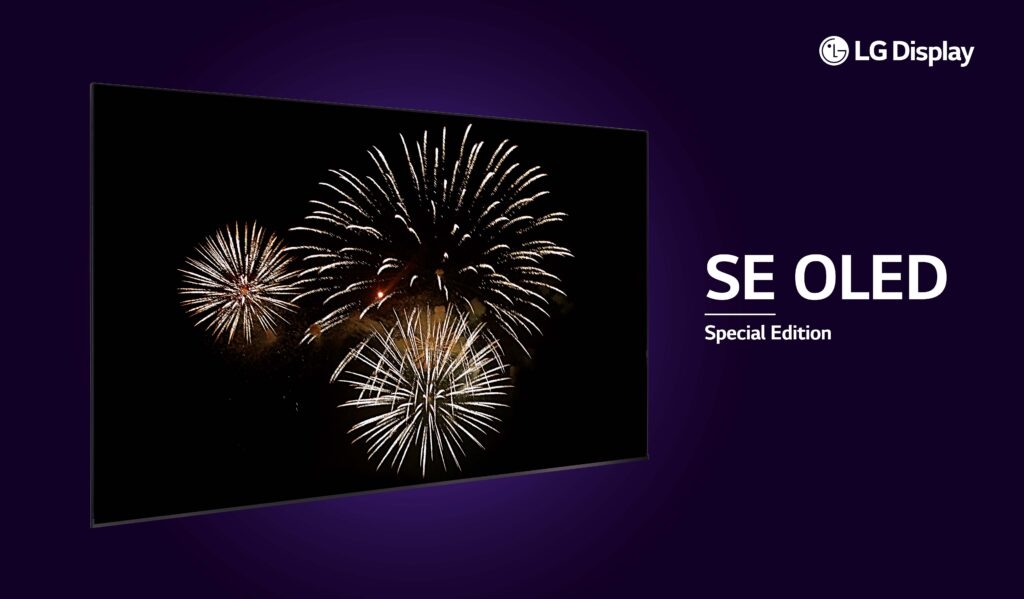
OLED Price Premium Over Chinese Mini-LED May Drop to Just 10%
Imagine this: You’re standing in an electronics store with a $1,500 budget. To your left, a stunning 65-inch LG OLED TV boasts incredibly deep blacks. To your right, a significantly larger 75-inch TCL mini-LED TV commands attention with its impressive size.
Increasingly, consumers are opting for the larger screen.
According to Counterpoint Research, mini-LED TVs have surpassed OLED TVs in shipments and revenue within the premium TV market in recent years. Notably, shipments of 75-inch and larger premium sets experienced a substantial 79 percent year-over-year increase in early 2025. “Consumers face a decision between a smaller OLED TV or a larger mini-LED TV,” explains Bob O’Brien, Director at Counterpoint Research. “And a growing number are choosing mini-LEDs.”
LG’s response is slated for release later this year: the SE (Special Edition) OLED panel. This panel is engineered to bring OLED pricing closer to that of mini-LEDs. However, LG clarifies that this isn’t about transforming OLED into a mass-market product. The core question is whether the price gap can shrink sufficiently, allowing the superior image quality to sway purchasing decisions.
‘Think Lexus, not Lamborghini’
At a product launch event in Seoul on March 25th, Baek Seon-pil, head of display customer experience at LG Electronics, provided candid insights. He highlighted that roughly 200 million TVs are sold globally each year, while OLED production capacity remains below 10 million units. He characterized OLED as “like a Lexus: no longer prohibitively expensive, but never truly cheap.”
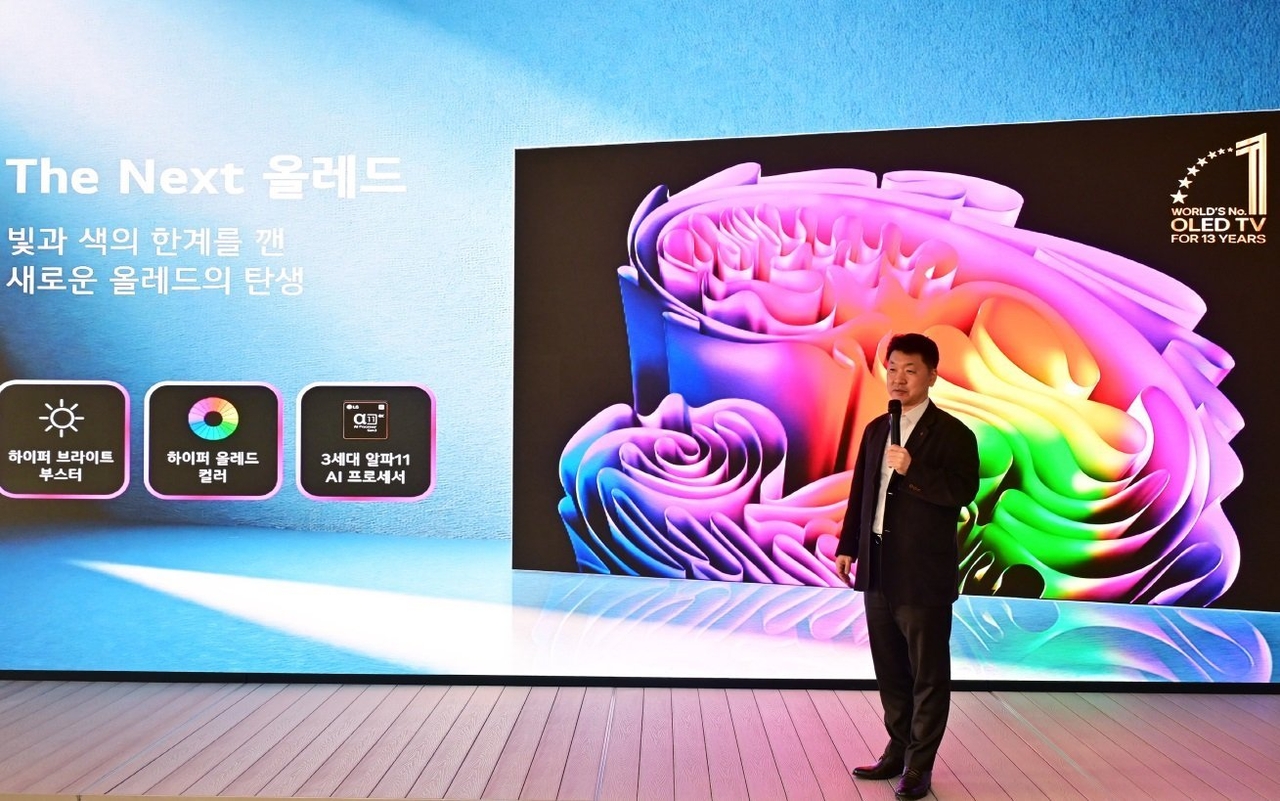
When questioned about the SE panel, which LG Display unveiled earlier that month as its first budget-friendly OLED (without specific pricing details), Baek explained that cost reductions were achieved through “improved power efficiency and thermal management,” rather than compromising image quality. This, in turn, “reduces the need for expensive heat-dissipation materials.”
Moon Dae-gyu, a display engineering professor at Soonchunhyang University and former LG Display researcher, offered a more direct interpretation: “LG’s explanation essentially means they’re lowering the brightness.” By driving pixels less intensely, less heat is generated, and the need for costly aluminum heat sinks and thermal sheets is diminished.
“Especially for larger panels, where thermal materials become expensive, the savings could be substantial,” Moon told The Korea Herald.
Industry sources also indicate that LG Display has removed the polarizer, a film designed to minimize ambient light reflections but which also absorbs approximately half of the panel’s light output. Removing the polarizer enables the panel to achieve its brightness targets with significantly less power. However, this comes at a trade-off: the SE’s reflectance is approximately 4 percent, similar to most mini-LED TVs but noticeably higher than the sub-2-percent levels of LG’s polarizer-equipped C-series OLEDs.
These changes, combined with a brightness cap of around 1,000 nits, are projected to reduce SE panel costs by over 20 percent.
What SE Keeps and What it Gives Up
Baek from LG emphasized that the SE panel retains the core OLED experience. This holds true for the fundamentals: perfect blacks, wide viewing angles, and instantaneous motion response. These characteristics are inherent to self-emitting pixels and remain regardless of price tier. “As long as it’s OLED, they’re there,” stated Han Chang-wook, vice president at UBI Research and former OLED TV development executive at LG Display.
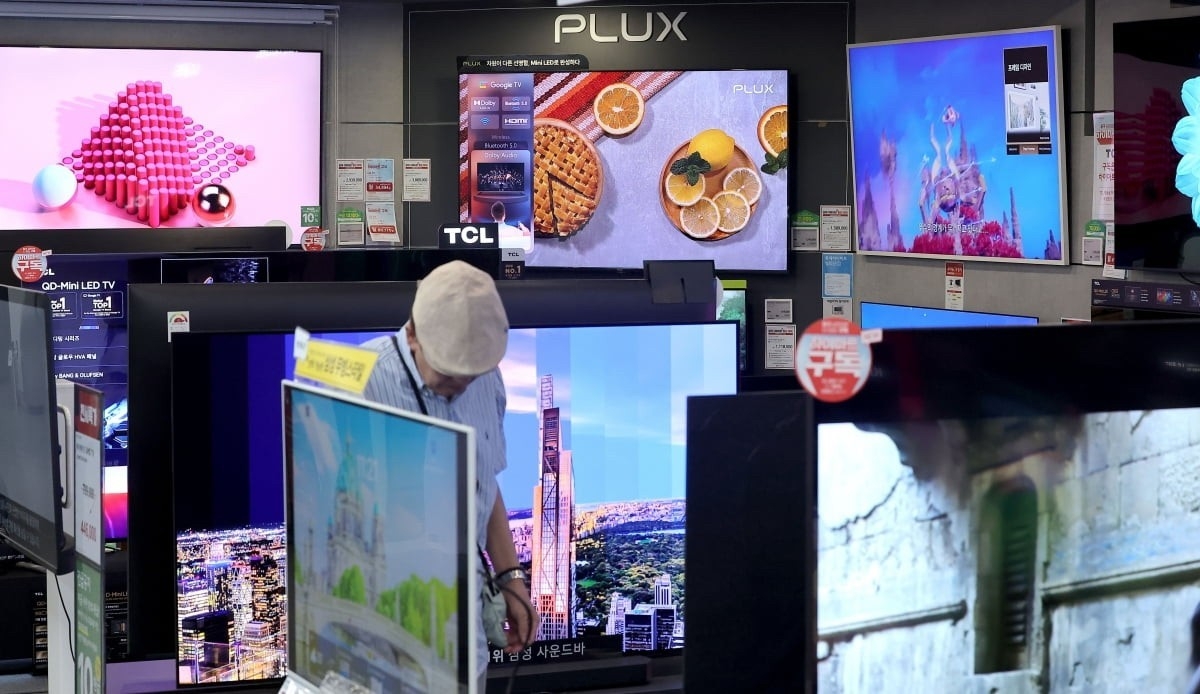
Professor Moon added that the reported brightness of 1,000 nits is more than sufficient for typical home viewing. He noted that even TVs in retail showrooms rarely operate at higher brightness levels to prevent panel degradation.
“At that brightness, with a reported reflectance of around 4 percent, there’s no issue for normal use,” he said.
However, “adequate for use” and “competitive in the market” are different considerations. An anonymous industry official offered a more critical perspective. Lower peak brightness has long been OLED’s weakness compared to LCD-based rivals, and LG has invested significantly in closing this gap, increasing flagship models from 1,500 nits to over 3,000 nits this year. “An SE model that visibly reverses that progress could undercut its own pitch,” the official stated.
Ultimately, the pricing gap with mini-LED TVs will determine the success of the SE panel. Han from UBI outlined a simple calculation: LG’s 2025 C5, a 65-inch OLED, currently retails for around $1,300 in the US after discounts. A 2026 model based on the more affordable SE panel could launch near that price point, bringing it within reach of premium Chinese mini-LED sets like TCL’s QM8 or Hisense’s U8.
Based on this, Han estimates the OLED-to-mini-LED price premium “could fall from today’s 30 to 50 percent to as low as 10 percent.”
The long-term success of the SE panel also depends on factors beyond LG’s control. A potential TCL-Sony joint venture in the coming years could further enhance the appeal of mini-LED TVs by combining Chinese manufacturing scale with Sony’s advanced image-processing capabilities. Chinese manufacturers also have a history of absorbing losses to maintain market share. “That isn’t hypothetical,” Han said. “We’ve seen it plenty of times.”
mjh


