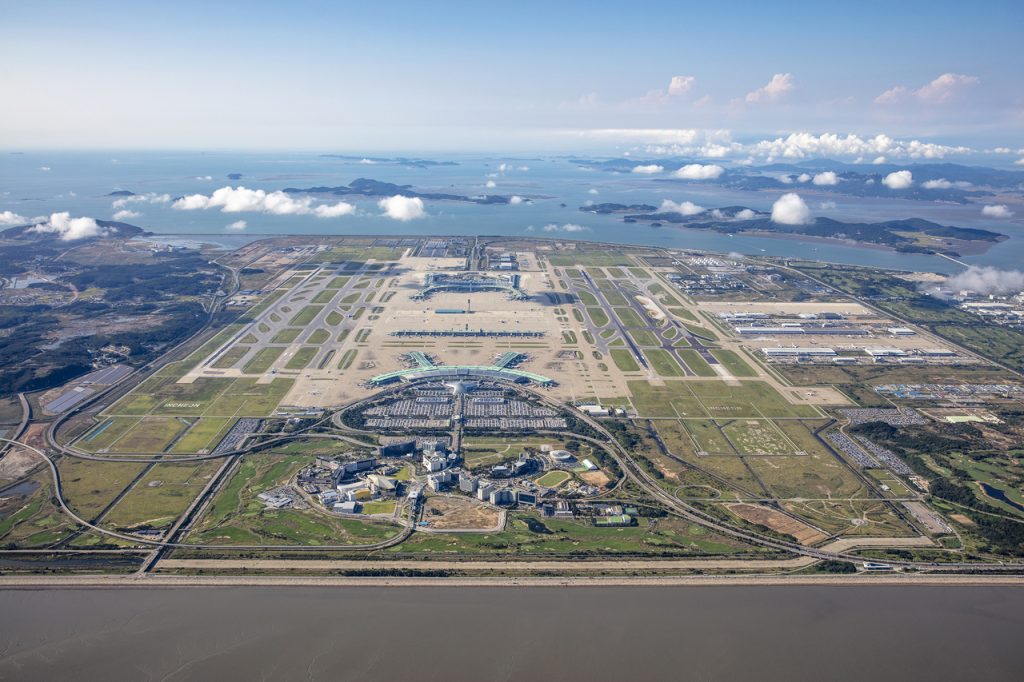
Incheon Airport is aiming for 100 million annual passengers as it celebrates its 25th anniversary this week, marking a quarter-century of growth and innovation.
Incheon International Airport Corp. announced on Friday that the airport has ascended to the position of the world’s third-busiest airport for international passenger and cargo traffic, according to the International Airport Council. This milestone comes 25 years after its inauguration on March 29, 2001.
“We extend our sincere gratitude to the government, the Korean people for their unwavering support, and our dedicated 94,000 employees who have been instrumental in our journey to become a leading international airport,” stated Kim Beom-ho, acting president of the Incheon International Airport Corp.
“Incheon Airport will continue to be a vital gateway to Korea, contributing significantly to the development of the national aviation industry and fulfilling its social responsibilities as a public corporation.”
In 2025, the airport handled over 74 million international passengers and 2.9 million tons of international cargo. Furthermore, with over 8 million transit passengers, Incheon Airport has firmly established itself as a major air travel hub in Northeast Asia, according to the corporation.
Infrastructure expansion has been a pivotal factor in the airport’s success. In November 2024, the completion of the fourth phase of its expansion project, including the extension of Terminal 2, boosted the annual passenger capacity to an impressive 106 million.
This enhancement positions Incheon among the world’s largest airports in terms of international capacity, holding the third-highest rank globally, following Hong Kong (120 million) and Dubai (115 million).
Building upon these remarkable achievements, the airport is set to embark on large-scale innovation across all operational areas.
With a primary focus on operational safety and passenger convenience, Incheon Airport will undergo a significant digital transformation by accelerating the adoption of artificial intelligence and establishing an ecosystem ready for urban air mobility, the operator announced.
The airport will also support the government’s goal of attracting 30 million overseas tourists by enhancing regional transportation networks. This includes the introduction of new Airport Limousine routes and the expansion of existing ones to improve accessibility and transportation convenience.
To further enhance connectivity, the airport will increase both domestic flight routes and connecting flight options. Starting in April, the number of domestic flights between Incheon and Gimhae, serving Busan, will increase from 35 to 39 weekly flights. The Incheon-Jeju City route, which was suspended in 2016 due to low demand, will resume operations with two weekly flights from May.
A commemorative ceremony was held on Friday at Incheon Airport Terminal 2 to mark the anniversary.
stlee0329