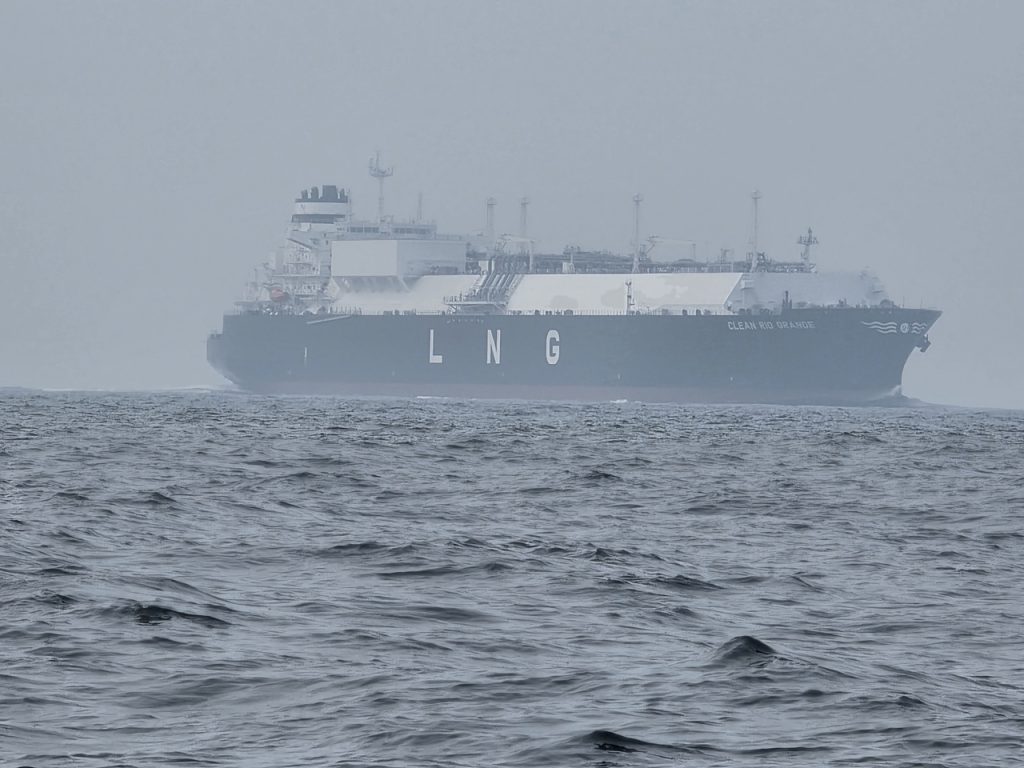
South Korea anticipates potential volatility in liquefied natural gas (LNG) prices following reports of Qatar declaring force majeure on its long-term LNG supply contract with the nation. However, government officials assured that the impact on actual LNG supply will likely be minimal.
“We have already accounted for the exclusion of LNG shipments from Qatar in our projections for this year’s LNG supply,” stated Yang Ghi-wuk, Deputy Minister for Trade, Industry, and Resource Security, during a briefing addressing resource supplies amidst the ongoing Mideast crisis. He emphasized that South Korea possesses sufficient LNG reserves to meet demand throughout the year, even without Qatari shipments.
Deputy Minister Yang further explained that the government has proactively secured alternative gas supply routes in anticipation of Qatar’s potential force majeure declaration, although official confirmation from Qatar is still pending.
Later in the day, a Cheong Wa Dae official affirmed the “stable supply of LNG,” highlighting that supply routes originating outside the Middle East “remain secure.”
The official reiterated the ministry’s position that no official confirmation has been received from Qatar, emphasizing that the government’s contingency plans had already factored in potential supply disruptions from the Middle Eastern nation.
“Even in the event of a suspension of LNG supply from Qatar, we are confident in maintaining a stable supply until the end of the year, as imports from non-Middle Eastern sources are proceeding as planned,” the official stated.
Despite assurances of adequate supply, the ministry official cautioned that LNG price volatility could increase, potentially exerting upward pressure on domestic electricity rates. The official highlighted ongoing collaboration with climate and related ministries to address this concern. The climate ministry announced plans on Tuesday to mitigate LNG consumption by increasing coal and nuclear power generation.
Yang’s statements followed reports from international news outlets, including Reuters and Al Jazeera, that QatarEnergy, Qatar’s state-owned energy company, had declared force majeure on its long-term LNG supply contracts with South Korea, China, Italy, and Belgium. These declarations were reportedly triggered by damage to Qatari facilities resulting from recent missile attacks amidst the ongoing conflict involving the U.S., Israel, and Iran.
Deputy Minister Yang stated that the government is also actively monitoring the supply of other essential industrial and consumer goods, including engine oil, paints, and garbage bags, acknowledging the potential for unforeseen disruptions across various sectors.
Regarding the possibility of importing oil from Russia, Seoul has received confirmation from the U.S. government that purchases of Russian crude and petroleum products are permissible using the U.S. dollar, Chinese yuan, Russian ruble, and United Arab Emirates dirham, according to Yang.
The U.S. recently granted temporary waivers allowing the purchase of Russian crude already in transit, aiming to stabilize global oil prices amid the Mideast crisis.
Washington also confirmed that these transactions would not be subject to secondary sanctions, the Deputy Minister explained, adding that the South Korean government is sharing this information with private sector entities.
However, Yang acknowledged significant uncertainties surrounding Russian crude imports, including concerns regarding oil quality and the limited timeframe for securing supplies.
He indicated that imports of Russian naphtha appear more feasible.
The South Korean government has temporarily designated naphtha, a crucial component in petrochemical and other industries, as an economic security item due to a shortage. The country primarily imports naphtha from the Middle East.
Plans are also underway to implement export restrictions on naphtha, with an announcement expected within the week.