
China-Free Defense Supply Chains Open New Opportunities for Korean Battery Makers Beyond EV
The United States’ push to reduce reliance on Chinese battery supply chains is extending beyond electric vehicles (EVs) and energy storage into the defense sector. This creates significant opportunities for Korean battery manufacturers as they navigate a slowdown in EV demand and seek new avenues for growth.
At a recent Korea-US defense battery cooperation seminar, held during InterBattery 2026 in Seoul, the US Department of Defense emphasized its intention to strengthen partnerships with South Korea. The goal is to standardize batteries for military applications, reducing costs and accelerating mass production.
Eric Shields, Senior Battery Advisor in the office of the US Secretary of Defense, highlighted the current complexity, noting that over 5,000 different battery types are utilized in various military systems, from infantry equipment and jammers to drones, submarines, and even space-based weaponry.
“Batteries should be standardized like ammunition and fuel,” Shields stated, suggesting that commonly used formats like 18650 cylindrical cells could be crucial for enhancing interoperability across different military platforms.
This initiative by the Pentagon reflects a broader strategy to establish battery supply chains independent of China. The National Defense Authorization Act will effectively prohibit the use of Chinese-made batteries in new US weapon systems starting in 2028, with these restrictions expanding to legacy systems, including submarines, by 2031.
The Urgency of Reducing China’s Dominance
The urgency behind this shift stems from China’s overwhelming dominance in battery production. According to Lisa King, Director of Advanced Battery Strategy at LEAP Manufacturing, approximately 90% of cylindrical batteries used in defense and electronics are currently manufactured in China. This concentration poses significant risks to national security.
The initial focus on cylindrical batteries, particularly the 18650 cells (18mm in diameter and 65mm in length), is due to their widespread use in lighter military applications such as radios, drones, and small unmanned vehicles. US officials have indicated that standardization will gradually extend to larger formats, including prismatic batteries used in heavier platforms like submarines and armored vehicles.
Korean battery manufacturers are poised to become key beneficiaries of this strategic realignment.
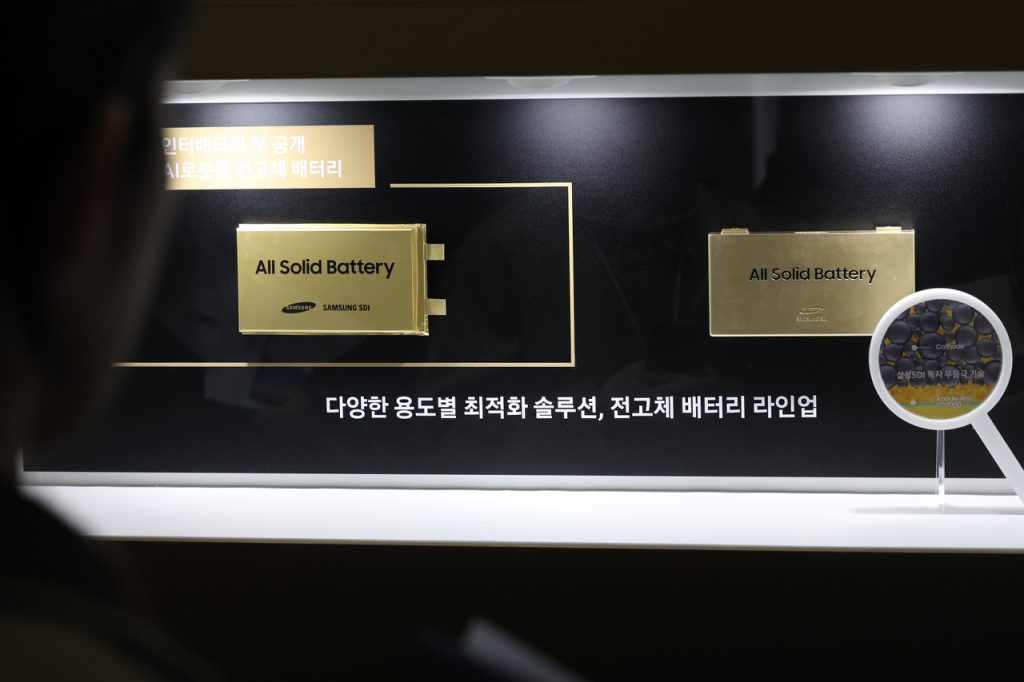
Samsung SDI is particularly well-positioned in the cylindrical lithium-ion battery market, leveraging its leading position in small-format cells used in data center backup units and consumer electronics. The company held approximately 50% of the global battery backup unit market share in the fourth quarter of the previous year, according to its earnings reports.
A senior researcher at a major battery firm commented that companies with existing cylindrical battery production lines have a significant cost advantage, as they can adapt their capacity without requiring substantial new investments.
“Defense contracts tend to be stable and placed in fixed volumes, meaning even relatively modest margins compared to EVs can be viable,” the researcher explained.
The researcher further added that smaller formats like the 18650 are less expensive to manufacture and offer proven reliability across various applications.
“These batteries have also demonstrated low defect rates after extensive testing under extreme conditions, which is critical in defense settings, where malfunctions can result in life-or-death situations – making cylindrical cells particularly well suited for military use.”
Samsung SDI is also expanding its capabilities in larger battery formats. The company has co-developed a submarine-grade prismatic lithium-ion battery with Hanwha Ocean and Hanwha Aerospace, with deployment anticipated between 2027 and 2028.
LG and SK Expand Their Defense Footprint
Other Korean battery makers are also actively increasing their presence in the defense sector.
LG Energy Solution has established credibility in high-performance applications, supplying batteries for aerospace projects in collaboration with NASA and SpaceX. The company is also indirectly involved in US defense electrification through GM Defense, which utilizes battery technologies from LG Energy Solution and its joint venture, Ultium Cells, to adapt EV platforms for military use.
GM Defense has reportedly joined Pentagon-backed initiatives to test EV batteries for directed energy systems (weapons that use focused energy, such as lasers) and is participating in battery standardization efforts.
SK On is providing high-nickel pouch batteries for unmanned systems developed by Hyundai Rotem and is in discussions with US and European defense companies to supply batteries for AI-powered submarines and electric vertical take-off and landing (eVTOL) aircraft.
For Korean battery manufacturers, the defense sector represents a promising new avenue for growth, particularly as EV demand slows. Unlike the highly competitive EV market, defense contracts tend to be stable, long-term, and involve fixed volumes, providing predictable revenue streams.
“Excluding Chinese players, Korean battery makers are effectively Washington’s only viable alternative with both advanced technology and mass production capacity,” an industry source stated.
As the US accelerates its efforts to decouple from Chinese suppliers, Korea’s battery industry is increasingly positioned at the center of a strategically driven market – one shaped by national security priorities as much as by commercial demand.
hyejin2


