Strong government measures, public caution and live streaming shift many viewers online
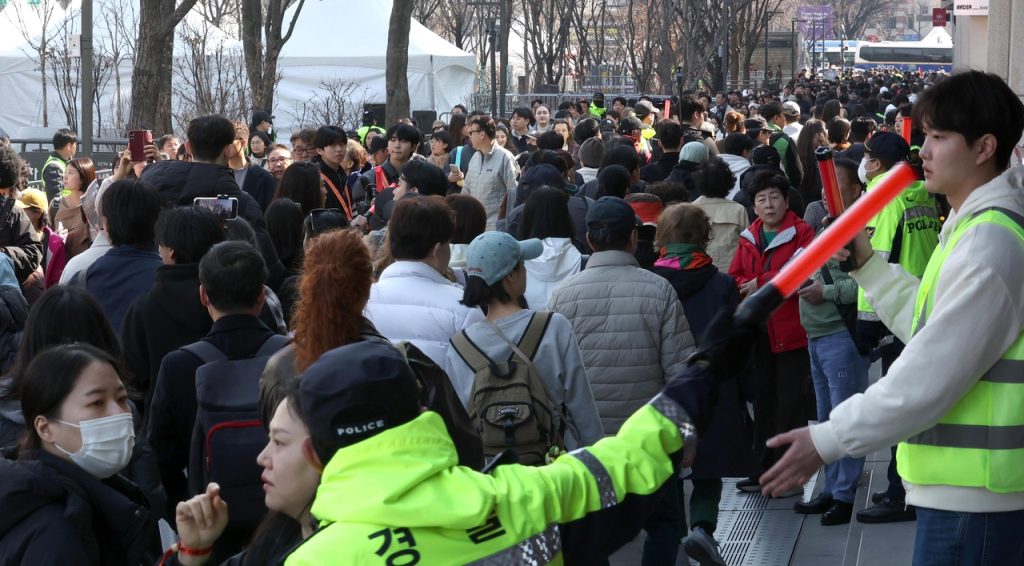
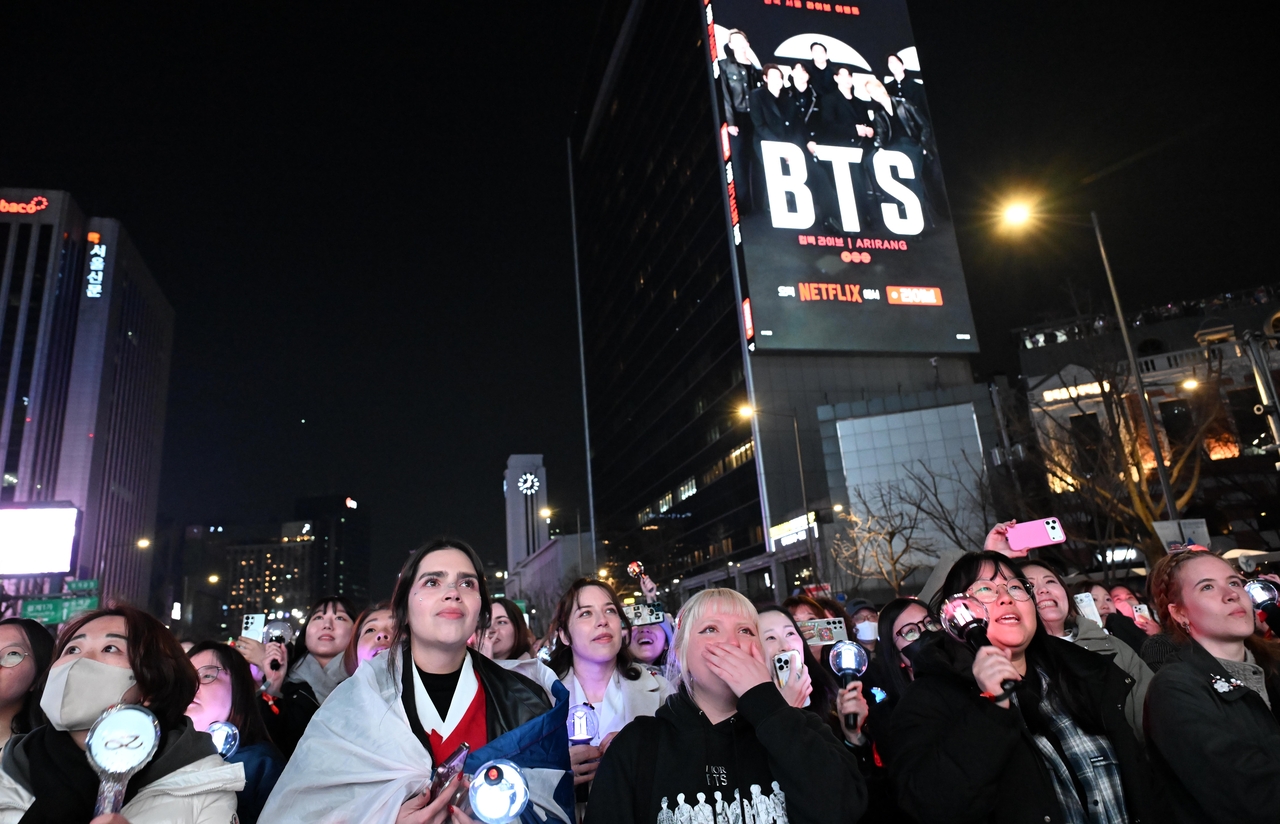
Fewer fans than expected gathered at Gwanghwamun Square for the BTS comeback show on March 21, as extensive safety measures and widespread public caution led many to watch the event online instead.
While police had initially forecast a crowd of up to 260,000, actual attendance fell far short of that figure. Estimates varied widely depending on the source.
According to the Ministry of the Interior and Safety, Monday, about 62,000 people were present in the Gwanghwamun area during the concert hour from 8 p.m. to 9 p.m. Seoul city data placed the figure between 46,000 and 48,000, while police estimated 70,000 to 80,000 attendees. Hybe, parent company of BTS’ agency Big Hit Music, put the number higher, at around 104,000, based on ticket holders, mobile carrier data and foreign visitor estimates.
Regardless of the discrepancies, the turnout was significantly below initial projections.
The lower attendance is attributed to a combination of strict crowd-control measures, heightened public awareness following past disasters, and the availability of a global livestream.
In the days leading up to the concert, authorities issued multiple warnings about large gatherings. The Seoul Metropolitan Office of Education sent notices to schools advising students to avoid crowded areas, while education offices in Incheon and Gyeonggi Province issued similar guidance.
The government also raised its crowd-related risk alert level to “caution” a day before the event, and the national counterterrorism center increased the terrorism alert level in central Seoul during the concert period.
“I heard some office workers in the Gwanghwamun area were told to take the day off on Friday and Saturday to avoid potential risks from the large gathering,” said a Seoul resident surnamed Lee.
On the day of the event, access to the area was tightly controlled, too. Major subway stations including Gwanghwamun, Gyeongbokgung and City Hall either bypassed stops or closed exits, while 31 security checkpoints screened visitors entering the zone.
Pedestrian movement was strictly regulated, with police directing crowds into one-way walking lanes to prevent congestion.
“Everyone had to keep moving in one direction, and many intersections were repeatedly blocked and reopened, which led many people to leave because of the inconvenience,” said Lee Jung-yeon, a BTS fan who attended the show.
Despite the reduced turnout, the concert concluded without a single reported accident — a result many see as a direct outcome of the strict precautions.
Public sensitivity to crowd safety also remains high in South Korea following the 2022 Itaewon Halloween disaster, which left 159 people dead and 195 injured. At the time, about 80,000 people had gathered in the area, but only around 100 police officers were initially deployed.
The memory of the tragedy, still fresh for many, appears to have influenced decisions to avoid large crowds.
Another key factor was visibility. For many attendees positioned farther from the stage, the performance was difficult to see. Although Hybe had warned of limited visibility in certain areas, some fans expected large outdoor screens throughout the district. In reality, livestream screens were limited, with the main viewing area set near Seoul Plaza.
With Netflix broadcasting the concert live, many opted to watch remotely instead.
“If I can watch the show live on Netflix, why go all the way to Gwanghwamun where you can barely see BTS?” said another Seoul resident surnamed Han. “Unless you’re a die-hard fan, most people would choose to watch comfortably at home.”
jaaykim