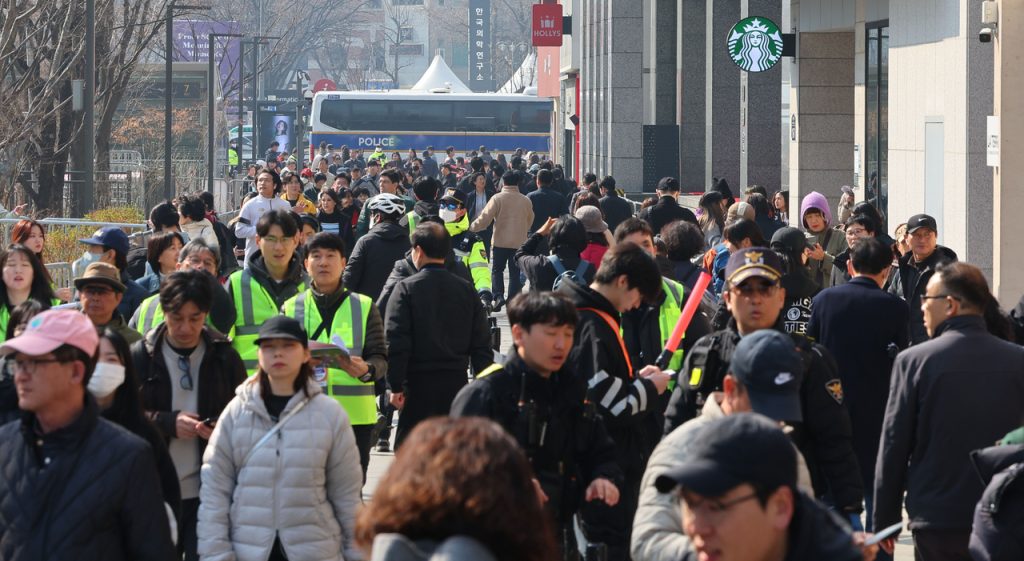
Huge crowds of BTS fans, also known as the BTS Army, began gathering in central Seoul overnight on Friday in anticipation of the group’s highly anticipated comeback concert the following evening. This influx of fans prompted authorities to implement extensive safety and traffic control measures throughout the Gwanghwamun district.
Despite frigid early-morning temperatures dropping to 2 degrees Celsius (35.6 degrees Fahrenheit), dedicated fans waited outside convenience stores, in 24-hour cafes, and along surrounding streets from late Friday night. Their goal was to secure the best possible viewing spots for the “BTS The Comeback Live: Arirang” concert.
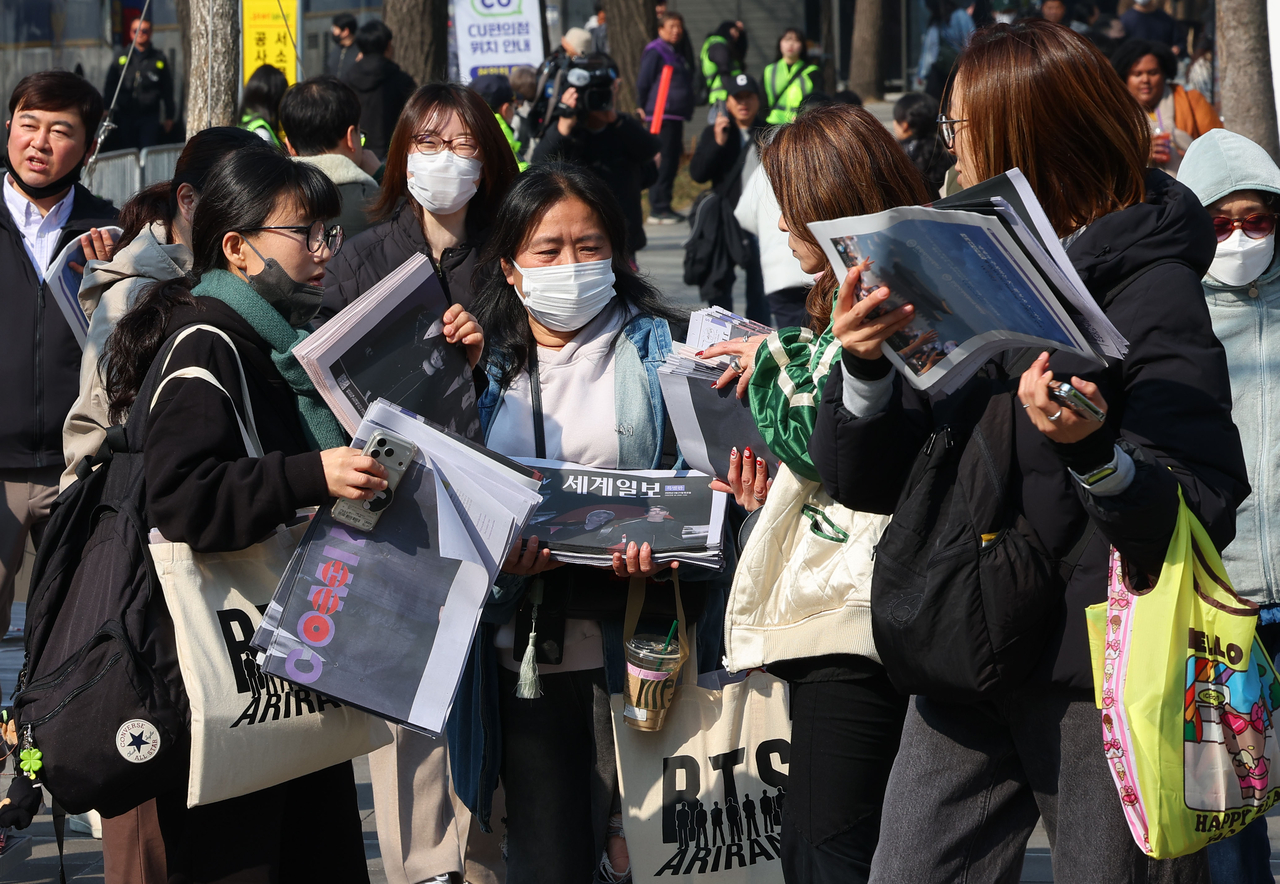
Some fans arrived after work, while others traveled from university campuses or various parts of the city in the early hours. Many stayed awake all night, bundled in warm clothing, equipped with portable chargers, blankets, and hot beverages. They shared their excitement with fellow ARMY members from around the globe.
According to the Seoul Metropolitan Government, an estimated 8,000 to 8,500 people had congregated in the Gwanghwamun and Deoksugung area by 7:25 a.m. This marked a significant 172.2 percent increase from three hours prior and a 42.7 percent rise from just an hour earlier, demonstrating the rapid growth of the crowd.
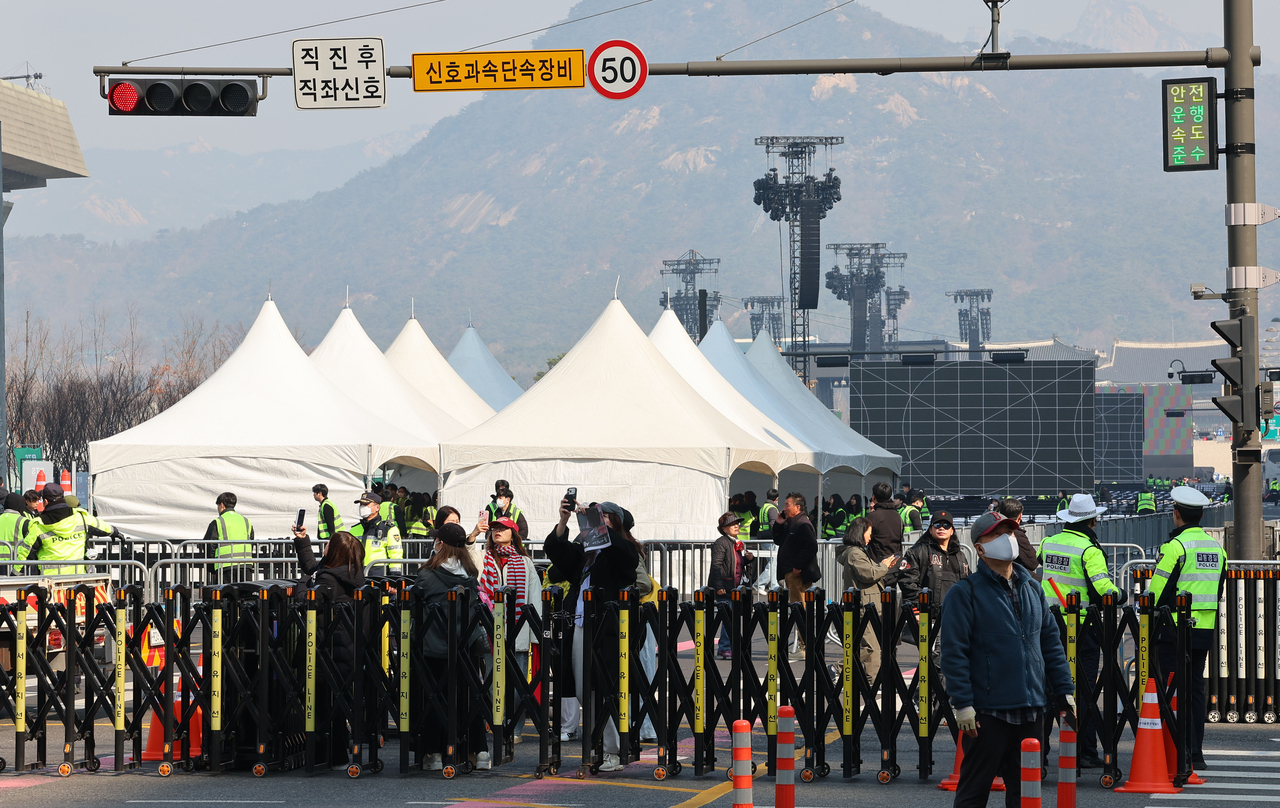
Safety fences were erected along a 1.2-kilometer (0.75-mile) north-south section from the front of Gwanghwamun to City Hall Station, extending 200 meters (656 feet) east-west. Access was restricted to 31 controlled entry points equipped with walk-through metal detectors, where police conducted thorough body checks and bag inspections. Given that the majority of concert attendees were women, female police officers were primarily deployed.
Security measures were also heightened inside nearby buildings. Entry to 31 buildings surrounding the plaza was restricted to prevent unauthorized access routes or entry to rooftops, thereby minimizing the risk of falls and other potential accidents.
Significant traffic restrictions were enforced throughout the district. Sejong-daero remained completely closed until 6 a.m. on Sunday. Sajik-ro and Yulgok-ro faced restrictions from 4 p.m. to 11 p.m., while Saemunan-ro and the Gwanghwamun underpass were closed from 7 p.m. to 11 p.m. on Saturday.
The government established a real-time on-site situation room at the Seoul Government Complex to closely monitor crowd density. The combined deployment of police, firefighters, and civil servants for the event totaled approximately 15,000 personnel, highlighting the scale of the event and the commitment to ensuring public safety.
jychoi