

OLED Monitors: A Growth Hotspot Dominated by Korean Manufacturers
Amidst a general slowdown in monitor demand, OLED monitors are emerging as a significant growth area, a trend largely benefiting South Korean giants Samsung Display and LG Display. This surge in demand is fueled by the increasing popularity of premium gaming hardware.
According to Omdia, OLED monitor panel shipments experienced a dramatic increase of 69.3 percent in 2025. This growth significantly outstripped the overall large-area display market, which saw a comparatively modest growth of 2.9 percent. UBI Research estimates that OLED monitor shipments reached approximately 3.2 million units last year and predicts a further growth of over 50 percent in 2026.
This growth is driven by more than just typical consumer upgrades. The demand for enhanced gaming experiences, fueled by faster graphics processors and the proliferation of AI-enhanced gaming content, is pushing the need for higher refresh rates, superior contrast ratios, and rapid response times. These are all areas where OLED technology excels compared to LCD technology, particularly in the premium monitor sector.
TrendForce reports that OLED panels have become the preferred choice for high-end gaming monitors, especially as models with refresh rates of 240Hz and above become more prevalent. They also note that Nvidia’s RTX 50 series graphics cards are further stimulating demand for these high-specification displays.
This increasing demand has created a key opportunity for Korean panel manufacturers, particularly as growth in other OLED categories remains relatively constrained. Omdia reports that OLED TV display shipments only increased by 1.5 percent in 2025. In response, Korean manufacturers have strategically shifted their focus from TV panels to OLED monitors, which offer better profitability.
Korean companies currently dominate the OLED monitor panel market. Omdia data shows that Samsung Display held approximately 78 percent of global OLED monitor panel shipments in the first half of 2025, while LG Display accounted for roughly 22 percent.
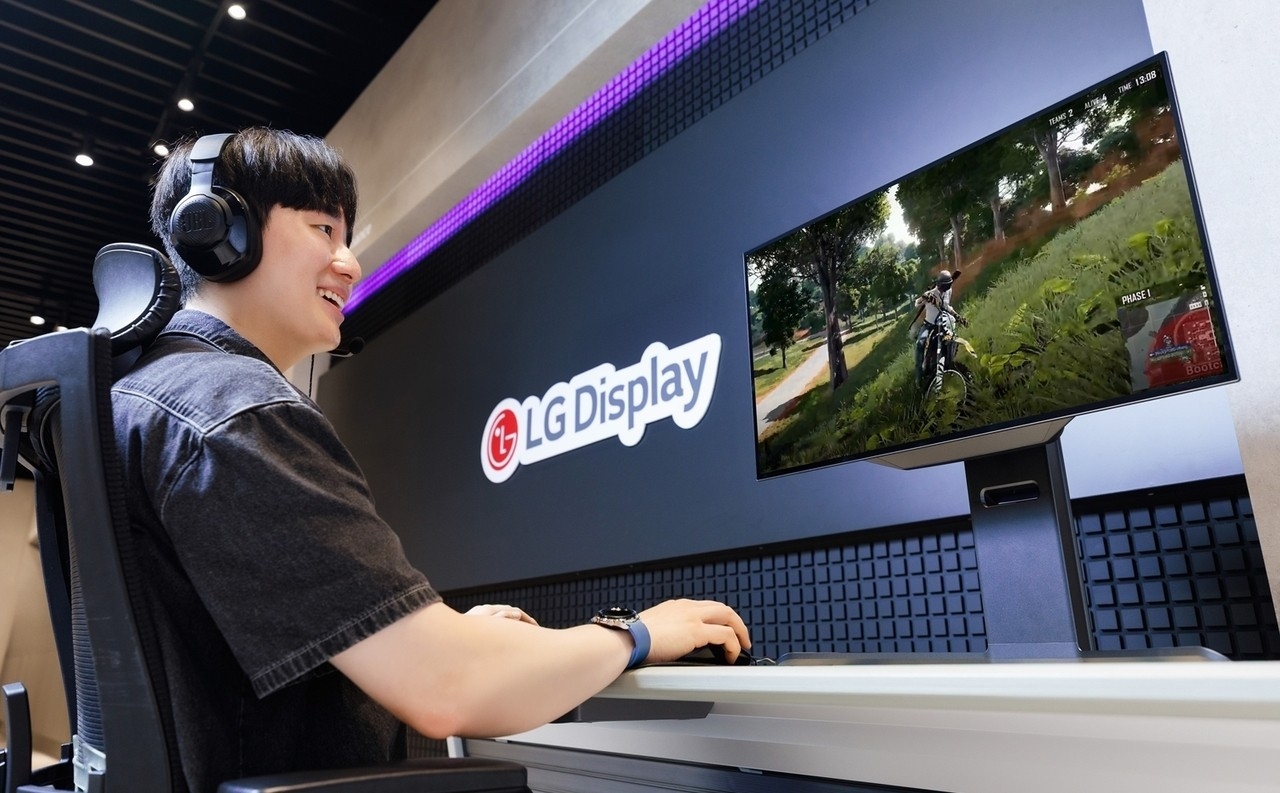
Samsung Display and LG Display are capitalizing on this opportunity by utilizing different technologies and product strategies. Samsung Display focuses on QD-OLED technology, targeting the ultra-high-end gaming and premium monitor markets with products such as their 27-inch UHD 240Hz and 27-inch QHD 500Hz panels, which were launched last year.
LG Display is expanding its monitor OLED shipments based on WOLED technology while simultaneously accelerating its broader shift from LCD to OLED. In their 2025 earnings release, LG Display highlighted that OLED products represented a record 61 percent of their annual revenue, with panels for IT devices – including monitors, laptops, and tablets – contributing 37 percent.
Despite the rapid growth, the OLED monitor market remains relatively small in absolute terms. Estimates from China-based AVC Revo suggest that OLED monitor penetration will reach approximately 3 percent of the total monitor panel market in 2026, even with shipments projected to rise to 5.4 million units. This indicates that the current boom is primarily driven by premium gaming and content creation applications, rather than a widespread replacement of LCD monitors.
Currently, Korean panel makers maintain a strong hold on the market, but Chinese competitors are preparing to enter the fray. BOE is reportedly investing 63 billion yuan ($9.1 billion) in a new AMOLED production line in Chengdu, primarily targeting high-end IT applications such as laptops and tablets. Omdia reports that new Gen 8.6 IT OLED fabs from BOE are expected to begin production in 2026. TrendForce has also indicated that TCL CSOT is proceeding with its Gen 8.6 OLED plans.
mjh


