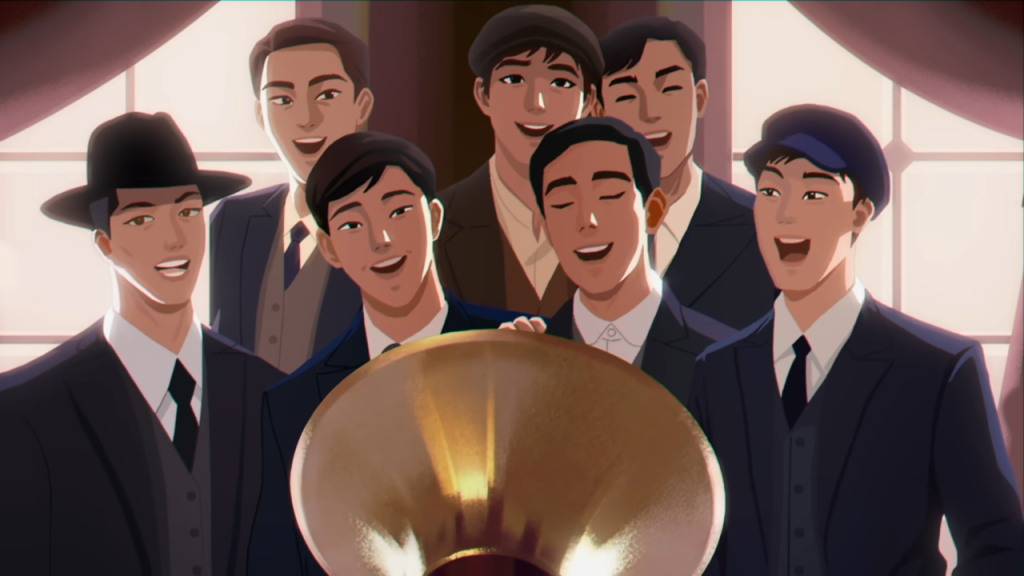
BTS’s “Arirang” teaser, featuring Howard University, has sparked debate surrounding racial representation and historical accuracy. The animated trailer for the upcoming album has drawn both criticism and defense regarding its depiction of race and the events it portrays.
The one-minute video for “Arirang” was released March 13 on the group’s official YouTube channel.
The teaser opens with the seven BTS members gathered around a gramophone. The scene then transitions to 1896 at Howard University, where seven Korean students are shown recording “Arirang.” The narrative progresses, connecting this historical moment to BTS’ 2013 debut and the global impact of the song through their fandom.
The storyline is inspired by a May 8, 1896, article in The Washington Post, “Seven Koreans at Howard,” detailing the experiences of young men from prominent Korean families who travelled to the United States for education.
During this period, international student opportunities were limited due to racial barriers in many Northern universities. Howard University, established in 1867 as a Historically Black College and University (HBCU), became a welcoming institution for students facing discrimination.
In the summer of 1896, American ethnologist Alice C. Fletcher invited several of these students to her residence in Washington, where they created what are believed to be the earliest recordings of Korean voices and music in the United States.
According to the Library of Congress, Ahn Jeong-sik, Lee Hee-cheol and Son Rong recorded six wax cylinders over two days, including “Love Song: Ar-ra-rang,” which is considered the oldest known recording of “Arirang,” often hailed as Korea’s unofficial national anthem.
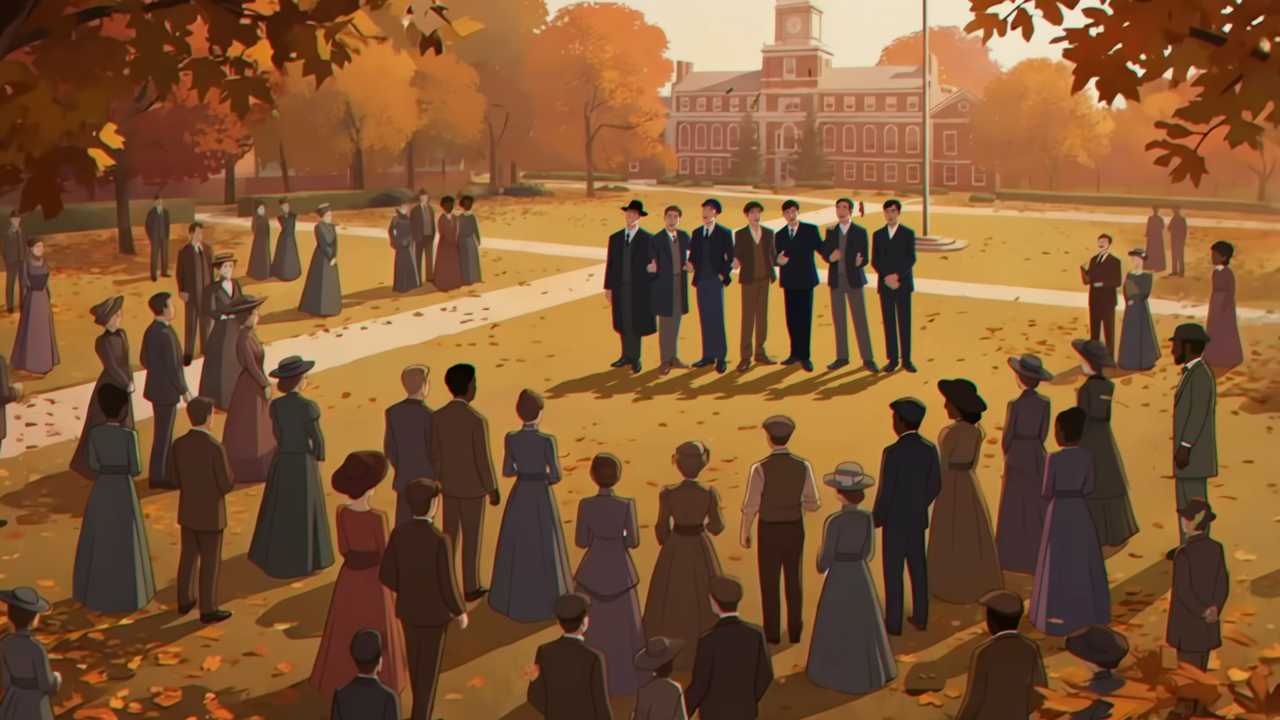
The main point of contention revolves around the depiction of Howard University, specifically the visuals of the campus and audience within the animation. The predominance of white figures, with Black figures appearing relegated to the background, has been criticized.
This portrayal has sparked significant reaction on social media, with some users highlighting what they see as a pattern of racial insensitivity in K-pop. Others have accused the genre of overlooking its Black fanbase. Some critics have also condemned the video for what they see as a distortion of historical context.
Defenders of the teaser argue that it’s a creative interpretation, not a documentary. They also point out that the complete album concept is yet to be revealed and place the responsibility for the visual choices with the production team, rather than BTS themselves.
A disclaimer within the video clarifies that the work is “a modern reimagining” inspired by historical records, but “deviates from actual historical events and does not serve as a formal evaluation or interpretation of any historical event or person.”
hwangdh