
March 21 marks International Day of Forests, a United Nations observance. This year’s theme, “Forests and Economies,” underscores the crucial role forests play as both natural resources supporting life and cornerstones of economic activity.
“Even if I knew that tomorrow the world would go to pieces, I would still plant my apple tree.”
This powerful quote, often attributed to Martin Luther, encapsulates the long-term vision inherent in forestry. Planting a tree signifies a commitment to the future, a responsible act of hope. Forests represent intergenerational wealth, planted by one generation, nurtured by the next, and enjoyed by those that follow. They are not just environmental assets; they are fundamental to a sustainable economy and society.
South Korea is globally recognized for its remarkable forest restoration success. After enduring the devastation of war, the nation’s once-barren mountains were revitalized through the collective dedication of its people.
Today, forests cover 63% of South Korea. This achievement is more than just an environmental victory; it was integral to the nation’s reconstruction. In 2025, Korea’s reforestation efforts were recognized with inscription on UNESCO’s Memory of the World Register, cementing its status as a sustainable development role model.
We now stand at a point where the ecological and economic significance of forests must be considered in tandem. Forests act as vital nature-based solutions, absorbing carbon dioxide, purifying water resources, and mitigating the impact of natural disasters such as landslides and floods. Simultaneously, they are invaluable economic resources, generating new industries and employment through timber production, non-timber forest products, forest-based tourism and recreation, and the development of bio-based industries.
The total estimated value of South Korea’s forests is 408 trillion won (approximately $272 billion USD). Of this total, 259 trillion won represents public value related to ecosystem services, while 149 trillion won reflects economic value, equating to roughly 4.99 million won per person annually.
Across the globe, countries are leveraging forest resources to bolster their industrial competitiveness. The forest-based economy, encompassing timber construction, bio-based materials, and renewable energy, is experiencing rapid expansion. Notably, wood is gaining prominence as a renewable alternative to carbon-intensive materials like steel and concrete, making it a key element in achieving carbon neutrality goals.
Companies worldwide, especially those within the G20, are increasingly mandated to disclose financial information related to climate change and nature. Given the pivotal role forests play in climate change mitigation and biodiversity conservation, their investment value is poised for further growth.
Korea needs to transition from simply producing and consuming timber to cultivating a robust, forest-based industrial ecosystem that values forests as high-value resources. Through a sustainable cycle of forest management – planting, nurturing, harvesting, utilizing, and replanting – we can continuously enhance forest value. Healthy forests are not only crucial for achieving carbon neutrality but also provide the foundation for emerging industries and jobs.
If the past five decades were characterized by forest restoration, the next 50 years will be defined by the forest economy, an era where forests generate new forms of value. Policy initiatives must prioritize sustainable forest management, promote growth in timber and forest product sectors, and broaden public access to forest resources. Moving beyond basic protection, we must collectively strive towards realizing the vision of “Healthy Forests, Happy People.”
Forest policy’s impact unfolds gradually over time, through the extended cycle of planting, nurturing, utilizing, and replanting. A tree planted today becomes a national asset decades later – a source of hope for future generations.
On this International Day of Forests, we are reminded of the immense value of forests. That is why we remain committed to planting trees today – to ensure the sustainable use of forests and create enduring economic value for generations to come.
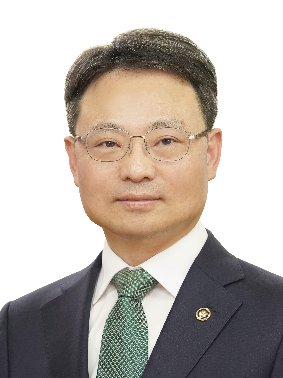
Park Eun-sik is the Minister of the Korea Forest Service. The views in this column are his own. — Ed.
khnews


