
Labor Law Uncertainty Clouds South Korea Investment Despite Strong Business Ties, Says ECCK Chair
March 10th marks a pivotal moment for South Korea’s labor relations as the amended Trade Union and Labor Relations Adjustment Act, commonly known as the “Yellow Envelope” bill, came into effect.
The European Chamber of Commerce in Korea (ECCK) expresses concerns that the law expands collective bargaining rights beyond direct employment contracts, impacting how businesses navigate their entire supply chain.
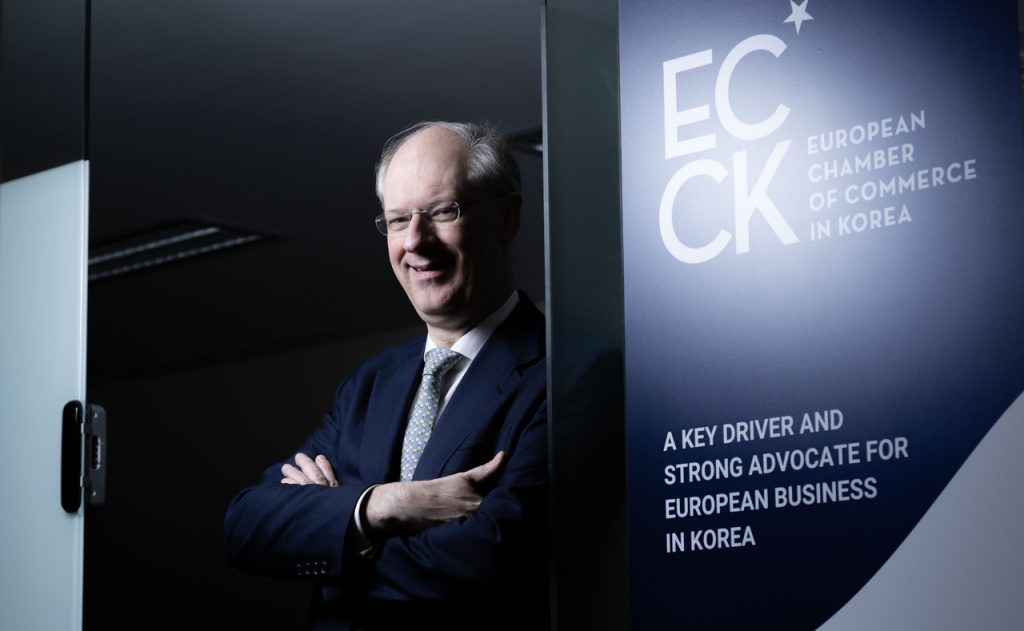
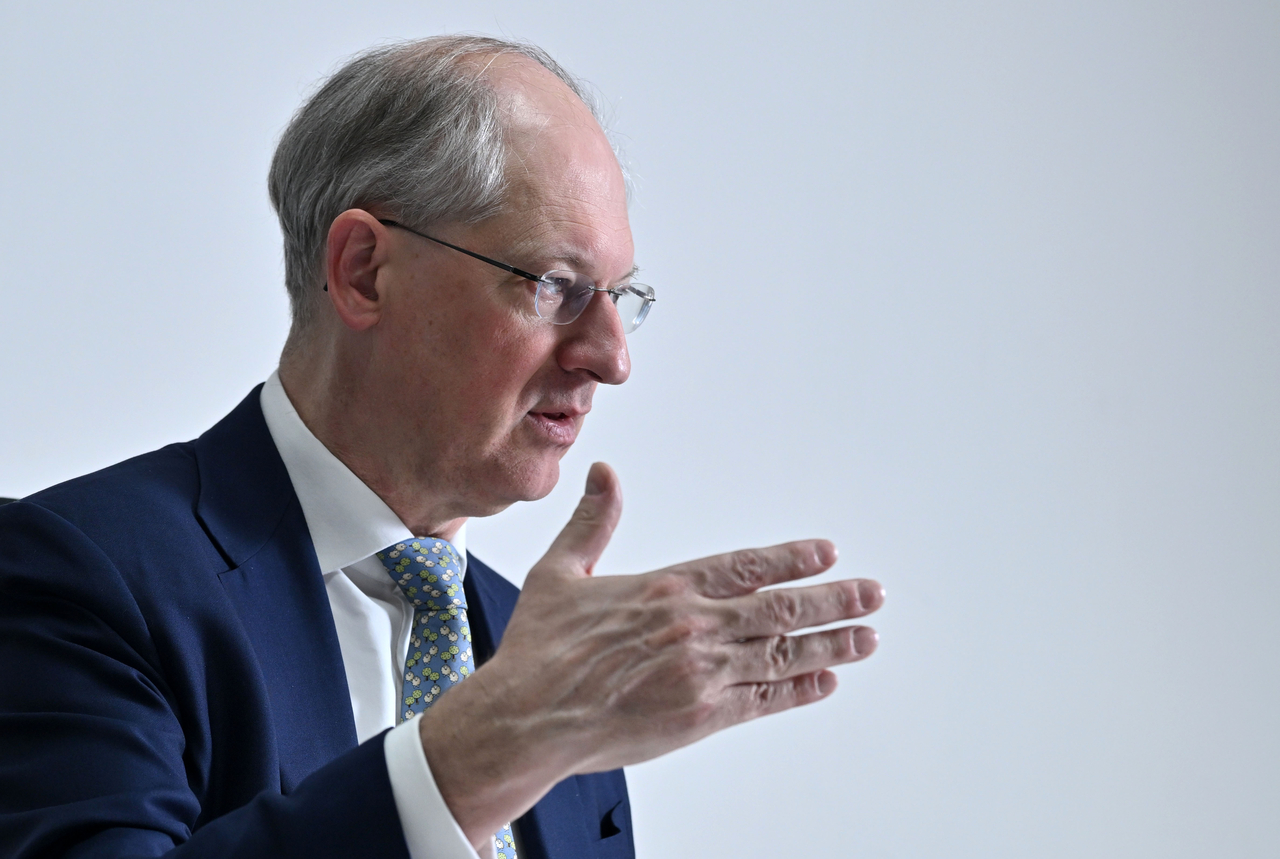
“The ambiguity surrounding the new labor law introduces potential for unnecessary legal disputes,” stated ECCK Chairperson Philippe Van Hoof in an interview with The Korea Herald on Tuesday. “This uncertainty could slow down business decision-making and escalate legal risks for companies operating in South Korea.”
The ECCK, representing approximately 400 companies from the European Union, European Free Trade Association, and the United Kingdom, cautions that this unpredictability may negatively impact long-term foreign direct investment (FDI) in South Korea.
Van Hoof highlighted the lack of clarity defining an “employer” for collective bargaining purposes. Broadening obligations across complex contractual networks and subcontractors creates unpredictable legal exposure.
“Effective value chain management becomes challenging without clear guidelines on who qualifies as an employer,” he explained. The ECCK raised these concerns with relevant South Korean ministries as early as July 2025 and continues to advocate for practical guidance to provide businesses with a reliable framework.
Concerns also arise from the discrepancy in legislative progress between amendments to the Commercial Act, which have increased legal responsibilities for directors, and stalled legislation addressing breach of trust liabilities. The latter would refine directors’ criminal exposure.
“This institutional gap creates uncertainty for corporate management in Korea,” Van Hoof noted. He argued that shifting towards clearer civil liability instead of broad criminal exposure would improve South Korea’s attractiveness as an investment destination.
Van Hoof acknowledged that the South Korean government has engaged with the ECCK’s concerns, but emphasized the need for swifter implementation.
During a ministerial roundtable in February, he shared these concerns with the Ministers of Industry and Labor, alongside other foreign chambers of commerce. In response, the ministers pledged to establish a dedicated hotline to provide ECCK members with direct access to official interpretations, offering clarity amid uncertainty.
Van Hoof described this initiative as “a positive signal to foreign investors seeking greater certainty and predictability in South Korea.” While the hotline is active, the ECCK has yet to receive formal submissions from its European members.
Despite regulatory anxieties, the ECCK maintains a generally positive outlook on South Korea as a business hub.
South Korea’s advanced technological capabilities, world-class infrastructure, and skilled workforce make it increasingly appealing for European research and development (R&D) activities. EU investment stock in South Korea exceeded 50 billion euros ($57.6 billion) in 2024, while Korean investment in Europe surpassed 40 billion euros.
These figures showcase a growing interdependence fostered by the EU-Korea Free Trade Agreement (FTA) over the past 15 years, the EFTA-Korea deal spanning two decades, and the recently signed UK-Korea FTA, Van Hoof pointed out.
Van Hoof suggested that aligning domestic regulations with international norms would further enhance South Korea’s investment appeal. He identified three key areas for improvement: English proficiency among young professionals, more robust technology exchange programs, and opportunities for early overseas management experience.
The ECCK recognizes significant opportunities in the expanding EU-Korea cooperation framework.
South Korea is the first Asian nation to join Horizon Europe, the EU’s prominent research and innovation initiative, facilitating joint projects in biotechnology, semiconductors, and aerospace. Collaboration on climate action is also crucial, as the EU Green Deal and South Korea’s energy transition strategy converge on clean energy supply chains.
“Europe offers a third way for Korea, and Korea presents a third way for Europe,” Van Hoof stated. Strengthening this relationship at all levels, from government to individual companies, remains central to the ECCK’s mission, he concluded.


