
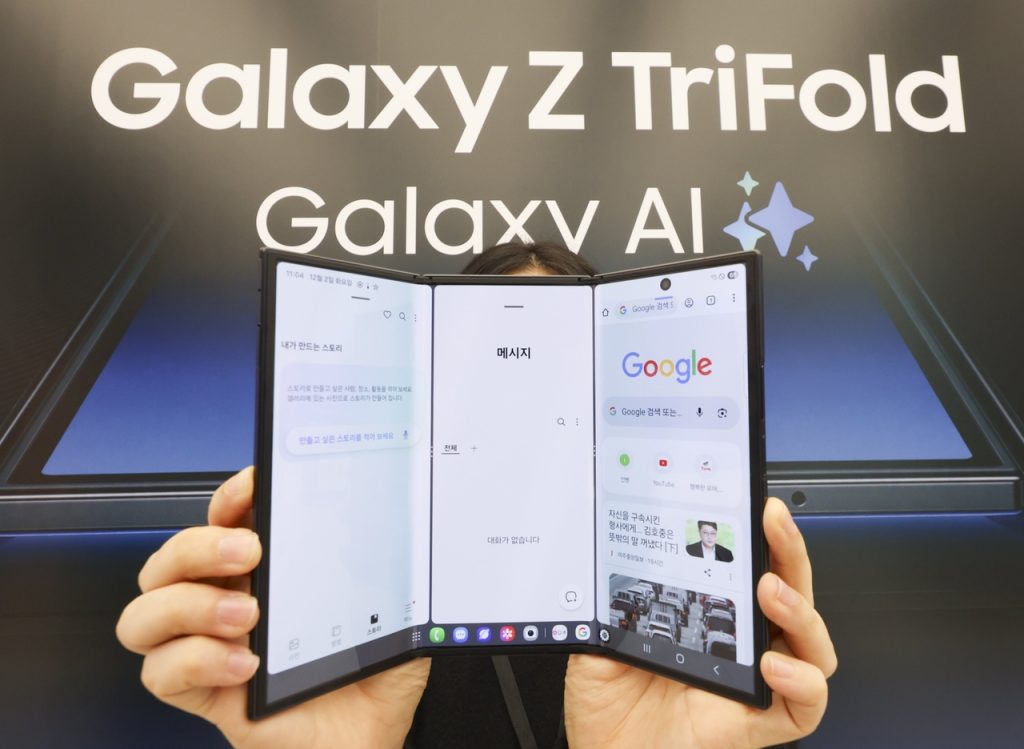
Limited-Run Device Highlights Tech Leadership as Samsung Prepares Next Foldable Push
Samsung Electronics has concluded domestic sales of the Galaxy Z TriFold, marking the end of a three-month period for the device, which served as a technological showcase rather than a major profit source.
The Galaxy Z TriFold, launched on December 12 at a price of 3,590,400 won ($2,410), consistently sold out within minutes of each restock. Samsung released limited quantities through its online store and select retail locations every one to two weeks. Each batch sold out in approximately two to five minutes.
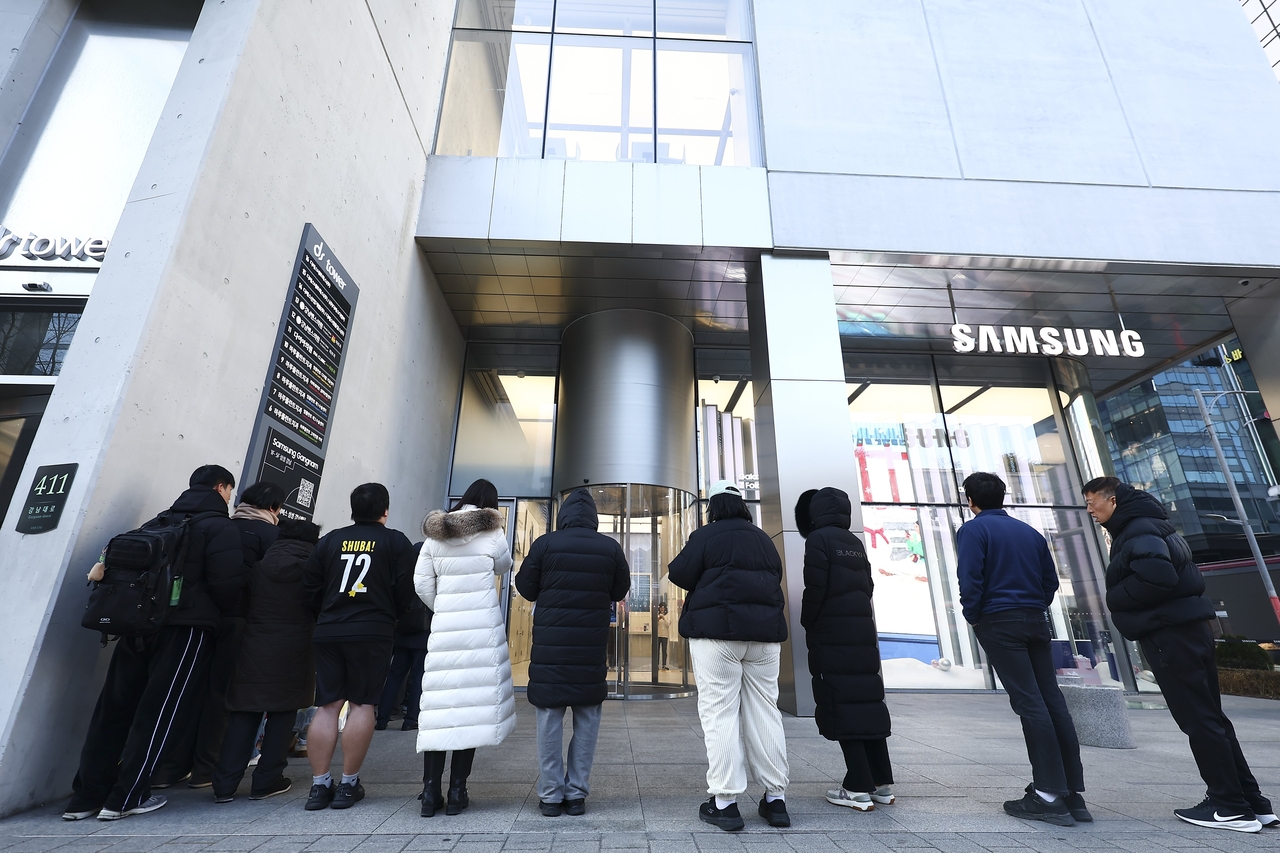
Despite the consistent sell-outs, Samsung reportedly never intended for mass production of the TriFold. Industry estimates suggest total domestic sales were no more than 10,000 units, with global production estimated at 20,000 to 30,000 units.
The innovative device unfolds into a 10-inch display and folds down to a 6.5-inch bar-type phone. At its thinnest point when open, it measures 3.9 mm, making it the slimmest in the Galaxy foldable series. Powered by a Snapdragon 8 Elite chip, it features a 200-megapixel wide-angle camera and a 5,600 mAh three-cell battery.
Samsung acknowledged that the TriFold’s complex dual-hinge structure and high component costs impacted profit margins. At the product’s unveiling, Lim Sung-taek, vice president and head of Samsung Electronics Korea, stated that the price was carefully calculated, emphasizing cost-cutting measures down to the last 100 won digit.
Industry analysts initially anticipated a price point exceeding 4 million won.
The TriFold’s pricing is most competitive in its home market. In the United States, where it launched on January 30, the device starts at $2,899. In China, the base model is priced at 19,999 yuan ($2,875).
Sales will continue in the US, China, and other international markets until remaining inventory is exhausted. Samsung is also considering a potential launch in Japan, according to Chief Operating Officer Choi Won-jun in a recent interview with Nikkei.
An industry source indicated that Samsung achieved its objectives with the Galaxy Z TriFold. “Even without the recent increase in smartphone component prices, the TriFold was essentially a break-even product for Samsung,” the source said. “Its purpose was to generate excitement and demonstrate technological capabilities. Given its consistent sell-out rate, there was no reason to continue producing a low-margin device.”
Some industry observers also pointed to Samsung’s focus on its recently launched Galaxy S26 series, its latest flagship line being rolled out across more than 120 countries.
Looking ahead, Samsung is actively preparing its next foldable release. Korean component industry sources reported in January that the company plans to produce approximately 1 million units of a new “Wide Fold” model with a 4:3 aspect ratio display. This marks the highest-volume special-edition foldable Samsung has attempted in three years.
The Wide Fold is anticipated to launch alongside the Galaxy Z Fold 8 and Z Flip 8 in the third quarter, positioning Samsung for a direct competition with Apple’s expected entry into the foldable market with its first foldable iPhone later this year.
mjh


