
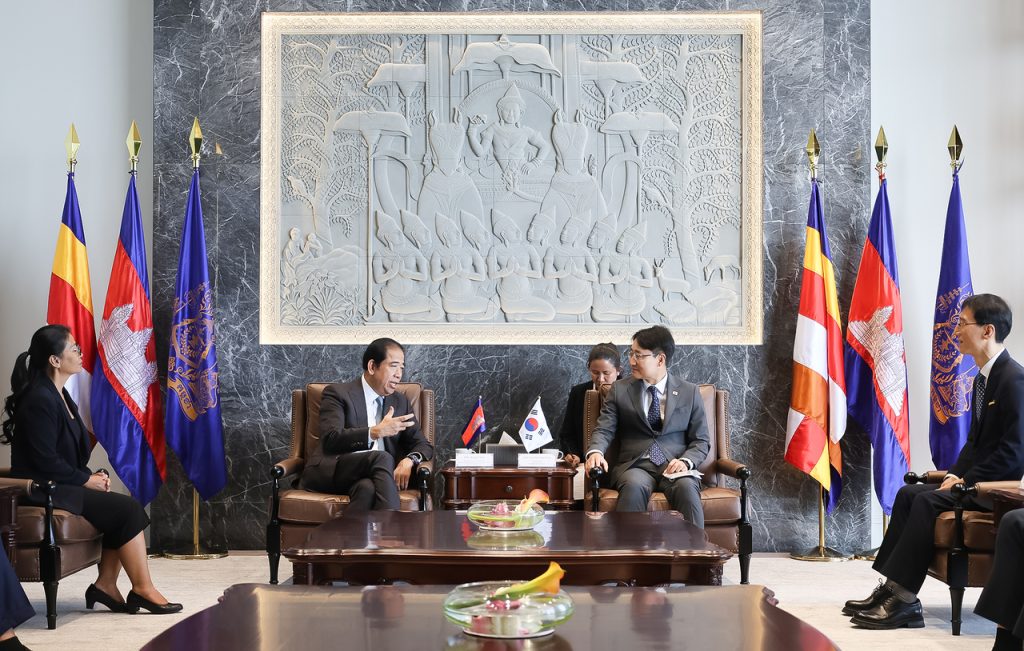
South Korea and Cambodia are strengthening their collaborative efforts to combat cross-border tax evasion and trace hidden assets. Tax authorities from both nations are intensifying information sharing related to tax crimes and financial holdings concealed overseas.
The National Tax Service (NTS) of South Korea announced on Monday that Commissioner Lim Kwang-hyun and Kong Vibol, Director General of Cambodia’s General Department of Taxation, signed a memorandum of understanding (MOU) to enhance the exchange of tax information. The signing occurred during a meeting held in Phnom Penh on Thursday.
This agreement formalizes the understanding previously reached in Seoul in January. The primary goal is to facilitate a more efficient and accurate exchange of tax-related data, particularly financial asset information associated with tax evasion schemes, according to the NTS.
The meeting, marking the fifth commissioner-level discussion between the Korean and Cambodian tax authorities, centered on expanding cooperation in tax administration. Key areas of focus included strengthening information exchange, coordinating investigations into tax crimes, and improving administrative support for Korean businesses operating within Cambodia.
The NTS emphasized the growing importance of closer collaboration, citing the increasing sophistication of offshore tax evasion tactics. These tactics include concealing criminal proceeds abroad and laundering money through virtual assets.
During the discussions, both commissioners shared their recent experiences in handling tax crime investigations. Commissioner Lim presented cases involving the destruction of accounting records and income shifting through offshore shell companies. Cambodian officials showed particular interest in the follow-up procedures, such as criminal accusations, the NTS reported.
During his visit, Commissioner Lim also engaged with representatives from the Korean Chamber of Commerce and leading Korean companies operating in Cambodia. He conveyed their concerns to Cambodian authorities, including issues related to delays in value-added tax (VAT) refunds. He requested ongoing administrative support for Korean businesses, to which Director General Kong pledged active cooperation, according to the NTS.
jwc


