
Araon, a South Korean startup specializing in innovative vehicle emissions reduction technology, announced Friday its initiative to launch a project in India. This venture seamlessly blends cutting-edge Korean environmental technology with the Corporate Social Responsibility (CSR) efforts of Korean companies operating within India.
The core objective of this project is to significantly reduce vehicle emissions and improve overall fuel efficiency in major Indian cities. This will be achieved by installing Araon’s advanced emissions-control devices on a wide range of corporate and public vehicles.
This impactful initiative is being executed in partnership with the esteemed Indian nonprofit, Bhai Jaitajee Foundation India. The project strategically leverages CSR funds contributed by Korean companies with a presence in India. These funds will be directly used to install Araon’s emission reduction devices on their logistics and sales vehicle fleets.
Araon anticipates that the successful implementation of this initial phase could pave the way for expansion to include public vehicles in New Delhi, furthering the positive impact on air quality.
At the heart of this environmental solution lies Araon’s flagship product, the EcoMax Plus. This state-of-the-art electronic emissions and particulate reduction device is specifically engineered to optimize engine combustion processes.
The system effectively filters electromagnetic noise generated between a vehicle’s accelerator pedal position sensor and the electronic control unit (ECU). This refined process optimizes fuel injection timing and air intake conditions, contributing to cleaner and more efficient engine performance.
According to Araon, rigorous verification programs conducted by Korea’s Public Procurement Service have demonstrated the technology’s remarkable ability to achieve over 60 percent reductions in exhaust emissions and more than 3 percent improvements in fuel efficiency.
The EcoMax Plus device has already been successfully deployed on vehicles operated by approximately 60 public institutions and local governments throughout Korea, showcasing its reliability and effectiveness.
Furthermore, Araon highlights the deployment of its technology in 360 public vehicles in Ulaanbaatar, Mongolia, including essential vehicles like ambulances and police cars. This deployment has demonstrably contributed to improved local air quality in the region.
Araon emphasizes that the India initiative represents a forward-thinking approach to CSR, defining it as “performance-based CSR.” This model involves the direct application of environmental technology to corporate operations, moving beyond traditional donation-based programs to create tangible and measurable environmental benefits.
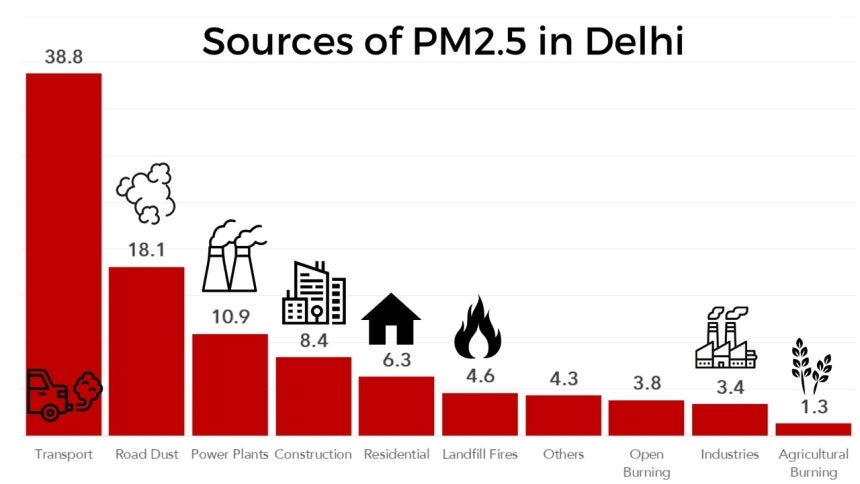
Air pollution continues to pose a significant public health challenge in India. Studies cited by the World Health Organization (WHO) indicate that air pollution reduces the country’s average life expectancy by approximately 5.3 years, with the impact escalating to as much as 11.9 years in Delhi.
Araon believes that this project holds the potential to serve as a pioneering model for environmental cooperation between Korea and India. Simultaneously, it can empower Korean companies to bolster their Environmental, Social, and Governance (ESG) activities in international markets.
stlee0329


