
Affluent Investors Target Semiconductor and AI Stocks, Holding Bonds and Cash for Volatility Protection
Geopolitical events in recent weeks have highlighted the potential for rapid market fluctuations.
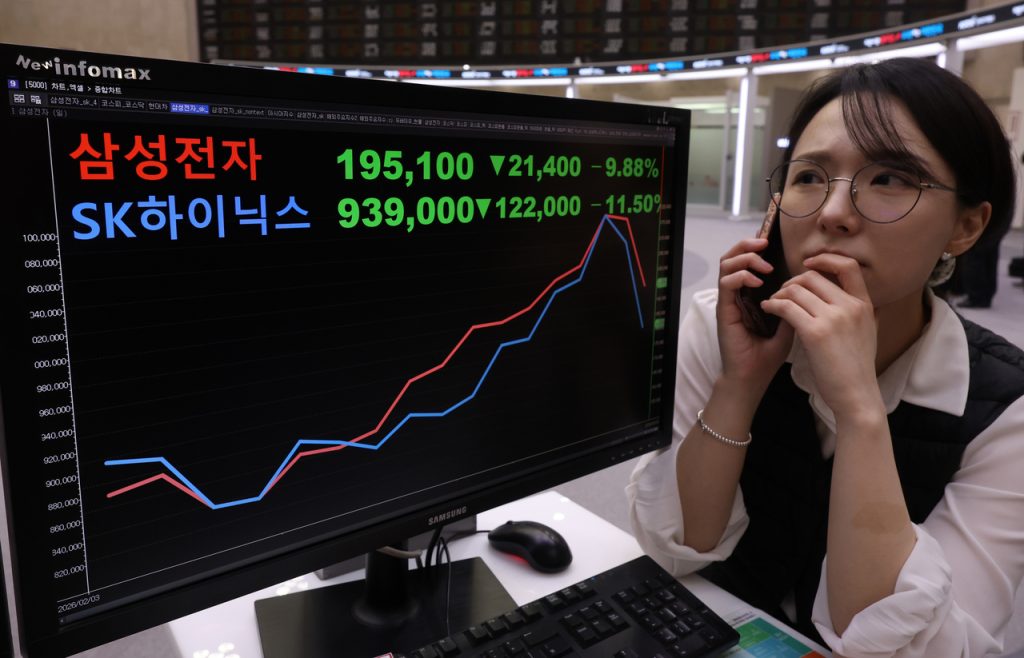
Escalating tensions in the Middle East caused a spike in oil prices and a ripple effect across global equity markets. The South Korean Kospi experienced a significant dip, impacting investor confidence. While the market has partially recovered, it hasn’t fully returned to previous levels.
Market volatility often provides insights into the investment strategies of high-net-worth individuals.
Instead of panic selling, many wealthy investors are actively seeking opportunities during market downturns.
Private bankers working with affluent clients report a shift in sentiment, focusing on identifying strategic entry points rather than succumbing to fear. Many investors are maintaining their current positions and selectively adding to their stock holdings.
The Recurring Question: Is Samsung Electronics a Buy?
A key development has been the increased willingness of investors to embrace risk assets.
Discussions have evolved from concerns about interest rates and economic growth to questions such as: Which stocks are ideal for accumulation during market corrections? Is now the right time to invest in Samsung Electronics?
The semiconductor industry is at the center of this renewed interest.
Optimism surrounding a chip cycle recovery, spearheaded by Samsung Electronics and SK hynix, is growing as global investment in artificial intelligence infrastructure surges. Major technology firms are expanding data centers, leading to increased demand for high-performance memory and improved earnings forecasts for Korean chip manufacturers.
Beyond semiconductors, investors are closely monitoring sectors like automotive, defense, and shipbuilding.
Hyundai Motor’s advancements in AI-driven robotics are generating renewed interest in the broader mobility sector. Defense and shipbuilding companies are benefiting from rising global orders and government support for key strategic industries. Financial stocks are also attracting attention amid expectations of enhanced shareholder returns and corporate governance reforms.
The Importance of Diversification
While showing renewed interest in equities, wealthy investors are not discarding caution.
They emphasize maintaining a balanced portfolio structure.
Equities typically represent 40-60% of portfolios, frequently anchored by major semiconductor companies. Diversification is achieved through exposure to sectors such as finance, defense, robotics, and aerospace.
Bonds, usually comprising 20-30%, are increasingly regarded as strategic tools for managing interest rate volatility rather than solely as safe havens.
Gold and other alternative assets, often representing 5-10%, serve as an inflation hedge, while cash holdings of 15-20% are maintained as dry powder for capitalizing on opportunities during market corrections.
Lessons for Individual Investors
The primary distinction between high-net-worth investors and retail traders often lies in portfolio structure rather than stock selection.
Wealthy investors can increase their equity exposure while maintaining downside protection through bonds, alternative investments, and cash reserves.
In contrast, retail investors often heavily concentrate on a limited number of themes or stocks during market rallies.
Financial advisors recommend three fundamental principles for individual investors: establish a target return and acceptable loss level, diversify across asset classes, and regularly rebalance the portfolio.
Ultimately, successful investing depends less on predicting market direction than on creating a portfolio resilient enough to weather volatility.
Discipline, rather than emotion, is the key determinant of long-term outcomes when markets experience turbulence.
Reporting for this article was based on discussions with Herald Business reporter Hong Tae-wha and Jeon Hyo-jin, research chief at Hanwha Investment & Securities. Edited by Lee Ji-yoon, business desk editor at The Korea Herald. — Ed.
The original Korean version of this story is available at:
![“삼성전자, 더 살까요?” 중동 사태에도 부자는 기회 엿본다 [큰손 따라잡기]](https://wimg.heraldcorp.com/news/cms/2026/03/09/rcv.YNA.20260303.PYH2026030301160001300_T1.jpg)
jylee


