
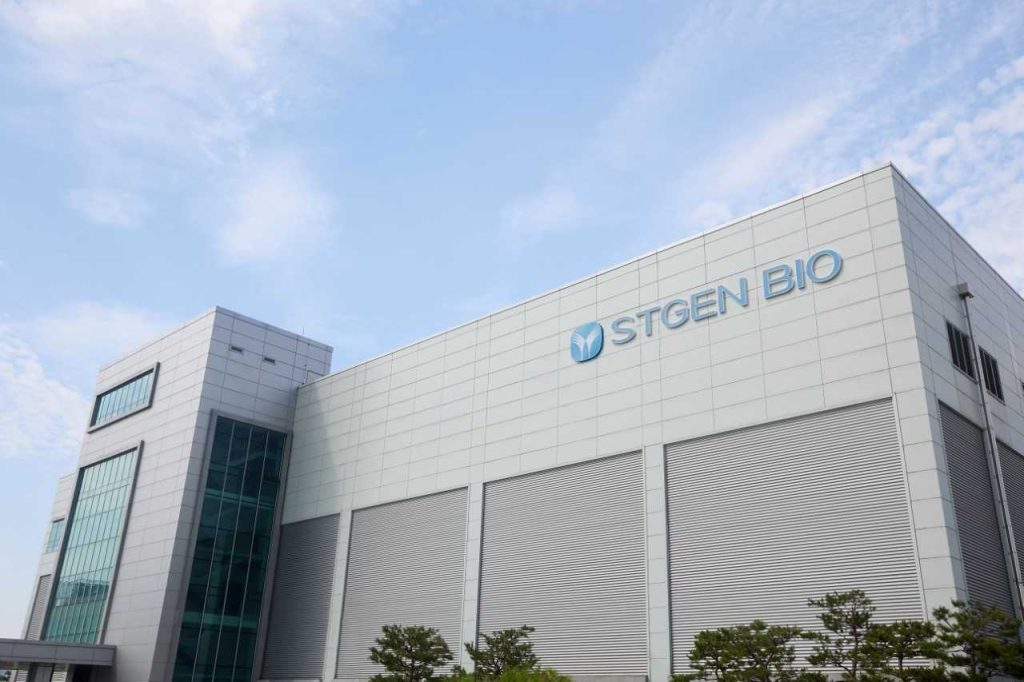
STGEN Bio, a leading South Korean biopharmaceutical CDMO (Contract Development and Manufacturing Organization), announced Friday a significant investment of approximately 110 billion won ($82 million) to expand its biomanufacturing capabilities. This strategic move aims to solidify its position in the global biologics market, driven by increasing demand for complex therapies.
The investment will fuel the expansion of both drug substance (DS) and drug product (DP) production facilities, coupled with essential infrastructure upgrades. Construction is slated to commence in the first quarter of 2026, with an anticipated completion date in the first quarter of 2028.
This expansion will boost STGEN Bio’s total annual manufacturing capacity from 9,000 liters to 14,000 liters. The project includes the installation of two new bioreactors, a state-of-the-art harvesting system, and an advanced isolator-based DP filling line, all designed to facilitate flexible multi-product manufacturing.
STGEN Bio stated that these enhancements will enable the company to better serve the evolving needs of global pharmaceutical partners, supporting projects spanning from early-stage clinical development to large-scale commercial production.
Upon completion, STGEN Bio anticipates a roughly 44 percent increase in its DS production capacity and a substantial 170 percent increase in DP capacity, significantly enhancing its ability to supply high-value biologic drugs.
An STGEN Bio representative emphasized that this investment underscores the company’s commitment to strengthening its competitive edge in biologics manufacturing and broadening its international client base.
“Leveraging our proven global regulatory track record and deep commercial manufacturing expertise, we are dedicated to expanding our customer and revenue portfolio across international markets,” the official stated.
STGEN Bio holds regulatory approvals from ten major global regulatory bodies, including the US Food and Drug Administration (FDA) and the European Medicines Agency (EMA). The company also serves as a key global manufacturing hub for the biosimilar Imuldosa, further reinforcing its crucial role in the international biologics supply chain.
stlee0329


