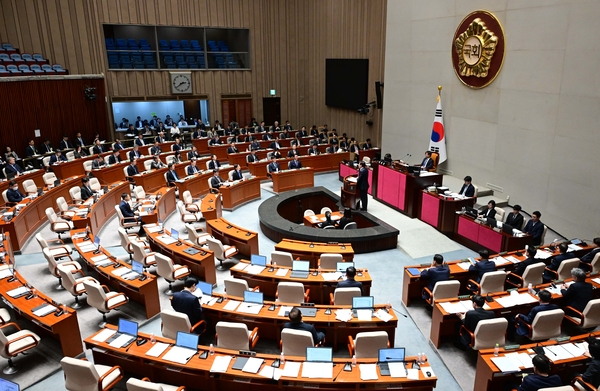
South Korea’s National Assembly has passed a special bill to facilitate a significant $350 billion investment by Seoul in the United States. This investment is part of a bilateral strategic investment framework agreed upon with Washington last year, aiming to bolster economic ties and technological collaboration.
The bill secured approval with a decisive vote of 226 in favor, 8 against, and 8 abstentions, reflecting broad support from the 242 lawmakers present out of a total of 296.
The core of the legislation revolves around expanding Korean investment within the U.S. across vital sectors. These include manufacturing, energy, and, crucially, advanced technologies. This initiative aims to foster innovation and create jobs in both countries.
The approved bill outlines the government’s commitment to an initial capital injection of 2 trillion won ($1.35 billion). This funding will establish a state-run entity, tentatively named the Korea-US Strategic Investment Corp., which will manage a dedicated investment fund specifically for U.S.-based projects.
The primary source of funding for this investment initiative will be returns generated from managing South Korea’s foreign exchange reserves. To ensure adequate resources, the government retains the option to issue special Korea-US strategic investment bonds or seek funding through loans from established financial institutions.
The entity responsible for managing the fund will be the same one currently operating the Foreign Exchange Stabilization Fund. This ensures consistency and leverages existing expertise in foreign exchange management.
Recognizing the importance of responsible investment, the legislation includes crucial safeguards to mitigate potential risks. A project management committee, operating under the auspices of the Ministry of Trade, Industry and Energy, will conduct thorough reviews of the commercial viability of prospective investments. A separate operating committee, overseen by the Ministry of Economy and Finance, will then make the final investment decisions.
The bill also streamlines the legislative process by replacing the previous requirement for prior parliamentary approval with a prior reporting system. This change is intended to expedite investment decisions and improve efficiency.
This strategic move is also expected to alleviate potential tariff pressures from the U.S., particularly in light of previous concerns voiced regarding delays in implementing the investment framework.
In related news, Prime Minister Kim Min-seok embarked on a multicity visit to the United States on Thursday. His itinerary includes stops in Washington and New York, followed by a visit to Geneva, concluding on March 19.
During his time in Washington, Prime Minister Kim is scheduled to meet with high-ranking U.S. officials, potentially including U.S. Vice President JD Vance. Discussions are expected to focus on bilateral tariff negotiations and broader regional matters, including the ongoing situation with North Korea.
A meeting with Vice President Vance would represent the first high-level interaction between the two nations since January 23.
The Prime Minister’s trip will also encompass meetings with various international organizations, as Seoul seeks support for its proposal to host a United Nations AI hub. He will also hold consultations with the UN secretary-general and the heads of specialized agencies.
flylikekite