South Korea’s leading battery manufacturers, LG Energy Solution and Samsung SDI, emphasized their intellectual property strength at InterBattery 2026, indicating a growing competition to secure advanced battery technologies for burgeoning sectors like energy storage systems (ESS) and robotics.
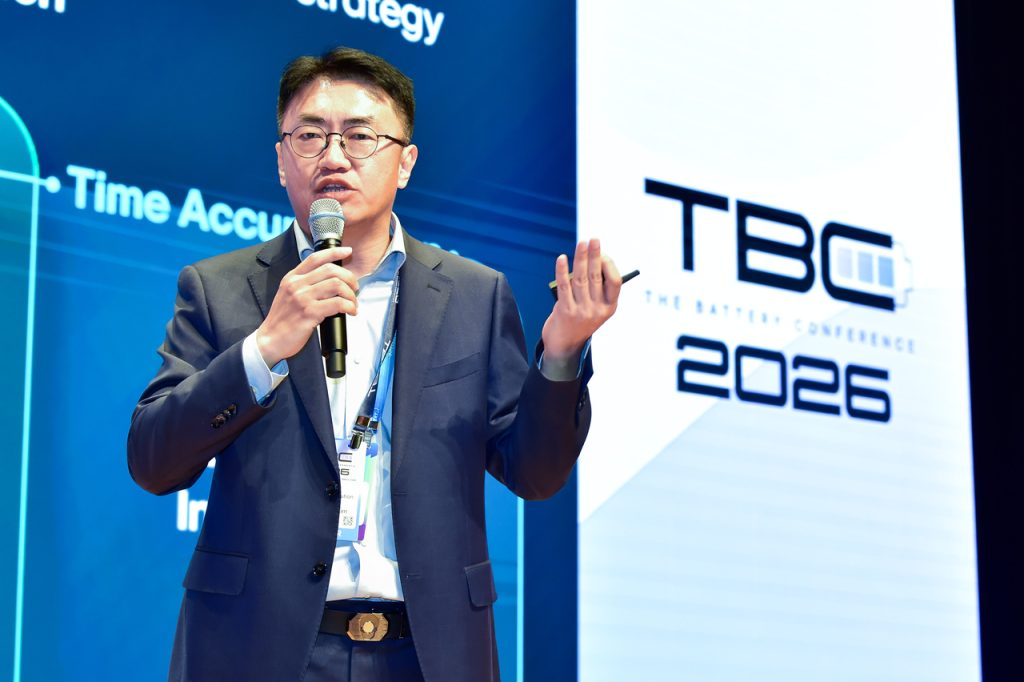
At The Battery Conference, a concurrent event of InterBattery 2026 held at Coex in Seoul on Wednesday, Joo Yong-lak, Head of Samsung SDI’s R&D Center, cautioned against patent infringements involving their prismatic battery cell technology. This statement was widely considered to be a direct warning to competitors.
Joo explained that prismatic cell technology presents significant barriers to entry due to the extensive expertise required in materials, components, design, manufacturing, and production processes, making it difficult for newcomers to quickly duplicate.
Referencing US patent data, Joo noted that Samsung SDI possesses approximately 1,200 registered patents for prismatic batteries, substantially more than their Chinese and Japanese counterparts, who each hold about 600. He added that domestic rivals, including LG Energy Solution and SK On, possess approximately 30 to 40 patents in this category.
Samsung SDI initially filed its first US patent for prismatic batteries in 1997 and has since broadened the application of this technology to include electric vehicles and energy storage systems.
Concerns surrounding technology leaks have also escalated. Last year, KMTECH, a battery equipment supplier based in Gyeonggi Province, allegedly stole Samsung SDI’s prismatic can and cap assembly designs and shared them with China’s AESC, according to sources within the industry.
During the exhibition, Samsung SDI also unveiled “PrismStack,” a new brand name for its prismatic battery product line. The move is largely interpreted as a strategic effort to reinforce their dominance in the prismatic battery segment.
Prismatic batteries feature a metal-cased structure housing layered electrodes, optimizing space utilization and enhancing energy density.
The company also showcased “SolidStack,” their prismatic all-solid-state battery platform, targeting mass production by next year.
Joo mentioned that Samsung SDI holds around 1,100 patents related to all-solid-state battery technology, providing them with a notable advantage over competitors.
LG Energy Solution also highlighted the importance of safeguarding intellectual property.
Kim Je-young, Chief Technology Officer at LG Energy Solution, stated that while some companies invest decades in technology development, others attempt to replicate these innovations in a few years by copying designs or poaching talent.
“New entrants should respect the investment and utilize technology legitimately,” Kim asserted.
Although he refrained from naming specific companies, BMS Innovations, LG Energy Solution’s patent management arm, recently filed a lawsuit at the European Unified Patent Court in The Hague, accusing Chinese electric vehicle manufacturer BYD of infringing on its battery management technology.
Kim also emphasized Tulip Innovation, a joint patent licensing company established by LG Energy Solution and Panasonic, which offers legal access to their battery technologies through royalty payments.
He stated that LG Energy Solution maintains strong patent leadership across the entire battery value chain, encompassing materials, cells, battery packs, and battery management systems.
According to the company, LG holds three times as many patents as competitors in 46-series cylindrical batteries, more than double the number of patents in high-voltage mid-nickel gas-free electrolytes, and four times as many patents in dry electrode technology.
hyejin2