
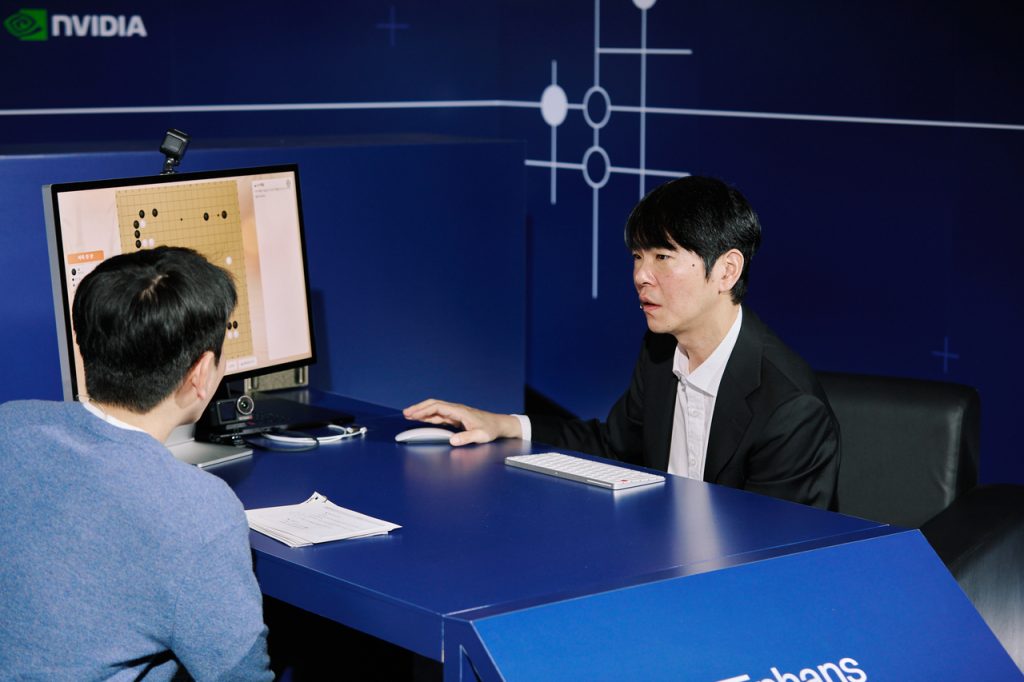
Ten years after his landmark match against Google DeepMind’s AlphaGo, which significantly shifted global understanding of artificial intelligence, Go legend Lee Se-dol revisited the same location.
This time, the event wasn’t a competition between a human and an AI but a demonstration of potential collaboration.
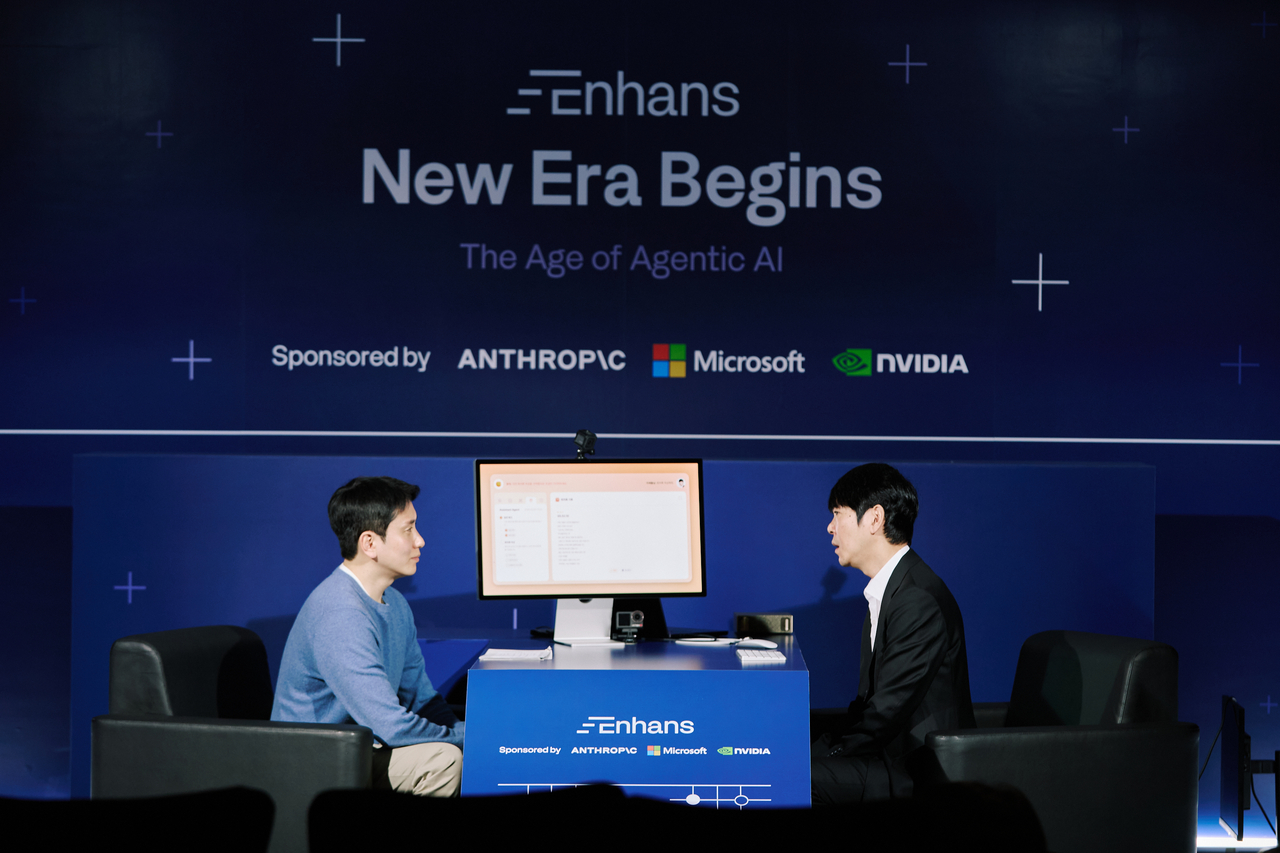
The event, hosted at the Four Seasons Hotel Seoul, was organized by Korean AI startup Enhans. They showcased a system designed to coordinate multiple AI “agents” to execute intricate tasks independently.
During a live demonstration, Lee Se-dol used voice commands to interact with Enhans’ AI operating system. This system then researched, designed, and developed a functional Go application in real time. The AI system performed web searches, created interface designs, and wrote code before deploying the program for Lee to test live on stage.
Following a brief play session, Lee provided a technical evaluation of the application’s strength.
“It doesn’t seem to be the absolute strongest Go AI currently available,” he noted. “However, it’s already at a level where a human would find it difficult to win. In my view, it appears to have surpassed the AlphaGo version I competed against in 2016.”
The entire program was built in approximately 20 minutes through voice interaction alone, without Lee writing a single line of code.
From Competition to Collaboration
The demonstration spotlighted agentic AI, a class of systems designed to deconstruct a user’s commands into multiple steps and execute them across various software tools. These systems go beyond generating text or images, enabling tasks such as web research, application design, and code deployment.
The AI system began by transcribing a discussion between Lee and Enhans CEO Lee Seung-hyun about the future of Go. Lee suggested that AI could enhance the game’s accessibility as an educational resource and proposed features like beginner-friendly board sizes.
Using this dialogue as input, the system’s agents then explored online resources, gathered development tools, and constructed a Go application incorporating an open-source engine. The finished program included beginner tutorials and variable board sizes.
Observing the process, Lee underscored that the implications extend far beyond a simple board game.
“If the same process is applicable to other areas, the possibilities are immense,” he stated.
Lee also drew a contrast between this experience and previous attempts to create software using existing AI coding tools.
“I’ve personally tried ‘vibe coding,’ but it wasn’t very effective because you need some technical expertise to make progress,” he explained. “Today, I essentially did nothing technical, yet a functioning program emerged. If this becomes accessible to anyone, it could bring about transformative change.”
Lee’s presence carried symbolic significance. His five-game series against AlphaGo in March 2016 became a pivotal moment in the evolution of AI. While AlphaGo won the series 4-1, Lee’s single victory in the fourth game remains celebrated in the Go community.
The match ignited a global conversation on whether machines could exceed human intelligence in complex cognitive areas.
A decade later, Lee noted that the pace of technological progress has exceeded his initial expectations.
“Even three or four years ago, something like this would have been inconceivable,” he said during the event. “The rate of change since then has been remarkable.”
However, Lee emphasized the continued significance of human players despite AI’s increasing capabilities.
“Throughout over 5,000 years of Go history, every move has reflected a player’s personality and emotions,” he explained. “AI lacks that. AI is AI. The human game will continue.”
mjh


