
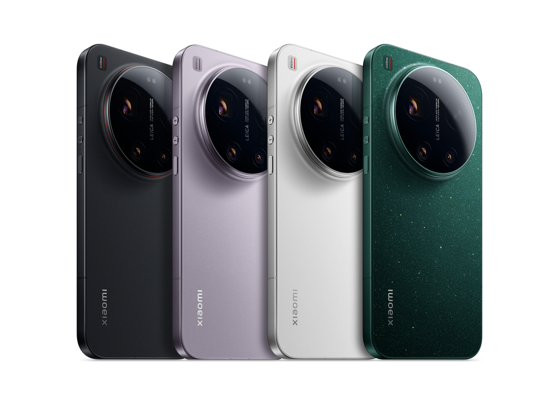
Chinese smartphone manufacturer Xiaomi is gearing up to introduce its highly anticipated, camera-focused flagship device, the Xiaomi 17 Ultra, to the global market. This launch positions the Xiaomi 17 Ultra as a direct competitor to Samsung’s upcoming Galaxy S26 series, with its unveiling scheduled just days after the expected Samsung event.
According to industry insiders on Tuesday, Xiaomi plans to reveal the Xiaomi 17 series at MWC26 in Barcelona on Saturday. This closely follows Samsung Electronics’ anticipated launch of the Galaxy S26 lineup in San Francisco on Wednesday, setting the stage for a week of major smartphone announcements.
The Xiaomi 17 Ultra represents a deepening of Xiaomi’s collaboration with renowned German camera brand Leica. Expanding beyond collaborative research and development, Leica has been involved from the very initial stages of product planning, under what Xiaomi describes as a “strategic co-creation model.” This makes the Xiaomi 17 Ultra the first smartphone developed under this new, more integrated framework.
The device boasts a powerful 200-megapixel telephoto camera, complemented by a rear triple-camera system featuring ultrawide, wide, and telephoto lenses. It combines a high-performance ultrawide lens, a large 1-inch image sensor main camera, and the advanced high-resolution telephoto unit.
Its predecessor, the Xiaomi 15 Ultra, also featured a 200-megapixel telephoto lens. However, this time around, Xiaomi has redesigned the internal structure, enabling continuous optical zoom through a lens that physically shifts within the module to adjust magnification. This Leica-branded telephoto camera facilitates seamless zoom across a focal range of 75mm to 100mm.
High-resolution imaging, particularly in the 200-megapixel range, has long been a hallmark of Samsung’s Galaxy Ultra models, particularly in terms of long-distance zoom capabilities. Xiaomi’s latest offering indicates a significant push into the premium smartphone market, signaling the company’s determination to compete more directly in this high-end segment.
Powering the Xiaomi 17 Ultra is Qualcomm’s cutting-edge Snapdragon 8 Elite 5th generation processor, built on a 3-nanometer process. This processor facilitates high-resolution photography, sophisticated video processing, and advanced AI-driven image computation.
The device features a vibrant 6.9-inch display with a peak brightness of up to 3,500 nits. Xiaomi claims its Xiaomi Shield Glass 3.0 provides drop resistance that is up to 20 times stronger than conventional strengthened glass. Despite housing a large 6,800 milliampere-hour battery, the device maintains a slim profile of just 8.29 millimeters in thickness, making it the slimmest Ultra model in Xiaomi’s product range.
The standard Xiaomi 17, released in China in September of the previous year, is priced at 6,999 yuan (approximately $1,013), which is 500 yuan higher than its predecessor. This price increase reflects rising component costs, including those of semiconductors and camera modules. However, in Europe, the device is projected to launch at 1,499 euros (around $1,766), remaining unchanged despite industry-wide cost pressures, according to sources.
“We are unable to comment on specific pricing ahead of the launch, but the final price will reflect market conditions in each country, including tariffs, exchange rates and logistics costs,” stated a Xiaomi Korea official.
Following its global debut, Xiaomi is planning a launch in Korea. While its market share in Korea remains relatively small — the Korean market is often considered challenging for foreign smartphone brands — the company has experienced strong growth and sustained momentum in other international markets.
According to market research firm Omdia, Samsung led the Southeast Asian market in the previous year, with an 18 percent market share across Indonesia, Vietnam, Thailand, the Philippines, and Malaysia. Xiaomi closely followed with a 17 percent market share.
yeeun


