CEO Cites Fair Valuation, Rigorous Review, Semiconductor Ties Behind Rare Kosdaq Debut
While high-profile Korean startups like Toss and Yanolja aim for Wall Street valuations, following Coupang’s US listing, British chip-equipment maker TeraView is strategically choosing Seoul.
TeraView, a UK-based company specializing in terahertz technology for ultra-precise semiconductor inspection, opted to list on the Kosdaq rather than in London or New York. Key clients include Samsung Electronics, Intel, and Nvidia, for whom they supply vital components used in cutting-edge chip manufacturing.
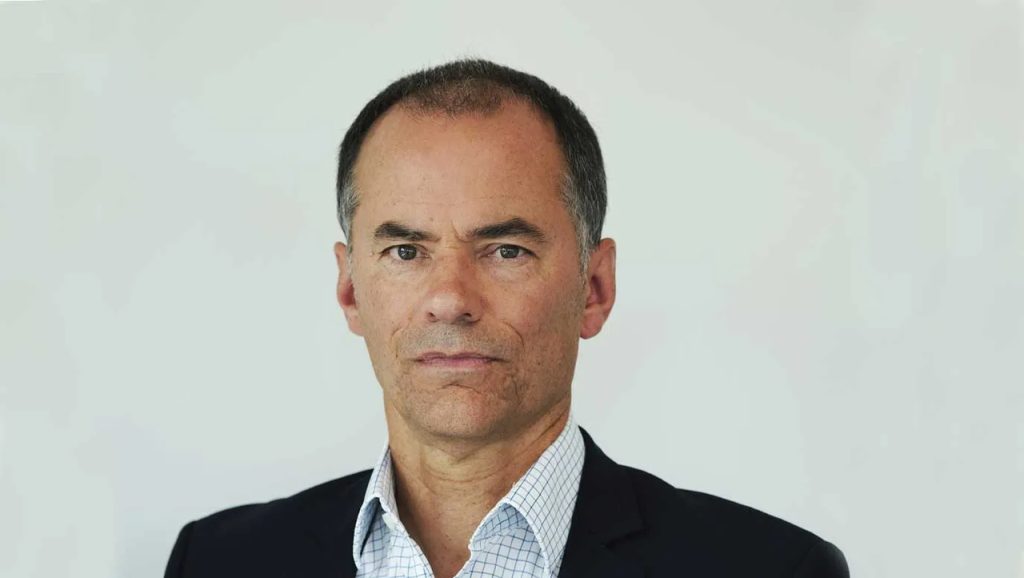
“TeraView chose to list based on a clear commercial strategy that demanded a substantial presence in Korea and Greater Asia for the company to scale its growing business,” TeraView CEO Don Arnone stated in an email to The Korea Herald.
Generating approximately 60 percent of its revenue from semiconductor companies, Korea represents a crucial market for the British technology firm, hosting many of its significant customers.
According to Arnone, the Kosdaq listing serves to “demonstrate direct and solid support to Korean (and wider Asian) customers.”
“It was also prompted by the desire to move a component of TeraView’s manufacturing to Korea, as well as R&D, to develop new markets,” he explained, mentioning the company’s plans to establish an Asian hub in Korea and further expand into Singapore, Malaysia, and Taiwan.
TeraView’s Kosdaq debut was facilitated by the Korea Exchange’s special listing track for technology companies, allowing firms to go public based on their technological potential instead of strict financial metrics. This program was launched in 2005 to establish Kosdaq as Korea’s equivalent to Nasdaq.
Arnone emphasized that the special track allowed the company to obtain a “fair value,” which he believes would have been unattainable in the UK, where deep technologies are “less understood and therefore less accurately valued.”
However, he acknowledged that the listing process itself was rigorous.
“Entry was more demanding than in other foreign markets, a fact confirmed by TeraView personnel who have experience in the US and UK markets,” he said.
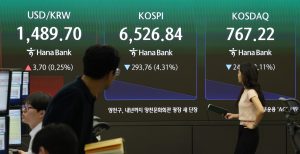
Although planned years in advance, TeraView benefited significantly from the recent stock market rally, with its valuation reaching 568 billion won ($393 million) upon its debut. After peaking at 605 billion won, it settled to 311 billion won as of Friday.
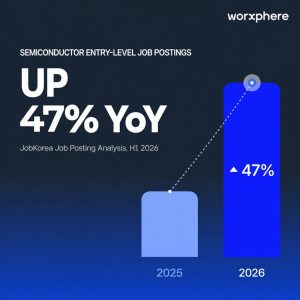
“TeraView has clearly benefited from the Kosdaq rally, particularly as it has centered on companies active in the AI and semiconductor chip (high bandwidth memory) sectors, where TeraView supplies vital inspection equipment for chip development and production,” he said.
He also noted that tech-savvy Korean investors played a vital role in more effectively determining the price.
“This helps secure not only the appropriate valuation for the company, but also means that tech-savvy Korean investors are better positioned to understand the technology and markets for a deep tech company such as TeraView as it grows on the Kosdaq,” he added.
TeraView’s largest shareholder is Dage Precision Industries, the UK subsidiary of Nordson, a US company listed on the Nasdaq, holding a 13.35 percent stake. Management, including the CEO, and UK institutional investors also hold stakes, while Samsung Securities, the lead underwriter, owns 3.46 percent.
From Korea Discount to Korea Draw?
Currently, 21 foreign corporates, including TeraView, are listed on the Korean stock market.
Two are listed on the Kospi: Singapore-based biosimilar and antibody drug developer Prestige BioPharma, and Cayman Islands-registered auto sales company LVMC. The remaining 19 are on the Kosdaq.
While the Korea Exchange has been actively promoting foreign company listings, appetite has waned in recent years, partly due to the “Korea discount.”
In 2016, six foreign companies went public on the Korean stock market. Listings continued steadily through 2021, but none emerged for several years until TeraView’s debut last year.
With rising expectations that listing activity could increase amid the market rally, Korea Exchange CEO Jeong Eun-bo emphasized the importance of leveraging Korea’s semiconductor supply chain.
“For overseas companies considering a local listing, industrial synergy is the most important factor,” Jeong said at a press conference on Feb. 5. “Supply chain companies, particularly in the semiconductor sector, are increasingly looking to enter the Korean market.”
When asked if TeraView would recommend listing in Korea to other foreign firms, Arnone replied, “We would.”
“Our guidance would be that if there are strong commercial and technology drivers to list in Korea and access the Korean and Greater Asian market, Kosdaq would be an excellent opportunity,” he concluded.
silverstar