
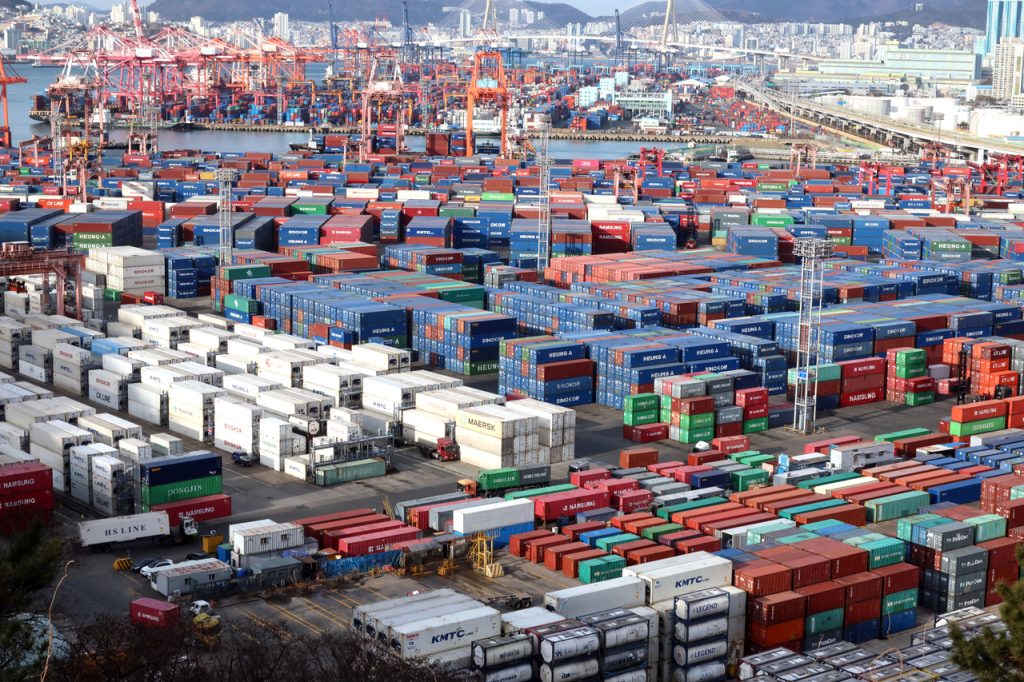
The US Supreme Court’s decision to strike down President Donald Trump’s emergency “reciprocal” tariffs has introduced new uncertainty into South Korea’s trade outlook, according to experts on Saturday. While major Korean companies are unlikely to drastically alter their US investment strategies immediately, the ruling’s implications are being closely watched.
The US court’s ruling on Friday challenged Trump’s use of the 1977 International Emergency Economic Powers Act (IEEPA) to justify reciprocal tariffs and other duties. This has raised questions about the future of trade agreements secured by the Trump administration that relied on these duties as a key negotiating tactic.
Responding swiftly, Trump signed an order the same day imposing a new 10 percent “global tariff” on all countries under Section 122 of the 1974 Trade Act.
Yoon Sang-ha, head of the international macroeconomics team at the Korea Institute for International Economic Policy, predicts short-term disruptions are inevitable following these developments.
“Over the past year, companies have made decisions based on the reciprocal tariff structure and the South Korea-US agreement,” Yoon stated. “If that legal foundation changes, businesses will face confusion regarding applicable standards.”
Yoon explained that even if the US administration reimposes tariffs through alternative mechanisms, the affected product range and applicable rates remain unclear, potentially delaying investment and export decisions.
“Increased uncertainty typically leads companies to postpone decision-making, which can negatively impact investment, exports, and overall economic activity,” Yoon added.
Chung Ji-young, an emeritus professor of international trade at Jeonbuk National University, echoed this sentiment.
“The greatest challenge is unpredictability,” Chung said, emphasizing that policy volatility itself has become a significant risk factor. However, he expressed confidence in the ability of Korean firms to adapt flexibly to these changing conditions.
Experts from leading South Korean trade organizations agreed, highlighting that tariff policy remains an external variable outside of corporate control.
Kim Hyun-soo, head of the economic policy team at the Korea Chamber of Commerce and Industry, said companies will need to make internal adjustments once Washington’s policy direction becomes clearer.
“Tariffs are an external factor. Companies have little choice but to adjust their management strategies and costs based on the decisions made,” Kim explained.
He urged closer communication between Seoul and Washington to minimize uncertainty and enable businesses to make timely decisions.
Ryu Sung-won, head of the industrial innovation team at the Federation of Korean Industries, dismissed the possibility of a significant shift in Korean companies’ US operations.
“Even though the Supreme Court ruled against the reciprocal tariffs, most companies had already anticipated that the US would seek to maintain tariffs through alternative legal channels,” Ryu said. “Therefore, the ruling itself is unlikely to cause a sudden or substantial change in the business environment for Korean firms.”
Ryu suggested that Seoul could utilize Korea’s industrial strengths in future trade negotiations.
“Negotiations are about leverage and the various assets each side possesses. Korea holds several advantages of interest to the US, such as nuclear power and shipbuilding. These areas could potentially be leveraged in negotiations.”
The Trump administration had imposed reciprocal tariffs of 15 percent on South Korean products, reduced from 25 percent following a bilateral agreement. Under this deal, Seoul committed to investing $350 billion in the United States, among other pledges, in exchange for the tariff reduction.


