
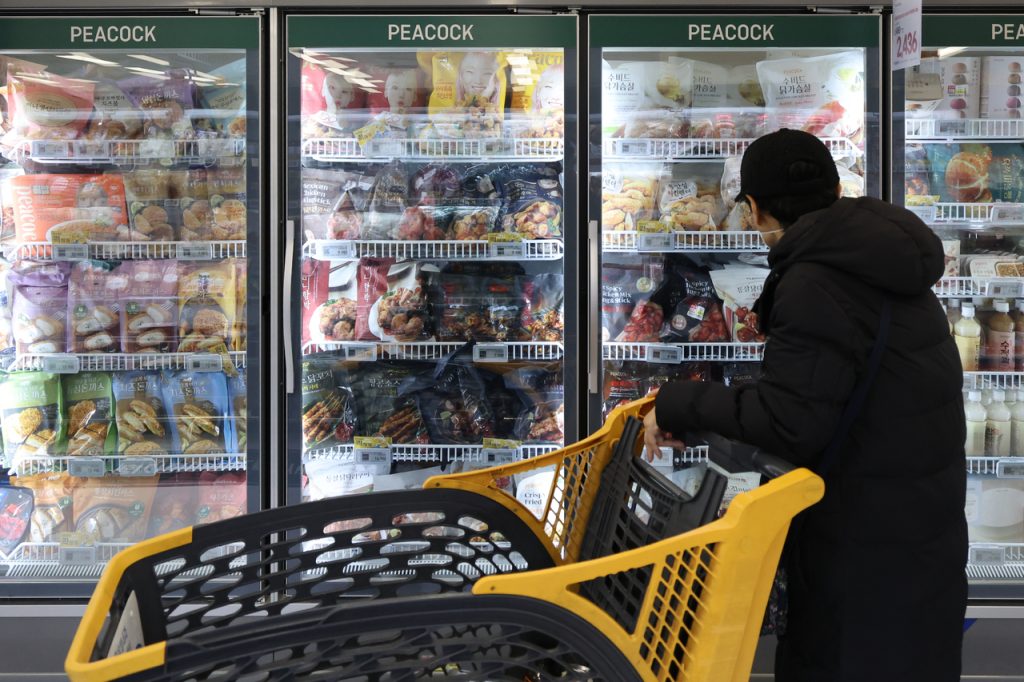
South Korea is considering significant revisions to its retail regulations, potentially allowing major supermarket chains to offer overnight delivery services. This move aims to level the playing field between traditional brick-and-mortar stores and the rapidly growing online retail sector.
At a recent policy meeting held in Seoul, government officials and lawmakers from the Democratic Party of Korea reached an agreement to amend the Distribution Industry Development Act. The proposed changes would lift the current restrictions that prevent large supermarket chains from providing early-morning deliveries, specifically those occurring between midnight and 10 a.m.
The Distribution Industry Development Act, originally enacted in 2012, was intended to safeguard traditional markets and local neighborhood stores by limiting the operational scope of large supermarket chains. However, the law is now perceived by some as inadvertently favoring online platforms, which have since gained significant market share and influence in the retail landscape.
“The rapid evolution of the retail environment, driven by the expansion of online commerce, necessitates an update to the existing regulatory framework, which is primarily focused on offline businesses,” stated Democratic Party senior spokesperson Park Soo-hyun on Sunday. He further explained that officials have agreed to pursue revisions to the law to address this imbalance.
“Our shared objective is to rectify the regulatory disparities between online and offline retail players, fostering a more equitable and competitive market environment,” Park added.
Large retailers have long criticized the existing regulations as outdated and restrictive. The debate surrounding these regulations has gained renewed urgency following a recent data breach at e-commerce giant Coupang, which has sparked increased scrutiny of the company’s rapid growth and the regulatory loopholes that may be contributing to its success.
The proposed deregulation would enable supermarket chains to leverage their extensive nationwide store networks to offer overnight delivery services. This would allow them to respond more effectively to regional consumer demand by utilizing their existing infrastructure and logistics capabilities.
Industry estimates indicate that the three largest supermarket operators in South Korea—E-mart, Lotte Mart, and Homeplus—collectively operate approximately 670 stores across the country. Of these, roughly 460 are already functioning as logistics hubs, which is nearly double the number of registered logistics centers operated by Coupang (246).
“Allowing supermarkets to participate in overnight delivery services would expand consumer choice and ultimately create a fairer competitive environment between them and online retailers,” commented an industry official.
However, lawmakers face the challenge of striking a delicate balance between modernizing retail regulations and preserving protections for small businesses and workers in a rapidly transforming sector. Government officials have pledged to implement measures to support traditional markets, as well as safeguards to protect the health and safety of delivery workers.
Labor groups have expressed concerns that expanding overnight operations could exacerbate already challenging working conditions in the retail and delivery sectors. They argue that understaffed workplaces may face increased workloads, and service unions warn that the move could reinforce the harsh labor practices often associated with online delivery services.
Small business groups have also voiced their opposition, arguing that the proposal contradicts existing policies designed to protect local neighborhood commercial districts.
“By lifting restrictions on large supermarket chains, the government would expose small business owners, who are already struggling due to the economic slowdown, to even fiercer competition with major corporations,” stated an official from a Seoul-based small-business federation.
The official further argued that the Coupang controversy highlights the authorities’ failure to effectively regulate the monopolistic power of online platforms, rather than the restrictions imposed on large supermarkets.


