“It feels like walking on thin ice,” says Culture Minister Chae Hwi-young, despite positive signals from Beijing regarding the potential easing of the Hallyu Ban.
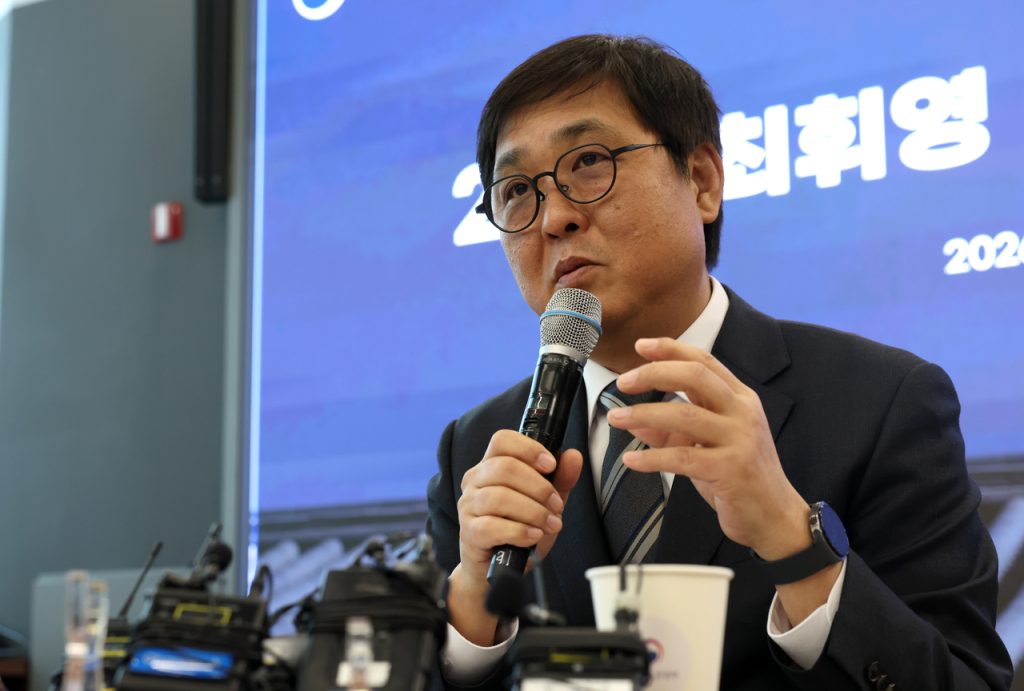
South Korean Culture Minister Chae Hwi-young expressed caution Thursday regarding the potential lifting of China’s unofficial “Hallyu Ban,” cautioning against premature optimism within the K-Pop and entertainment sectors despite encouraging signs from Beijing.
Speaking at a press briefing in Seoul, Minister Chae acknowledged industry hopes for a gradual easing of restrictions on Korean cultural content in China but emphasized the limited progress made thus far.
China implemented informal restrictions on Korean cultural imports in 2016 in response to Seoul’s deployment of the US THAAD missile defense system. Hopes for improved relations arose following Chinese President Xi Jinping’s attendance at the APEC summit in Gyeongju last October, and again in January during a visit by President Lee Jae Myung to China.
During a press conference in Shanghai this January, President Lee reported that Xi Jinping commented that “ice three meters thick does not melt in a single day” and that “fruit ripens and falls when the time is right,” suggesting a gradual timeline for a complete thaw. President Lee interpreted Xi’s remarks as “a clear expression of intent” towards improving the situation.
However, Minister Chae adopted a more measured approach.
“President Xi said that ice three meters thick doesn’t melt overnight, but to me, it feels like walking on thin ice,” Chae stated. “I believe this is thin ice that could crack at any moment, and we could fall through if we’re not careful.”
He further stated that the government is dedicated to building trust and mutual understanding, aiming to assure both nations that expanded cultural exchange will be mutually beneficial and not detrimental.
Minister Chae also mentioned a recent meeting with Chinese officials responsible for sports and tourism during the opening ceremony of the Milan-Cortina Winter Olympics in Italy. He noted that both sides expressed support for increased people-to-people exchanges, highlighting that greater interaction between citizens of both countries would naturally lead to increased exposure to Korean culture for Chinese audiences. This is critical for the growth of Korean Wave (Hallyu) and the K-Culture.
Since October 1, 2025, Chae has co-chaired the Presidential Committee on Popular Culture Exchange alongside Park Jin-young, the founder of JYP Entertainment, a major K-Pop agency. The committee’s long-term objectives include hosting a significant global K-pop festival in South Korea by 2027, featuring representation from various agencies and artists across the entire industry. This festival will significantly promote Korean culture and K-Pop.
“Artists’ schedules are already fully booked for this year and next,” Chae explained. “But by the end of 2027, we hope to clear their calendars and hold a festival of that scale.”
He added that once a suitable venue is secured, organizers intend to incorporate broader K-culture promotional elements, aiming to boost South Korea’s soft power.
“It could take the form of a Korea House, a Korea Arena, or a Korea Stadium,” he said. “These ideas are currently being discussed within the committee.” He hopes these future projects will enhance the popularity of K-Pop and K-Culture abroad.
jaaykim