TCL, Hisense Moving into Premium AI Models as Global Demand Slows
Chinese TV makers are shifting their focus from budget-friendly options to high-end, AI-powered models, directly challenging Korean giants Samsung Electronics and LG Electronics in a market experiencing slowing global demand. Discover the latest trends in the TV industry.
According to market tracker Counterpoint Research, China’s TCL and Hisense captured 12 percent and 11 percent of global TV shipments, respectively, between January and November last year. This represents a one percentage point gain for each company compared to the previous year. TCL’s shipment volume saw a significant increase of 9 percent over the same period.
Samsung Electronics and LG Electronics, meanwhile, maintained market shares of 16 percent and 9 percent. While holding their ground, their lack of growth is noticeable in a global TV market struggling to rebound.
TCL’s growth has been particularly impressive. In November, its market share reached 16 percent, closing the gap with Samsung to just one percentage point. Shipments surged 22 percent year-on-year, driven by aggressive expansion in price-sensitive regions like Eastern Europe, the Middle East, and Africa, where affordability is key.
Research firm Omdia’s data shows that in the third quarter of 2025, the combined market share of TCL, Hisense, and Xiaomi reached 31.8 percent, surpassing the 28.5 percent held by Samsung and LG combined.
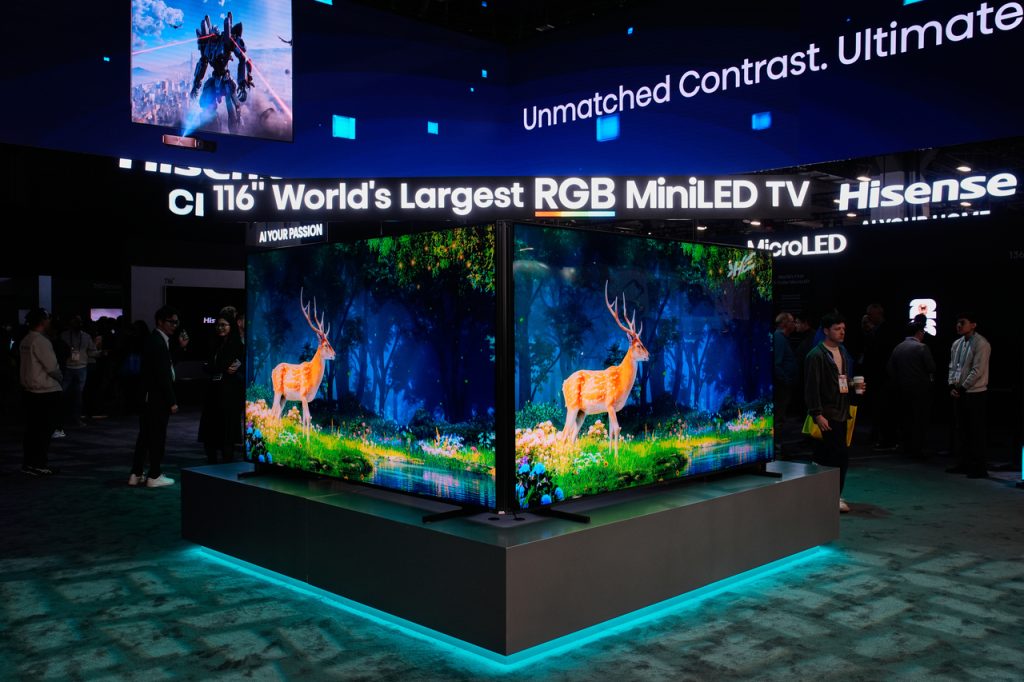
Competition is evolving beyond just price. TCL is repositioning its mini LED TV lineup towards higher-end segments and accelerating the introduction of AI-enabled features, posing a direct challenge to categories traditionally dominated by Korean brands. Explore the features of the latest AI TVs.
This trajectory mirrors the past success of Samsung and LG, who initially gained market share with competitively priced products, gradually improved quality, and eventually established themselves as premium global brands. Chinese players appear to be following a similar path, but at an accelerated pace. Learn about the history of TV technology.
The impact is already visible in earnings. Samsung’s video display and digital appliances divisions recorded a combined operating loss of approximately 200 billion won ($137 million) last year, while LG’s media entertainment solution division reported losses totaling 750.9 billion won. Both companies have responded with price cuts and increased marketing spending, considered necessary but impacting profit margins. See how these strategies are affecting the market.
They are now focusing on a dual strategy: strengthening premium AI-powered models and reinforcing their midrange portfolio. Cost controls and investments in their own TV operating systems are also seen as vital for restoring profitability. Discover the future of TV operating systems.
However, industry experts caution against simple comparisons to past rivalries. The current landscape is more complex, encompassing OLED-versus-mini LED technology, varying levels of AI and Internet of Things ecosystem development, supply chain capabilities, and the unpredictable effects of US-China trade tensions. Understand the complexities of the global TV market.
“Chinese brands are undeniably gaining market share, but the next phase of competition will revolve around ecosystem dominance — encompassing AI, platforms, and content,” said an anonymous industry source. “Whether Samsung and LG can adapt quickly enough will determine what happens next.”
yeeun