
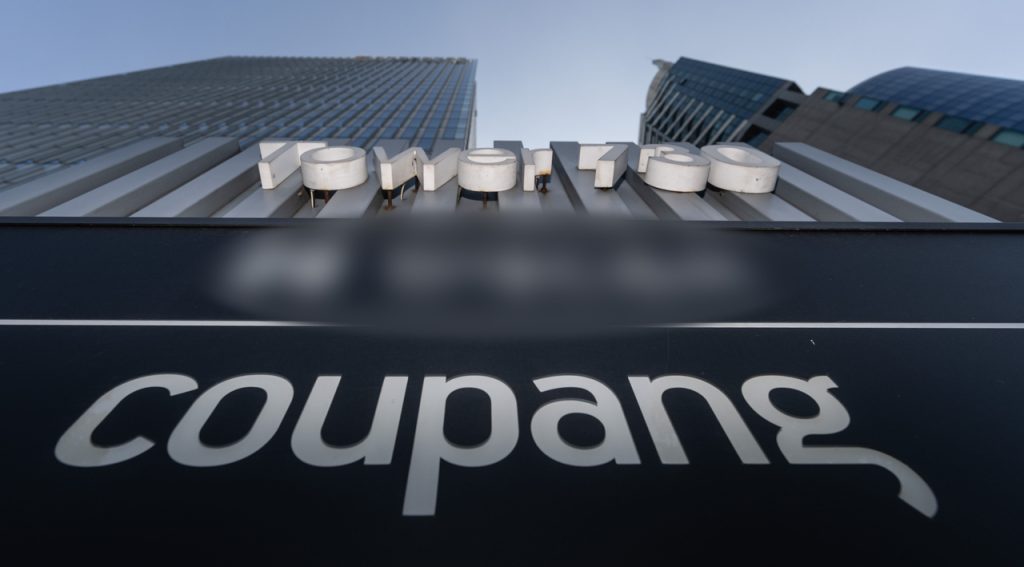
Online retail giant Coupang invested $250,000 in lobbying efforts directed at the White House, the House of Representatives, and the Office of the US Trade Representative during the second quarter of this year. This significant advocacy was conducted through Ballard Partners, a prominent firm recognized for its close ties to then-US President Donald Trump, as revealed in a recent lobbying disclosure report.
Detailed reports filed on the Senate website under the Lobbying Disclosure Act confirm that Ballard Partners, a lobbying firm with strong links to the Trump administration, received these funds for its work on behalf of its client, Coupang. These lobbying activities took place throughout the reporting period from April 1 to June 30.
These strategic lobbying initiatives emerged amidst a backdrop of criticism from a House Judiciary Committee report and a White House official. Both entities recently condemned South Korea’s regulatory investigations into Coupang’s substantial data leak within the Asian nation, labeling them as “discriminatory.” This situation unfolded as Seoul endeavored to ensure that the Coupang controversy would not jeopardize crucial US-South Korea alliance cooperation.
The filed report further delineated that Ballard Partners’ activities encompassed issues pertinent to US export promotion, international economic policy, and investment flows. Furthermore, their efforts aimed to bolster commercial ties between the United States and its key allies, including South Korea, Taiwan, Japan, Britain, and the broader European Union.
Founded by Brian Ballard, an influential and well-connected lobbyist, the Florida-based Ballard Partners is widely recognized for its strong connections within the Trump political sphere. The firm notably employed prominent figures such as former Attorney General Pam Bondi and White House Chief of Staff Susie Wiles, underscoring its significant influence.
On July 1, the House Judiciary Committee released an interim staff report that specifically accused South Korea of engaging in “discriminatory attacks” against Coupang and other American businesses. The report asserted that the South Korean government’s treatment of these companies constitutes a direct violation of the bilateral trade deal established last year.
Subsequently, a White House official vocalized concerns, stating that Coupang was being “singled out” by South Korean President Lee Jae Myung’s administration. Washington expressed considerable apprehension regarding what it characterized as the “discriminatory” targeting of the US-listed e-commerce firm, highlighting the international implications of the ongoing disputes.


