
German Rival Secures Canada’s Major Submarine Project, Yet Hanwha’s Close Bid Signals Korea’s Rising Defense Export Prowess
While Hanwha Ocean did not secure Canada’s largest-ever naval procurement project, its competitive bid against Germany’s Thyssenkrupp Marine Systems (TKMS) powerfully demonstrated the advanced capabilities of South Korea’s submarine industry, positioning it strongly for upcoming global defense tenders.
Canada officially named TKMS as the preferred supplier for its Canadian Patrol Submarine Project, an ambitious initiative to acquire up to 12 advanced diesel-electric submarines for the Royal Canadian Navy, replacing its outdated fleet. This significant decision was a setback for Hanwha Ocean, which, in a consortium with HD Hyundai Heavy Industries, had aggressively pursued the contract, potentially valued at 60 trillion won ($39.3 billion) including long-term maintenance and support.
Despite the disappointing outcome, industry analysts noted that the intensely contested competition was invaluable. It provided Hanwha Ocean with significant global validation, firmly establishing its reputation as a serious and capable contender within the highly competitive international defense market.
The Korean shipbuilder, showcasing its cutting-edge KSS-III-based submarine proposal, reached the final shortlist, competing directly with TKMS – recognized as one of the globe’s most experienced submarine manufacturers and a key supplier to over a third of the NATO alliance. Notably, other well-established European competitors, such as France’s Naval Group, Spain’s Navantia, and Sweden’s Saab, were eliminated in the earlier phases.
Canadian Prime Minister Mark Carney underscored the exceptionally close nature of the competition when announcing TKMS as the preferred bidder on Monday, at a Royal Canadian Navy base located in Halifax, Nova Scotia.
“This was a difficult, incredibly close decision between two exceptionally qualified suppliers,” Carney stated. “Both the advanced TKMS and Hanwha platforms successfully met the stringent capabilities mandated by the Royal Canadian Navy, and both presented robust proposals designed to maximize economic benefits for Canadian workers and businesses.”
While both proposals evidently fulfilled Canada’s fundamental operational requirements, Ottawa’s final decision seems to have been swayed by the critical need for enhanced NATO interoperability, highlighting Canada’s deepening strategic commitment to the alliance.
“The TKMS platform offers specialized optimization for challenging Arctic waters and boasts full NATO interoperability, enabling seamless communication, intelligence sharing, and joint mission execution,” Carney explained.
Canada’s upcoming fleet of submarines will be critical for patrolling Arctic waters for decades and operating in concert with NATO partners, many of whom already deploy German-built submarines. The advanced 212CD platform, a collaborative development by NATO allies Germany and Norway, provided Ottawa with a strategic pathway into an established European operating, maintenance, and supply network.
Retired Captain Moon Keun-sik, a distinguished professor at Hanyang University’s Graduate School of Public Policy and a former submarine captain in the South Korean Navy, concurred, emphasizing that the ultimate decision was influenced by the strategic alliance backing the German bid.
“Canada determined that selecting TKMS would more effectively align with its NATO commitments, facilitating the operation of submarines within a unified European defense framework,” he explained. “While Hanwha’s proposal was highly competitive in terms of technology and delivery timelines, TKMS ultimately gained an advantage from a more comprehensive strategic package directly linked to Germany and crucial NATO interoperability, particularly as Canada aims to deepen its engagement in collective defense.”
Carney’s timely announcement, made just before his departure for a significant NATO summit in Turkey, further solidified the perspective among observers that alliance politics were a pivotal factor in the decision.
Hanwha Ocean Sets Sights on Expanding Global Defense Market Footprint Beyond Canada
For Hanwha Ocean, whose advanced submarine technology achieved considerable international exposure through this high-profile bid, strategic focus now shifts to other burgeoning global markets actively pursuing naval modernization programs.
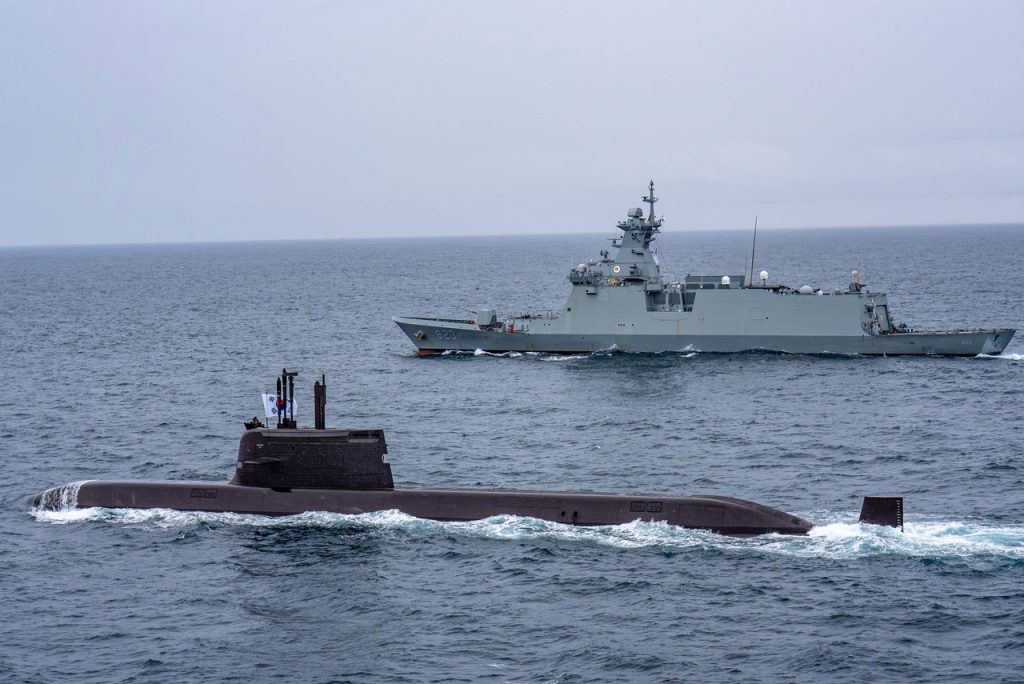
The Canadian campaign presented Hanwha Ocean with an invaluable opportunity to publicly demonstrate its submarine capabilities in a real-world operational context. South Korea’s Dosan Ahn Chang-ho, a formidable 3,000-ton KSS-III submarine, proudly operated by the Korean Navy and constructed by Hanwha Ocean (part of the same cutting-edge submarine family as Hanwha’s proposal), undertook an impressive journey of approximately 14,000 kilometers from Korea to Canada’s western naval base, making strategic stops in Guam and Hawaii. This remarkable voyage, according to observers, served as a compelling and highly visible testament to South Korea’s prowess in building advanced submarines capable of extensive long-range operations.
“While Hanwha Ocean may not have won the bid, its advanced submarine technology has been unequivocally validated,” stated Moon. “A state-of-the-art Korean-built submarine successfully navigated to Canada and even hosted Canadian sailors aboard, significantly boosting Hanwha’s technical confidence. By engaging in direct, head-to-head competition with Germany, Hanwha Ocean powerfully showcased its formidable competitiveness to the entire global defense market.”
Industry focus is now rapidly shifting towards promising defense markets in Saudi Arabia, Greece, the Philippines, and other nations actively evaluating new submarine capabilities or seeking modern replacements for their aging naval fleets.
Saudi Arabia is reportedly seeking to acquire four advanced 3,000-ton submarines, a project estimated at approximately 6 trillion won. The kingdom is actively enhancing its naval capabilities as part of an extensive military modernization initiative, and Hanwha Ocean is anticipated to be a strong contender in the upcoming bid.
Greece presents another significant potential market, with plans for a next-generation submarine program valued at approximately 4.6 trillion won. Given that Greece currently operates German-built submarines, TKMS is likely to be a formidable competitor in this arena. Nevertheless, Hanwha Ocean is poised to strategically position its KSS-III platform as a highly proven and advanced alternative, leveraging South Korea’s impressive and expanding track record in global defense exports.
Within Southeast Asia, the Philippines is contemplating its inaugural submarine acquisition, a project potentially valued at 2 trillion won, as it actively seeks to bolster its maritime deterrence capabilities. Hanwha Ocean has already engaged with Manila, presenting comprehensive submarine options that include integrated packages for training, maintenance, and crucial infrastructure development.
Thailand is also actively exploring the purchase of advanced 4,000-ton frigates, representing another key sector where Hanwha Ocean is strategically pursuing new opportunities.
“We are currently engaged in active discussions with Thailand regarding surface ships, and we anticipate reaching a conclusion by the first half of next year,” a Hanwha Ocean official confirmed during a conference call in October 2025. “Furthermore, we are also in advanced discussions concerning significant submarine projects in Greece, Colombia, Chile, and the Philippines, alongside substantial demand for modern warships across the Middle East region.”
sahn


