
South Korea Freezes Public Utility Rates and Unveils W1 Trillion Relief Package, Targeting Inflation Below 3%
South Korea has announced a comprehensive economic stabilization plan, committing 1 trillion won ($647 million) in fiscal spending to alleviate the burden of surging living costs. This extensive package includes freezing major public utility rates and adjusting fuel price caps for the latter half of the year.
“We are injecting 1 trillion won in fiscal spending to directly support small businesses grappling with high oil prices,” stated Finance Minister and Deputy Prime Minister Koo Yun-cheol on Friday. “Our administration is mobilizing every available measure to ensure consumer inflation remains below 3 percent during the second half of the year.”
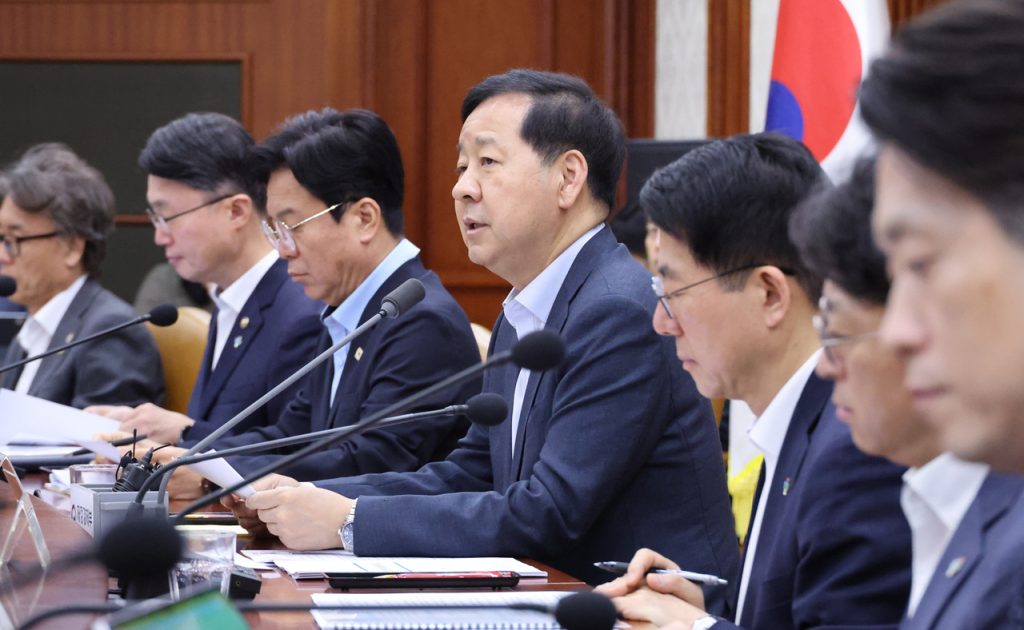
Minister Koo unveiled these critical measures during a high-level emergency economic meeting held in Seoul. This significant gathering brought together economy-related ministers and a dedicated special task force focused on addressing national living costs.
In a direct response to easing global oil prices and persistent pressure on household finances, the government intends to implement a lower seventh round of petroleum price ceilings. This adjustment aims to provide tangible relief to consumers, with specific details of the revised caps expected to be announced later today.
Koo affirmed, “Considering the recent decline in international oil prices, the ongoing living-cost burdens, and current fiscal conditions, we will indeed lower the existing price ceiling. However, this cap will remain in place until retail fuel prices demonstrate sustained stability.”
Previously, the government extended the sixth round of price ceilings on June 18, maintaining caps at 1,934 won per liter for gasoline, 1,923 won for diesel, and 1,530 won for kerosene.
Minister Koo noted that external uncertainties influencing energy markets appear to be diminishing. This positive shift follows the landmark signing of a memorandum of understanding between the US and Iran, signaling a potential end to their conflict. Consequently, global oil prices have decreased, with the average domestic diesel price falling below 2,000 won for the first time in two months.
Despite these favorable developments, the minister cautioned that significant risks persist within the economic landscape.
Koo elaborated, “Lingering uncertainty surrounding the follow-up negotiations after the memorandum, combined with persistent living-cost pressures, continues to pose challenges. These pressures are exacerbated by high inflation, a weaker won, elevated interest rates, and a slowdown in employment growth.”
The comprehensive relief package further includes the government’s unprecedented “largest-ever” discount campaign for essential agricultural, livestock, and seafood products, scheduled for July and August. To ensure food security and stabilize prices, the administration will also dramatically expand fresh egg imports, increasing them over sixfold to bring in an additional 200 million eggs.
Addressing volatile seafood prices, particularly for mackerel, the government will deploy a two-pronged strategy. Firstly, a delegation will be dispatched to Norway in July to finalize arrangements for the direct import of 2,000 metric tons of Norwegian mackerel, which will then be sold to consumers at reduced prices. Secondly, the government will intervene by purchasing domestically caught mackerel originally earmarked for export and making it available to local consumers at half its market value.
Crucially, major public utility rates, encompassing electricity and gas, are confirmed to be frozen for the second half of the year, shielding households from price hikes. Furthermore, vulnerable households utilizing kerosene or LPG and receiving energy vouchers will be granted an additional 147,000 won in support, redeemable from October through May 2027.
Beyond general relief, the government is intensifying its support for vulnerable social groups and small businesses. This includes expanding expressway toll discounts for individuals with disabilities and veterans. Simultaneously, a vital loan support program designed for small merchants severely affected by elevated oil prices will see its funding doubled from 1.5 trillion won to an impressive 3 trillion won.
The high-stakes meeting on Friday also addressed a forward-looking industrial transition employment stabilization plan. This initiative aims to proactively mitigate potential job-market disruptions arising from the nation’s strategic shift towards artificial intelligence (AI) and burgeoning green industries. As part of this, the government plans to train 1,000 dedicated AI specialists during the second half of the year, fostering their integration into new jobs and supporting AI-driven startups.
Looking ahead, Minister Koo indicated that the government is preparing to announce further substantial measures specifically designed to bolster small and medium-sized enterprises (SMEs) currently impacted by the won’s continued weakness.


