
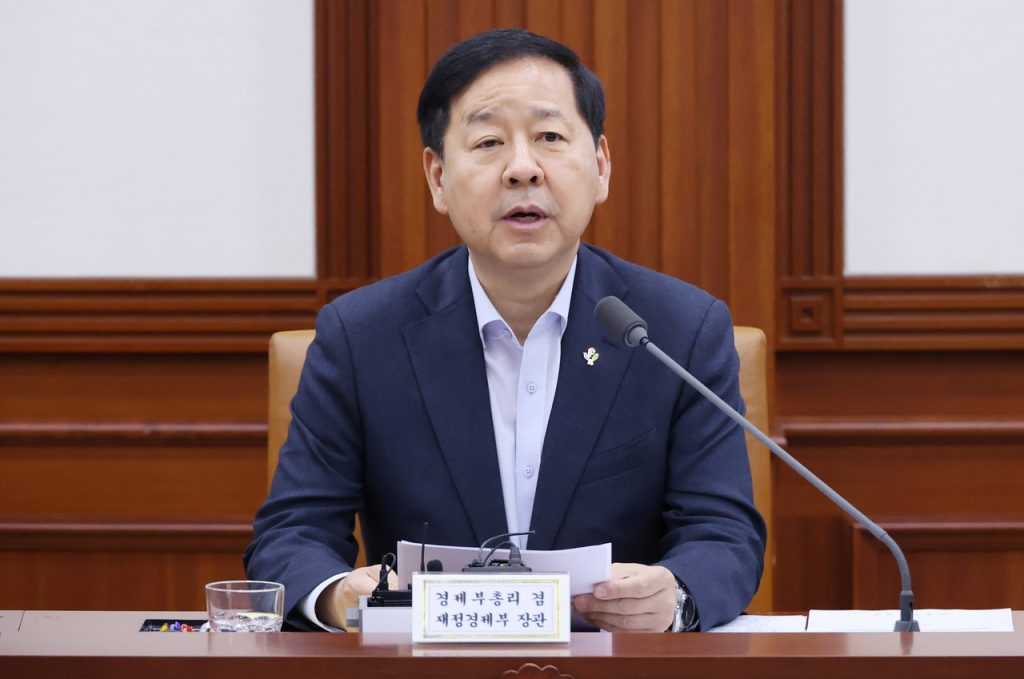
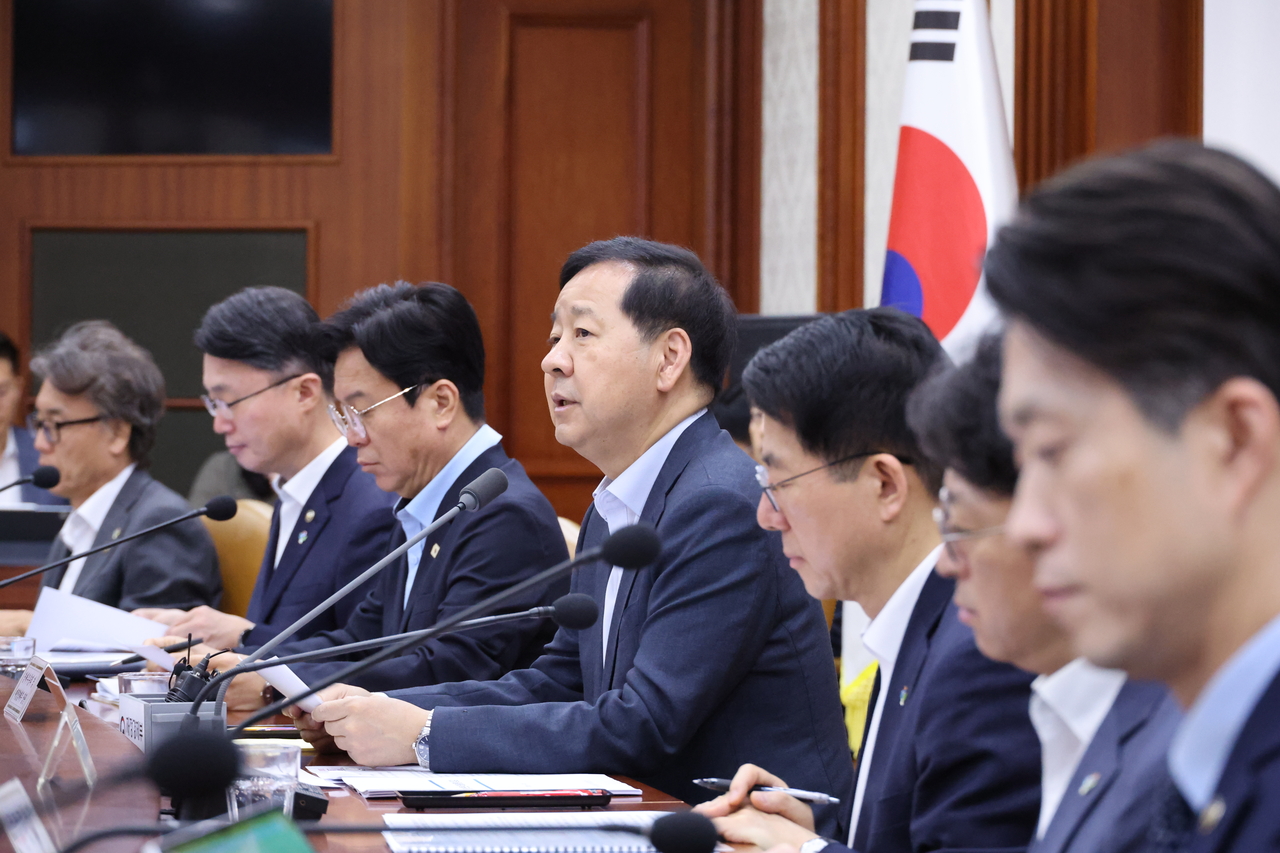
South Korea’s Finance Minister announced Friday a decision to lower the fuel price cap, responding to recent global crude oil price declines. This move comes alongside a freeze on electricity and gas rates for the second half of the year, aiming to bolster economic stability for households.
Speaking at a meeting with economy-related ministers, Finance Minister Koo Yun-cheol clarified that the fuel price cap system would remain active until domestic consumer prices achieve full stabilization.
Further details regarding the cap adjustment are anticipated to be released later on Friday.
The government initially implemented fuel price caps in mid-March to stabilize domestic energy costs, a measure taken amidst supply chain disruptions stemming from the ongoing Middle East conflict.
Minister Koo stated, “The government plans to adjust the current emergency economic measures in phases, closely monitoring both developments in the Middle East and the evolving South Korean economic landscape.”
While acknowledging a gradual easing of external uncertainties following the memorandum of understanding between Washington and Tehran, Koo cautioned that significant challenges persist. He highlighted ongoing public burdens, including elevated consumer prices, a weakening Korean won, high interest rates, and sluggish employment growth, citing lingering uncertainties surrounding follow-up negotiations.
The Finance Minister also affirmed the government’s target to maintain inflation at approximately 3 percent during the second half of the year.
Reaffirming the commitment to household financial relief, Koo stated, “We will freeze prices of major utilities, including electricity and gas.”
He concluded by emphasizing, “The government is proactively working to stabilize and enhance people’s livelihoods, while concurrently making full-fledged efforts to normalize and advance the economy in the aftermath of the Middle East conflict.”


