South Korean businesses and financial institutions are urged to rapidly prepare for an advanced AI era, one where artificial intelligence autonomously executes tasks and processes payments, as highlighted by speakers at the recent Global Business Forum in Seoul.
During the 11th Global Business Forum, co-hosted by The Korea Herald and Herald Business, key speakers Park Min-jun of Wrtn Technologies and Ha Tae-kyung, President of the Korea Insurance Institute, underscored a crucial point: successful AI adoption for South Korean enterprises depends more on robust supporting systems than on the AI technology itself.
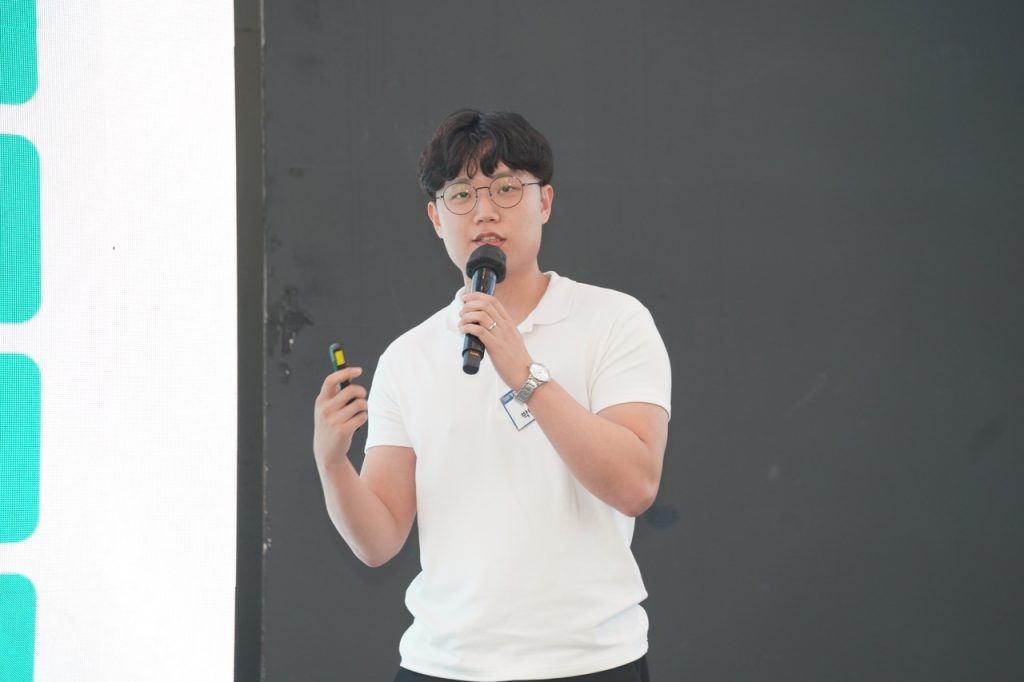
Park Min-jun leads Wrtn AX, the enterprise division established last year by the prominent Korean generative AI startup, Wrtn Technologies. This division is dedicated to integrating advanced AI agents into the core operations of businesses and public agencies. These sophisticated AI agents are designed to autonomously execute complex tasks, moving far beyond simple prompt responses.
According to Park, corporate demand has rapidly shifted towards these highly autonomous AI solutions.
Illustrating this evolution, Park noted a significant change in client expectations: “Last year, companies primarily sought AI for basic queries or document generation. Today, the focus has shifted dramatically towards AI’s ability to extract and analyze data, automate financial operations, manage subscriptions, process refunds, and even issue coupons autonomously.”
Wrtn exemplifies this shift with a customer service AI agent that has been operational for over a year. This agent doesn’t merely explain refund policies; it fully executes the refund process, gathering necessary details and autonomously fulfilling requests. Wrtn is currently developing similar bespoke AI systems for major clients, including the Culture Ministry and leading cosmetics manufacturer Amorepacific.
However, Park emphasized that the primary hurdle isn’t the AI technology itself, but rather the pervasive lack of usable, structured data within organizations. Across sectors like manufacturing, critical information frequently remains siloed in legacy factory equipment or physical paper records. Even digitally advanced firms often struggle with inconsistent data labeling across subsidiaries or fragmented data stored in disconnected systems, hindering AI agents’ ability to effectively process information across platforms.
He further underscored the complexity: “When companies embark on AI transformation, the overwhelming consensus is that data preparation presents the most significant challenge. While building an AI agent might take a mere two weeks, the comprehensive data preparation phase can easily consume the majority of a three-month project timeline.”
Having secured approximately 130 billion won ($84 million) in funding, Wrtn strategically leveraged AI to optimize its own internal operations and achieve lean efficiency. This practical, real-world experience then became the foundation for its service offerings, a strategic pivot recognizing the immense resource and talent gaps compared to global AI giants like OpenAI and Google.
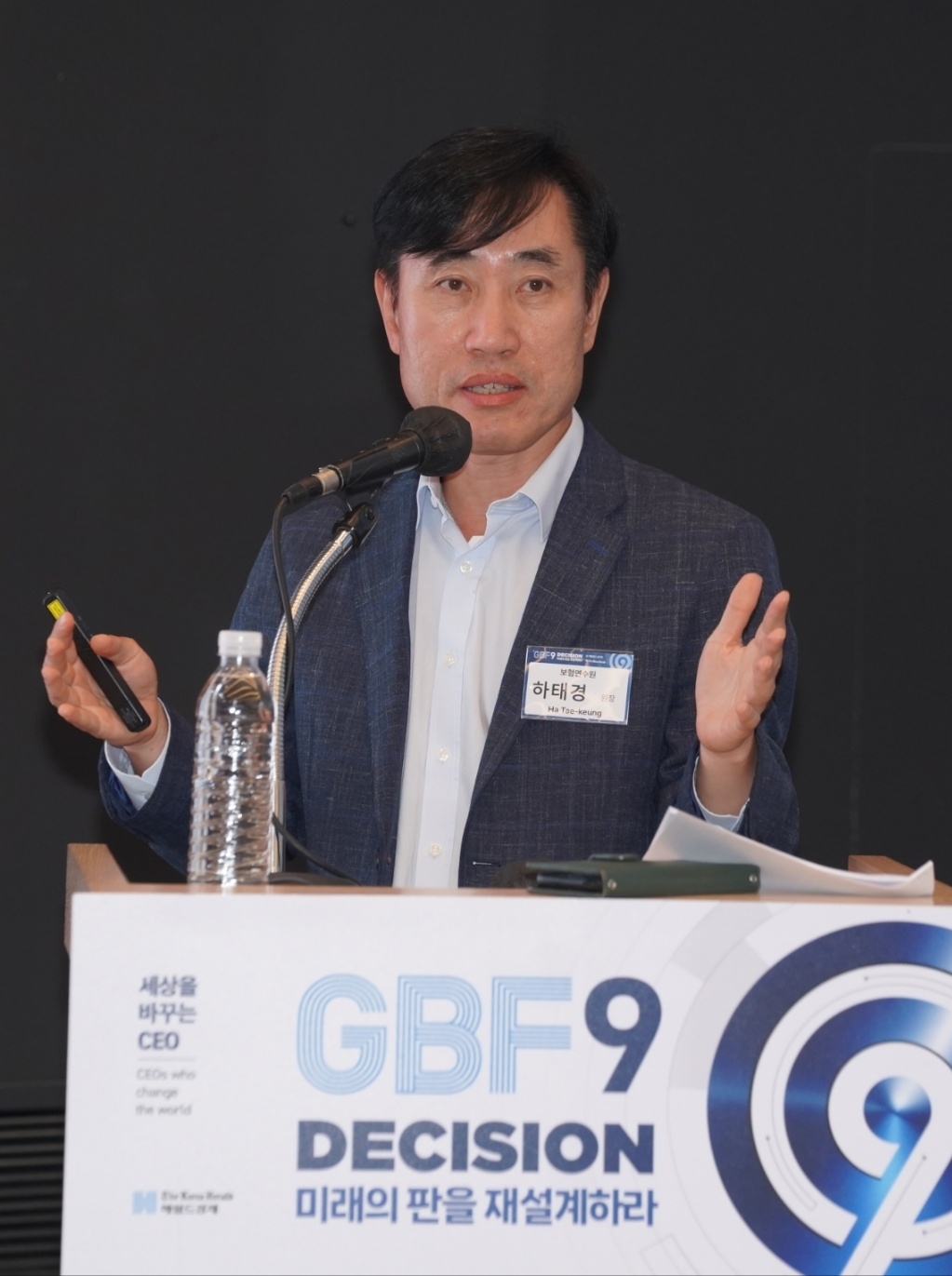
Extending the discourse into the financial sector, Ha Tae-kyung, a former three-term lawmaker and President of the Korea Insurance Institute (KII) since September 2024, posited a critical requirement for autonomous AI agents: the integration of programmable money to facilitate payments without the need for continuous human intervention or approval.
Ha succinctly stated, “AI agents and stablecoins are inherently linked; they advance in tandem.”
Stablecoins, digital tokens typically pegged to a stable currency like the US dollar, offer a significant advantage for AI-driven transactions: programmability. Unlike conventional payment systems that rely on human password entries or manual approvals, stablecoins can embed specific conditions directly into their code, enabling AI agents to execute payments autonomously based on predefined rules.
This paradigm shift holds the potential to profoundly reshape the insurance industry, particularly through the automation of small claims. Ha offered a compelling example: a flight-delay insurance policy could automatically disburse payouts the instant delay data is confirmed, eliminating paperwork and delivering instant settlements via stablecoins. This transforms insurance from an often-avoided product into an invisible, embedded component of transactions, enhancing user experience and efficiency.
To pave the way for this future, the Korea Insurance Institute has pioneered several domestic initiatives. These include accepting stablecoins for its crypto-literacy courses, providing small crypto-based learning incentives, and developing internal guidelines for holding Bitcoin. These forward-thinking steps aim to foster greater understanding and adoption of digital assets within the financial sector.
Despite these innovative efforts, Ha acknowledged that KII’s actions have repeatedly encountered caution from financial regulators. This regulatory hesitancy persists even as the crucial Digital Asset Basic Act, intended to provide a clear legal framework for such advancements, remains stalled within the National Assembly.
Ha’s overarching message, however, was unequivocally direct.
“While Korea boasts formidable strengths in manufacturing, culture, and technology,” Ha asserted, “our financial sector regrettably remains the weak link in this ecosystem.”
mjh