
AI Memory Demand Drives Stronger Earnings for Samsung, SK hynix as Long-Term Deals Reshape Chip Market, Though Concentration Risks Persist
The South Korean memory chip industry is undergoing a significant transformation, moving beyond its traditional boom-and-bust cycles. This profound shift is primarily driven by surging artificial intelligence (AI) demand, compelling major customers to secure long-term memory supply agreements at premium prices, according to analysis by CLSA.
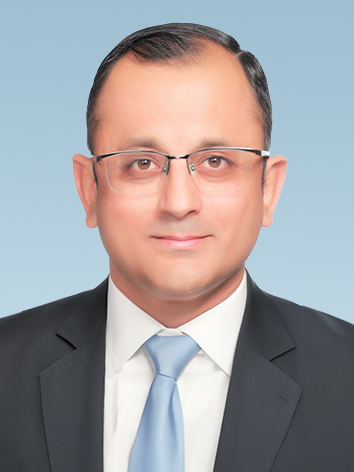
Historically, the memory market has been characterized by intense cyclicality, with profitability fluctuating based on supply and demand dynamics. However, the explosive growth of high-bandwidth memory (HBM) and the proliferation of AI servers are fundamentally altering this traditional pattern, explained Sanjeev Rana, CLSA’s head of Korea research.
“The fact that major memory customers are signing multiyear supply deals with the suppliers at record high prices suggests that they are concerned about the availability of memory,” Rana stated in a written interview with The Korea Herald. He further added that global memory supply is expected to remain constrained for the next several years.
This aggressive move by customers to secure long-term agreements could see 50 percent to 70 percent of memory suppliers’ manufacturing capacity locked into such contracts over the long term. These strategic deals, incorporating both fixed and variable pricing models, are poised to bolster higher valuation multiples for leading memory makers.
While HBM initially spearheaded the earnings recovery for memory suppliers during the nascent stages of the AI cycle, the profitability narrative has since expanded significantly. Conventional DRAM has emerged as another substantial growth driver, fueled by sharply increasing prices. Rana highlighted that certain conventional DRAM products utilized in high-end servers are now even surpassing HBM in terms of profitability, underscoring the remarkable surge in standard DRAM pricing.
For SK hynix, a key industry player, the critical question remains whether its pioneering lead in HBM technology can translate into sustained pricing power and robust profit margins. Rana confirmed that SK hynix’s early entry has secured it a dominant share in this rapidly expanding segment, further cemented by its strong strategic alliance with Nvidia.
SK hynix’s deep-rooted relationship with Nvidia, reinforced by their recent multiyear partnership, strongly indicates the chipmaker is “guaranteed a role” in supplying HBM for Nvidia’s advanced future platforms, Rana stated. He concluded that SK hynix’s leadership position in HBM is expected to remain “very strong for the foreseeable future.”
Meanwhile, industry giant Samsung is actively striving to recapture its market share in the critical AI memory sector, following its initial lag behind SK hynix in the early HBM development. Rana reported that Samsung has successfully achieved HBM qualifications from key industry players such as Nvidia, AMD, Broadcom, and OpenAI within the last year. This demonstrates Samsung’s regained customer confidence and its now solidified technological competitiveness in HBM. Furthermore, Samsung’s overall DRAM market share is showing a healthy recovery.
This significant AI memory boom has profoundly impacted the Korean stock market, positioning Korean equities as one of the world’s strongest-performing markets this year. As of Monday, the benchmark Kospi index surged over 110 percent year-to-date, a rally largely propelled by the impressive performances of Samsung Electronics and SK hynix, which collectively constitute over half of the index’s weight.
However, this increasing reliance of Korea’s market on a select few dominant chip manufacturers presents inherent risks for the broader economy and stock market. Rana cautioned that the nation’s robust stock market performance has been predominantly driven by a limited number of high-performing stocks, consequently fostering a significant concentration risk.
Looking ahead, Rana anticipates a substantial valuation rerating for Korean memory stocks. This optimistic outlook is based on the expectation that a majority of their future profits will stem from these multiyear supply contracts, offering enhanced visibility on both pricing stability and committed volumes.
Concluding his analysis, Rana emphasized that “AI isn’t just causing an increase in demand — it is reshaping how memory creates value,” urging investors to thoroughly grasp this fundamental industry shift.
jwc


