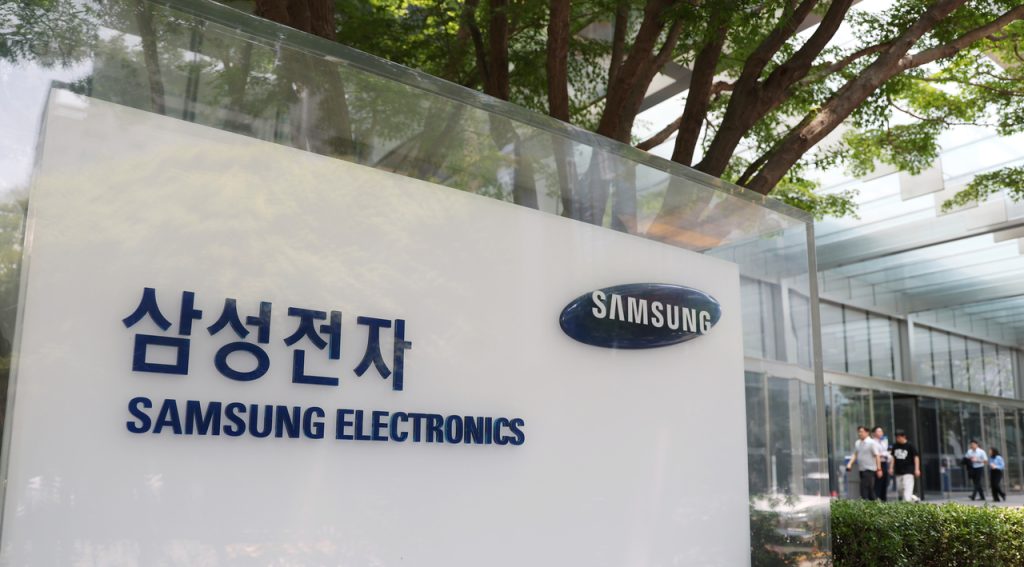
Samsung Electronics recently cemented its strategic focus on High-Bandwidth Memory (HBM) at its global strategy meeting, reviewing ambitious plans for expanding HBM shipments and securing crucial long-term supply agreements with leading AI customers. This pivotal move highlights HBM’s escalating strategic importance amidst soaring AI demand and tightening memory supplies across the industry.
The company’s Device Solutions division, which robustly oversees its semiconductor business, held its impactful session last Thursday, guided by Vice Chairman Jun Young-hyun.
During these critical discussions, executives meticulously outlined comprehensive supply plans for advanced HBM products, including the fifth-generation HBM3E, the next-generation HBM4, and future HBM4E chips. They also finalized strategic supply approaches for key industry players such as Nvidia, AMD, Broadcom, and Google, forging strong partnerships within the dynamic AI ecosystem.
Samsung regularly convenes these vital global strategy meetings bi-annually, in June and December, gathering top senior executives and international business heads to thoroughly assess prevailing market conditions and establish future business objectives.
While typically focusing on first-half performance and second-half strategies, this year’s June meeting placed a heightened emphasis on addressing rapidly escalating customer demand and meticulously planning supply amidst a rapidly constricting AI memory market. This strategic shift underscores the immediate criticality of HBM for Samsung’s future growth trajectory.
The atmosphere at this year’s meeting stood in stark contrast to the previous year, when Samsung faced significant pressure due to HBM business delays and had temporarily lost its global DRAM market leadership to SK hynix for the first time in 33 years. At that time, the primary focus was on accelerating HBM3E commercialization and aggressively regaining market competitiveness.
However, propelled by rising memory prices, tight supply conditions, and an unprecedented surge in AI server demand, Samsung has successfully reclaimed its top position in the DRAM market. This renewed leadership now enables the company to strategically focus on securing sustained long-term growth and solidifying its market dominance in the semiconductor space.
Industry sources confirm that Samsung’s proactive pursuit of long-term supply agreements has become increasingly vital, driven by major customers seeking assured and stable access to its cutting-edge advanced memory chips for their extensive AI initiatives.
During its first-quarter earnings call in May, Samsung officially stated its commitment to pursuing long-term memory supply contracts at the direct request of key customers, confirming that agreements have already been secured with several. These strategic deals are expected to significantly enhance demand visibility, thereby enabling more efficient production and optimized investment planning across its semiconductor operations.
Samsung continues to spearhead innovation in next-generation HBM products. The company proudly announced it commenced shipping mass-produced HBM4 chips in February, marking an industry first, with plans for significant supply expansion in the latter half of the year. Furthermore, samples of HBM4E, the advanced successor product, were shipped last month, underscoring Samsung’s relentless drive to strengthen its commanding position in the rapidly evolving AI memory market.
Beyond its core memory focus, Samsung’s Foundry and System LSI divisions also reviewed crucial strategies aimed at improving profitability and adapting to dynamic market conditions. This holistic approach ensures company-wide resilience and growth across its diverse business segments.
The Foundry business specifically addressed yield enhancements for its advanced process nodes, optimizing operations at its new Taylor, Texas fabrication plant, and intensifying efforts to secure additional orders from prominent global customers, solidifying its manufacturing prowess and market share.
Meanwhile, the System LSI division outlined the ongoing development of its powerful Exynos 2700 mobile application processor and refined its overarching image sensor strategy, positioning itself for future innovations and leadership in mobile technology.
Company-wide AI initiatives were also a key discussion point, particularly following the recent emphasis from Samsung’s Device eXperience division – which oversees mobile and consumer electronics – on accelerating a comprehensive transition towards AI integration across all business units, ensuring a future-ready portfolio.
Ultimately, the global strategy meeting underscored Samsung’s sharpened focus on HBM, with unprecedented AI server demand and tightening memory supply providing significant momentum to its forward-looking sales strategy. Long-term customer commitments are now poised to play a central and defining role as Samsung aims to massively expand HBM shipments and achieve clearer visibility over future demand, cementing its leadership in the AI era.
yeeun