South Korean Banks Expand Debt Relief Initiatives, Sparking Investor Debate Over Policy-Driven Support
South Korean banks are significantly increasing their debt relief efforts for struggling borrowers, driven by Seoul’s intensified focus on inclusive finance. This surge in policy-mandated support is drawing scrutiny, as financial institutions face growing expectations to fulfill broader social policy objectives.
Industry estimates released Sunday highlight a dramatic escalation in debt restructuring efforts. The five leading commercial banks in South Korea processed over 4,600 in-house debt restructuring cases during the first four months of this year alone, a near fourfold increase from the 1,180 cases reported a year prior. The total principal amount restructured also more than tripled, soaring from 10.5 billion won to 35.9 billion won ($23.5 million).
This intensified push directly stems from policymakers’ insistence that financial firms assume a more prominent role in aiding borrowers facing repayment difficulties. Key measures include comprehensive debt restructuring programs, interest relief initiatives, and the active cleanup of long-standing delinquent personal loans.
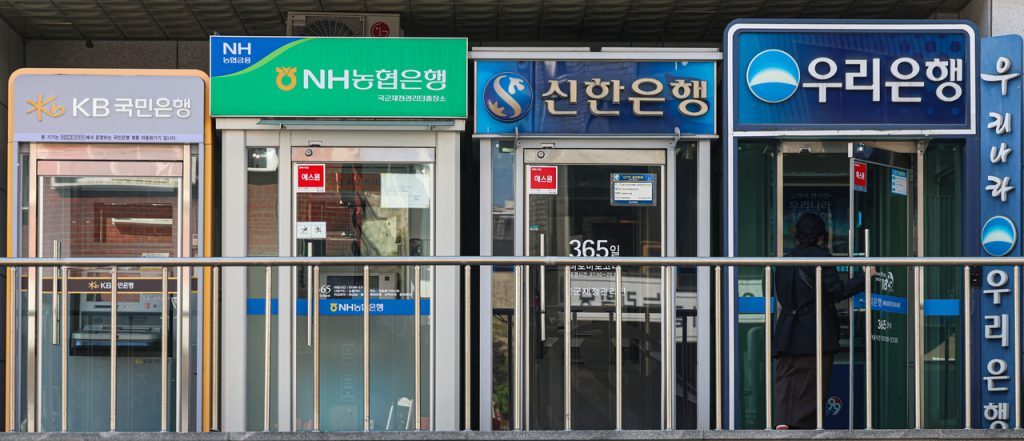
Further investigations by The Korea Herald confirm this trend has persisted into recent months. Major South Korean lenders, including KB Kookmin Bank, Shinhan Bank, Hana Bank, Woori Bank, and NH NongHyup Bank, have either implemented, publicly announced, or are actively reviewing a broad spectrum of support measures. These range from crucial debt restructuring and write-offs to significant interest relief and temporary suspension of collection activities.
Banks maintain that these extensive measures will have a limited impact on their overall profitability, capital management strategies, and ultimately, shareholder returns. They argue that the initiatives primarily target long-delinquent claims which have already been either fully written off or provisioned against. This approach, banks assert, functions more as a necessary cleanup of low-recovery assets rather than imposing new financial burdens on their balance sheets.
“Instead of holding onto and attempting to collect claims with minimal recovery prospects, facilitating the return of vulnerable borrowers – who have effectively lost their repayment capacity – to normal financial and economic activity stands to benefit both customers and financial institutions over the long term,” commented an anonymous banking official, explaining the strategic rationale.
This evolving situation is attracting significant investor attention as South Korean banking groups increasingly grapple with an expanding policy burden. Beyond the inclusive finance mandate, the government is simultaneously urging lenders to bolster “productive finance,” which involves directing funds toward sectors deemed strategically vital for robust economic growth.
For discerning investors, the pivotal question revolves around whether these government-led initiatives will remain contained as manageable policy programs or if they will transform into recurring operational costs, consequently impacting banks’ return on equity (ROE), capital allocation strategies, and ultimately, shareholder returns.
Rena Kwok, a prominent analyst at Bloomberg Intelligence, observes that the South Korean government’s policy initiatives are indeed steering major banks towards more policy-driven lending and expanded borrower support. However, she anticipates that the immediate impact on their fundamental credit profiles will likely remain modest.
“Despite government-led inclusive finance initiatives and productive finance policies actively guiding large South Korean banks into potentially riskier corporate lending and support frameworks for financially weaker borrowers, the underlying credit risks are projected to remain modest,” Kwok affirmed.
Kwok further projects that the asset quality of these banks will maintain its resilience throughout the latter half of the year. This stability is largely attributed to proactive non-performing loan (NPL) management, robust underwriting standards, and stringent risk control measures. Moreover, the substantial preemptive provisions established last year are expected to significantly contribute to keeping credit costs stable.
Nevertheless, a contrasting perspective emerges from other financial experts who caution that repeated, policy-driven debt relief programs could introduce serious longer-term concerns regarding proper risk pricing mechanisms, equity and fairness within the financial system, and the overall credibility of South Korea’s financial sector.
Professor Kim Sang-bong, an economics expert from Hansung University, articulated that the current surge in debt relief initiatives appears to be primarily motivated by governmental policy pressure rather than stemming from banks’ inherent risk-management requirements. He acknowledged, however, that these efforts could offer much-needed assistance to certain vulnerable borrowers.
“Establishing clear and unambiguous standards is absolutely essential,” Professor Kim emphasized. He elaborated, “Debt relief provided to borrowers who utilized loans for essential living expenses must be handled distinctly from relief offered for losses incurred through investment or gambling. Failing to differentiate these scenarios would provoke a serious fairness concern for diligent individuals who have consistently honored their repayment obligations.”
Kim further posited that foreign investors might interpret this evolving trend as yet another indicator of significant policy intervention within South Korea’s banking sector. This perception is particularly amplified given the persistently unclear definition of “inclusive finance.”
“It’s questionable whether anyone can truly provide a clear definition of inclusive finance if its ultimate outcome is simply compelling banks to write off debt,” Professor Kim asserted. He concluded by warning, “International investors will undoubtedly scrutinize this situation meticulously, as these policy-driven actions could ultimately translate into significant financial losses for the banks involved.”
jwc