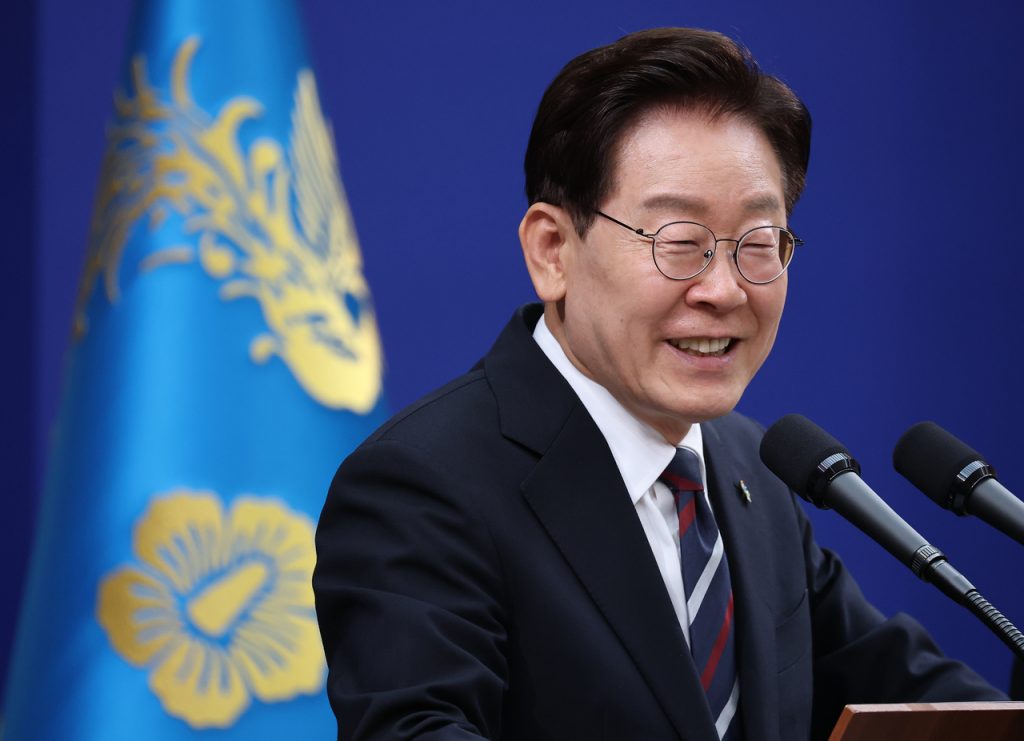
President Lee Jae Myung announced Friday that South Korea anticipates a positive resolution from the European Union regarding its proposed steel tariff-rate quota measures. These upcoming EU trade policies have raised significant concerns within South Korea’s crucial steel industry.
During his recent diplomatic visit to Brussels, President Lee personally engaged with top EU leaders to address these critical concerns. A senior presidential official later confirmed that EU authorities had assured Seoul its request for special consideration would be thoroughly evaluated.
These statements were made during a press briefing at Cheong Wa Dae, detailing the outcomes of his recent impactful European tour, which included stops in Italy, the Vatican, and France for the Group of Seven (G7) summit. This high-level visit occurred amidst escalating worries in Seoul that the EU’s revamped steel import regime, slated for implementation on July 1, could severely diminish tariff-free quota access for vital Korean steel products.
President Lee emphasized his direct message to EU leaders, stating, “I conveyed our position that such measures must not evolve into an unnecessary trade barrier for our industries.”
Furthermore, Lee explicitly requested “special consideration” for South Korea from the EU, underscoring the nation’s dual status as both a trusted free trade agreement partner and a critical strategic partner to the European bloc.
Echoing these sentiments, Presidential Policy Chief Kim Yong-beom, who accompanied President Lee on the trip, reported on June 11 that EU officials had committed to thoroughly considering Seoul’s appeal. They acknowledged South Korea as a nation sharing common values with the bloc and an indispensable strategic partner in global affairs.
Kim further disclosed that working-level negotiations concerning Korea’s steel quota had achieved “substantial progress.” He expressed Seoul’s optimism for a more favorable resolution for South Korea compared to other affected nations.
The European Union’s move to tighten its steel import regime stems from broader concerns about global steel overcapacity and increasing pressures on European producers. These protective measures are widely understood as an attempt to safeguard the European steel industry from a surge in imports, especially in light of similar tariff increases by the United States on steel products.
While acknowledging Seoul’s understanding of the underlying pressures driving the EU’s actions, President Lee cautioned against the measures inadvertently pushing major global economies back towards protectionism or undermining the principles of open trade.
Beyond steel tariffs, President Lee’s discussions with EU leaders encompassed extensive cooperation on critical economic security matters and other pressing global issues. These included efforts toward achieving peace on the Korean Peninsula and addressing ongoing tensions in the Middle East.
President Lee also reflected on his European journey, noting it clearly demonstrated a significant rise in South Korea’s international standing and the growing expectations for its global role over the past year.
“Through this trip, I unequivocally felt that the status of the Republic of Korea and the expectations from the international community for our nation have distinctly ascended,” President Lee affirmed, using South Korea’s official designation.
flylikekite