JoongAng Group Faces Critical Court Review as Creditor Exposure Tops W1.3 Trillion Amid JTBC Default
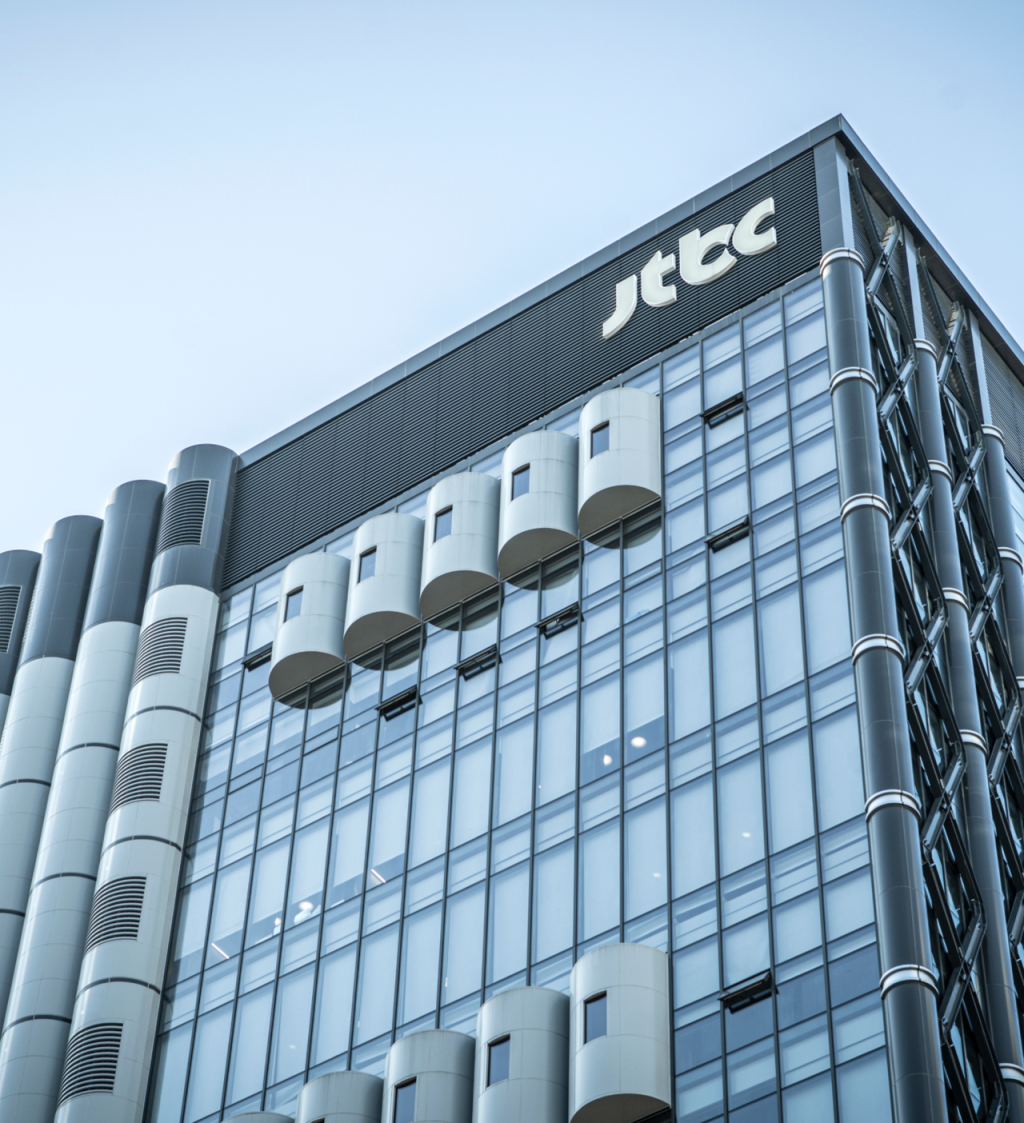
The JoongAng Group’s fight for financial survival intensifies next week as the Seoul Bankruptcy Court prepares to interrogate representatives from five of its affiliates. These companies sought court-led rehabilitation following broadcaster JTBC’s default on crucial short-term debt, signaling a widespread liquidity crisis within the prominent media conglomerate.
Legal sources confirmed on Wednesday that the Seoul Bankruptcy Court is slated to question key representatives from JTBC, JoongAng Holdings, Contentree JoongAng, Megabox JoongAng, and JoongAng P&I this upcoming Tuesday. This session is critical for the conglomerate’s future.
The court’s primary objective will be to thoroughly assess the extensive scale of their liabilities, scrutinize current liquidity conditions, and evaluate potential debt restructuring strategies. This comprehensive review will precede any final decision on initiating formal rehabilitation proceedings for these struggling JoongAng Group affiliates.
In a related development, JTBC has specifically requested the court’s approval for an autonomous restructuring support program. This mechanism would enable the court to temporarily postpone formal rehabilitation proceedings, allowing the broadcaster to engage directly in negotiations with its creditors.
Should this program be approved, JTBC could defer its full rehabilitation for a period of up to three months. Meanwhile, the other JoongAng Group affiliates involved in this financial crisis would proceed directly into the standard court-led rehabilitation process.
This profound financial crisis originated when JTBC failed to meet a crucial repayment deadline last week, defaulting on 20.6 billion won ($13.6 million) in matured debt. This default instantly triggered a severe, groupwide liquidity emergency across the entire JoongAng conglomerate.
Just days after the initial default, several of the JoongAng Group’s core affiliates proactively sought court protection. Concurrently, the court implemented an injunction, effectively freezing assets and claims. This critical measure aims to prevent a chaotic rush by creditors to seize collateral or recover outstanding debt prematurely.
Credit analysts have pinpointed years of progressively weakening earnings as the fundamental catalyst behind JoongAng Group’s severe liquidity crunch. A recent report by Korea Ratings, issued on Tuesday, highlighted a prolonged and challenging slump impacting the group’s diverse media businesses since 2020. This downturn was characterized by diminishing advertising revenue, significant struggles in the cinema sector, and a widespread viewer migration towards streaming platforms, all compounded by escalating production costs. Consequently, persistent free cash flow deficits compelled the group to resort to increased borrowing, interaffiliate funding, and the issuance of securitized debt to maintain operations.
The financial fallout from the JoongAng Group’s crisis is now extensively rippling through Korea’s broader credit market, raising concerns across the financial sector.
According to a comprehensive analysis by NICE Investors Service, financial firms face a substantial direct credit exposure. This exposure to the five primary JoongAng Group affiliates involved in rehabilitation is estimated at 796.9 billion won. Furthermore, exposure to eight other strategically important JoongAng-related companies, including JoongAng Ilbo, SLL JoongAng, and JoongAng Ilbo M&P, collectively reaches approximately 1.32 trillion won.
A detailed breakdown reveals that commercial banks bear the majority of this financial exposure, totaling 832.9 billion won. They are followed by special financial institutions with 164.2 billion won, securities firms holding 125.1 billion won, and credit finance companies with 79.7 billion won in outstanding loans.
NICE Investors Service clarified that these figures do not encompass indirect exposure, which may arise through private equity funds, securitization vehicles, and other complex financial structures. The agency estimated the total borrowings across JoongAng’s eight major affiliates to be around 2.8 trillion won, strongly indicating that the broader market’s true exposure could be significantly larger than initially assessed.
Adding another layer of concern, retail investors in South Korea may also confront significant risks due to their exposure to JoongAng Group’s financial instruments. Market analysts estimate that approximately 790.5 billion won in JoongAng-related public bonds and commercial paper could have been distributed and sold through various brokerages, indicating a substantial exposure level among individual retail investors. The total corporate bonds outstanding across the entire JoongAng Group are estimated to be around 900 billion won, underscoring the potential for widespread impact.

The profound balance sheet deterioration experienced by the JoongAng Group has already triggered significant downgrades in their credit ratings, reflecting the heightened financial risk. NICE Investors Service notably slashed JTBC’s senior unsecured bond rating to D from CCC, a move that followed an earlier reduction of its long-term rating from BBB to CCC. Concurrently, JoongAng Ilbo’s rating was downgraded from BBB to BB-. Similarly, Korea Ratings issued its own severe assessment, lowering JTBC’s commercial paper and unsecured bond ratings to D and revising JoongAng Ilbo’s long- and short-term ratings down to B- and C, respectively.
For financial institutions and investors closely monitoring the situation, the paramount concern is the extent of potential losses stemming from the JoongAng Group’s distress. NICE Investors Service specifically identified Hanyang Securities as the sole firm with material exposure disproportionate to its assets and capital. Hanyang Securities’ recorded book exposure stands at approximately 84 billion won, comprising 54 billion won linked to JTBC and an additional 30 billion won attributed to JoongAng Ilbo.
Bondholders, in particular, face a spectrum of adverse outcomes from the ongoing court-led rehabilitation process. Depending on the specifics of the approved rehabilitation plan, these could include significant payment delays, forced maturity extensions, substantial reductions in interest payouts, or even considerable losses on the principal amount invested in JoongAng Group’s debt instruments.
In the equity markets, the fallout from the JoongAng Group’s financial woes has also been pronounced. Hanyang Securities’ shares experienced a sharp decline, plummeting over 11 percent on Wednesday. Additionally, trading in Contentree JoongAng’s stock has been officially suspended since Monday, underscoring the severity of the market reaction.
Financial and legal experts universally concur that the current JoongAng Group crisis transcends a mere liquidity issue, indicating deeper systemic problems.
“This situation is far more complex than simply isolating a troubled subsidiary,” commented Lee Min-kyu, a prominent bankruptcy lawyer at Hansu Law Firm. “It starkly signals that critical funding channels across the entire JoongAng Group have become so severely blocked that even the holding company itself can no longer sustain its operations.”
Korea Ratings echoed this serious assessment, stating that the simultaneous nature of the rehabilitation filings unequivocally demonstrates that the JoongAng Group’s accumulated financial burden has “exceeded a manageable level.” Furthermore, the agency noted that the group’s overall funding conditions and its crucial liquidity response capacity have “sharply weakened,” painting a grim picture of its financial health.
The ratings agency further emphasized that the efficacy of the group’s previously proposed self-help strategies, which included critical asset sales and affiliate stake securitizations designed to mitigate debt and secure urgent liquidity, has also been severely impaired. Their concluding statement highlighted the challenge: “It will be difficult to ease short-term liquidity risks and fundamentally improve the financial structure through self-help measures alone,” indicating a need for more drastic intervention.