LG Innotek’s Ambitious Semiconductor Substrate Target: Surpassing Group Earnings by 2031
LG Innotek, a leading South Korean components manufacturer renowned for its premium smartphone camera modules, is setting an ambitious target for its semiconductor substrate business. The company aims for its package solutions division to generate more operating profit by 2031 than the entire group earned last year, underscoring a significant strategic shift towards high-growth semiconductor components.
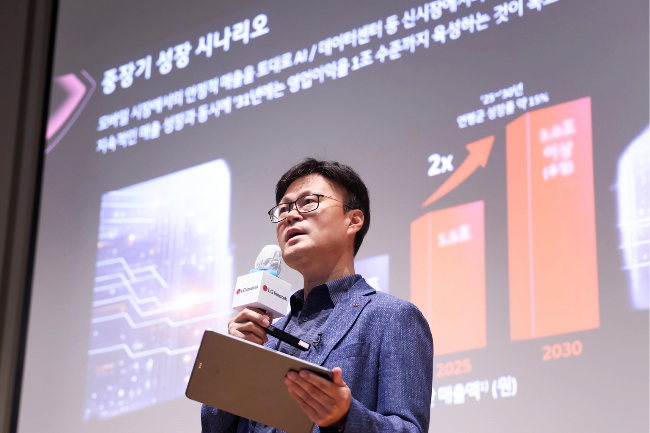
This specialized unit, focusing on advanced package solutions, projects an impressive surge in operating profit to 1 trillion won ($662 million) by 2031, a substantial leap from 128.9 billion won recorded last year. Furthermore, revenue is anticipated to reach over 3 trillion won by 2030, nearly doubling the 1.72 trillion won reported in 2025. This audacious profit target alone would significantly exceed LG Innotek’s entire consolidated operating profit of approximately 665 billion won last year, which was achieved at a margin close to 3 percent.
Cho Ji-tae, head of LG Innotek’s package solution division, acknowledged the challenge, calling it “not an easy target,” yet expressed confidence that current robust customer demand makes it an attainable goal.
The strategic vision, unveiled during a media event at the firm’s headquarters in Magok-dong, Seoul, on Tuesday, capitalizes on a dynamic market where demand for advanced substrates currently outstrips supply. Cho informed reporters that production lines are already fully booked with firm commitments extending through 2029, with major buyers even directly funding new capacity expansion rather than waiting for availability.
Hwang Jung-ho, LG Innotek’s marketing chief, highlighted the critical supply chain bottleneck, stating that customers often secure the chip and packaging first, “then look around and find they have no substrate.” This underscores the increasing strategic importance of reliable substrate supply.
Semiconductor substrates, which serve as the crucial interconnector between a chip and its underlying circuit board, have become a key choke point in the booming AI hardware industry. Cho elaborated that next-generation substrates are projected to be “10 times” their current size, with layer counts escalating from six or seven to more than 20, necessitating over tenfold the previous production capacity.
Significantly, chip substrates stand out as LG Innotek’s most profitable product segment. Last year, they contributed 10 percent of the group’s total revenue but accounted for a disproportionately high 19 percent of its operating profit. The segment’s profitability saw an 82 percent increase in 2025, followed by another robust 31 percent rise in the first quarter of this year.
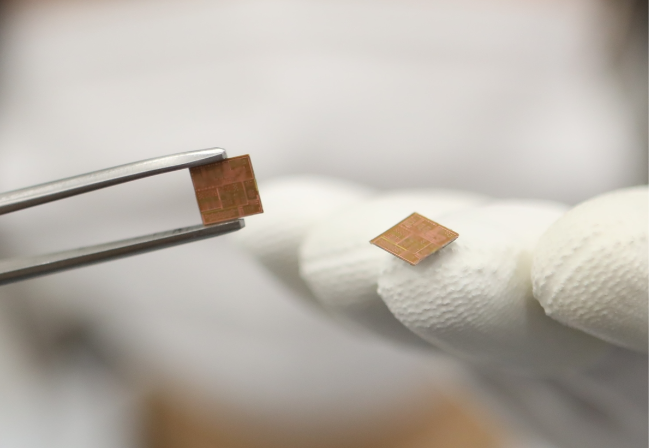
The division’s strong foundation is built upon its RF-SiP (Radio-Frequency System-in-Package) substrates, essential components in smartphone communication modules. LG Innotek has maintained its leadership in the global RF-SiP substrate market since 2016, achieving approximately 65 percent market share among the top five radio-frequency customers last year, with projections to reach 80 percent by 2026.
The more ambitious growth avenue for LG Innotek lies in FC-BGA (Flip-Chip Ball Grid Array) substrates, critical for the high-performance processors powering advanced AI servers. While LG Innotek boasts over 50 years of experience in substrate manufacturing, it is a relatively new entrant in the FC-BGA market, which has historically been dominated by Japanese and Taiwanese suppliers. Despite this, Cho asserted that only about five companies globally possess the capability to supply the scale demanded by current customers, confidently placing LG Innotek among these elite few.
The company aims to dramatically increase its FC-BGA revenue from around 50 billion won last year to an impressive 1 trillion won by 2030.
This significant market opportunity, Cho explained, stems from an evolving landscape in AI. As the focus shifts from training complex AI models to efficiently running them, demand is increasingly tilting towards central processors (CPUs). This shift is prompting CPU manufacturers to establish supply chains independent of those for graphics chips (GPUs). Many are seeking LG Innotek as a “first or second supplier,” with demand so high, Hwang added, that the firm must “ration its capacity.”
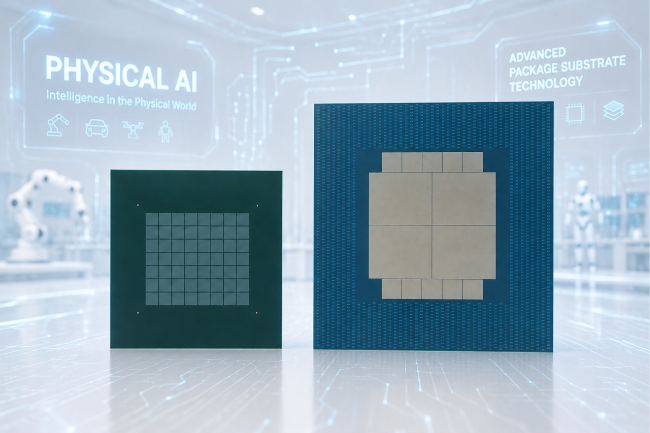
In a bid to innovate further, LG Innotek is co-developing a groundbreaking 120-millimeter substrate, significantly larger than any currently in production, with prominent US Big Tech customers, with results expected next year. Mass production for server substrates catering to AI training and inference is targeted for 2027, while network versions are slated for the second half of this year.
To fuel this projected growth, LG Innotek is making substantial investments. An initial tranche of 1 trillion won is allocated to equip RF-SiP and FC-CSP production lines at a new facility in Hai Phong, Vietnam. Further discussions are underway with two key customers regarding additional FC-BGA spending, which will be split between the Vietnam plant and the existing facility in Gumi, North Gyeongsang Province.
Cho concluded by acknowledging LG Innotek’s current position as a challenger in some segments but emphasized that market timing now favors its strengths. “We are a latecomer here, and we know it,” he stated. “But the market is moving toward the larger, more complex boards we do well, and by 2030 to 2031 we expect to shed the latecomer label for good, establishing ourselves as a dominant force in advanced semiconductor substrates.”
mjh