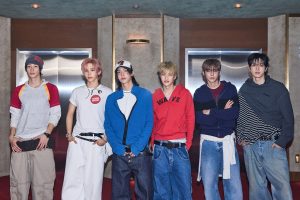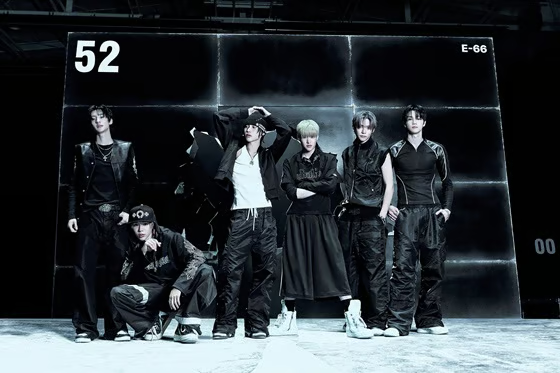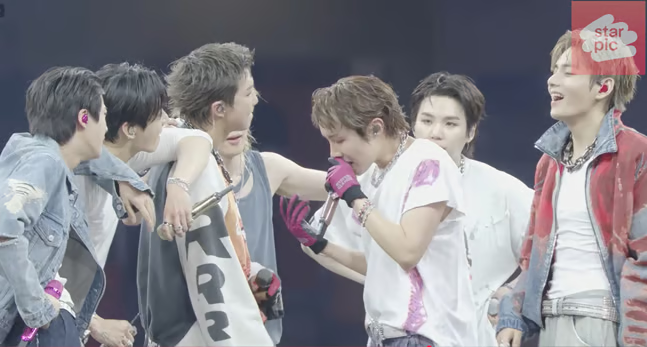
A recent essay published in the American fashion and culture magazine Vogue has captured significant attention. Written by a Korean-American author, the piece candidly details her unexpected journey into becoming a devoted fan of global sensation BTS, comprising members RM, Jin, Suga, J-Hope, Jimin, V, and Jungkook.
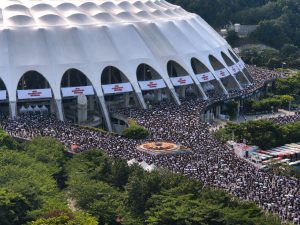
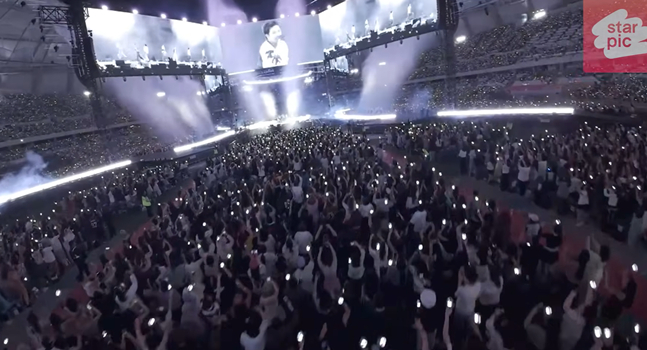
On June 15th, author Jezz Chung shared her “Confessions of a Former BTS Skeptic” in Vogue. The essay chronicles her transformation into an ARMY (BTS fandom name) after attending the highly anticipated BTS Arirang World Tour at Allegiant Stadium in Las Vegas last May.
Jezz Chung, renowned for her book “This Way to Change” and as a podcast host, is recognized as a progressive writer who openly identifies as LGBTQ+ and shares her experiences with autism and ADHD.
Chung openly admitted her initial reservations, stating she “entered the venue indifferently after accidentally getting tickets.” She confessed to having a critical view, believing that “BTS was art designed for maximum profit, a machine feeding celebrity worship, and artificially simulating intimacy.”
Despite being Korean-American, Chung’s musical preferences typically leaned towards early 2000s Atlanta and Houston hip-hop. She also harbored criticisms regarding K-pop’s issues with Black cultural appropriation and the exploitation within the trainee system. However, her perspective began to shift dramatically once the concert commenced. She wrote, “As I stopped analyzing, I became deeply captivated. It was the first time I’d seen a concert venue filled with 60,000 people where I could look around and see Asians everywhere. A distinct sense of camaraderie and community was palpable.”
Just two weeks after the unforgettable performance, Jezz Chung officially became an ARMY. She elaborated on her newfound understanding, stating, “What BTS sells isn’t just music. It’s meaningful friendship, persistent effort towards shared dreams, recovery after conflict, mutual care, and a sense of belonging.” Chung also highlighted the profound symbolism of the album title ‘Arirang,’ a 600-year-old Korean folk song born from colonial resistance. She remarked, “Korea is a nation with a history of oppression and hardship, and for BTS to proudly represent Korean identity and values and gain global empathy holds deep symbolic significance.”
Nevertheless, Chung maintained her critical lens on the broader K-pop industry. While frankly addressing concerns such as Black cultural appropriation, hyper-consumerism, and the labor exploitation inherent in the trainee system, she ultimately concluded that “The passion shown by BTS’s ARMY points to the greater truth that we are all connected.”