Samsung Electronics’ foundry division, a key player in contract chipmaking, is targeting a return to profitability by 2028, according to its chief, Han Jin-man. The semiconductor giant’s president indicated that achieving profitability in the upcoming year (2026) for the foundry business appears challenging, setting a more realistic goal for its financial turnaround.
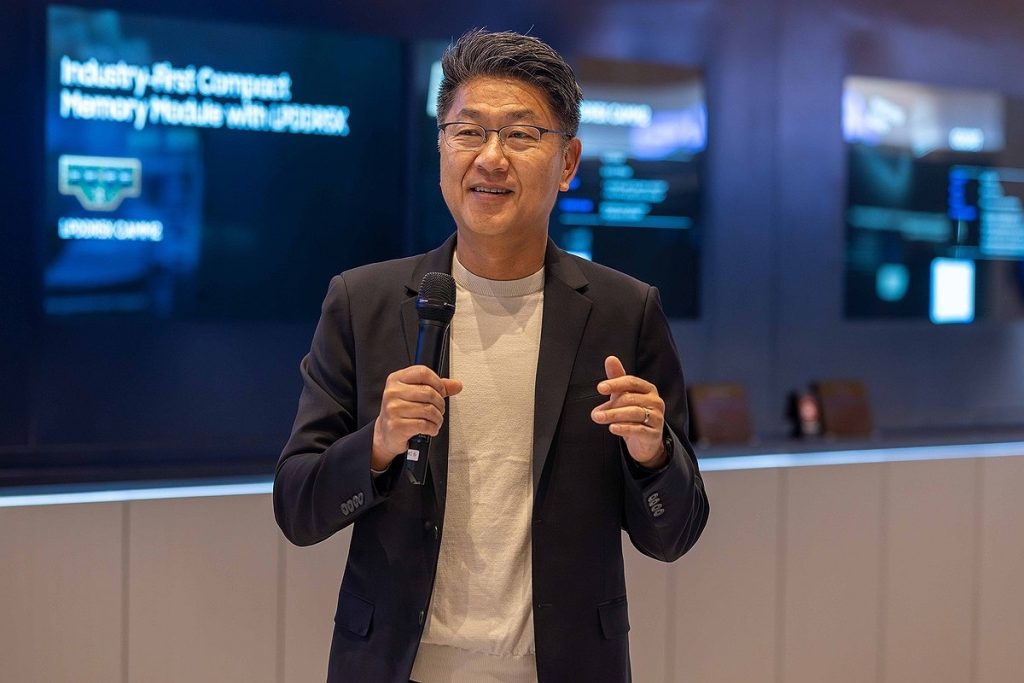
Speaking at an internal management briefing, held both online and offline for employees, Han Jin-man, who leads Samsung Electronics’ foundry business within its Device Solutions division, elaborated on the current outlook. Industry sources confirm these insights into the strategic direction of Samsung’s contract chip manufacturing.
During the session, Han candidly stated, “Achieving profitability for the foundry business next year does not look easy,” underscoring the complexities facing the advanced chipmaking segment.
The anticipated ongoing losses for both the current year and the next stem from a combination of significant cost burdens and fundamental structural weaknesses, Han explained. These challenges for Samsung’s contract chip manufacturing include substantial expenses for performance incentives, a slow reduction in dependence on mobile clients, gaps in technology readiness, an influx of low-margin orders, and strategic shortcomings in its approach to mature or legacy process nodes.
Taking full responsibility, Han affirmed, “Ultimately, management is responsible for the losses,” emphasizing the critical need for the foundry division to enhance its core business fundamentals and diligently work towards restoring overall profitability within the competitive semiconductor industry.
Regarding employee compensation, Han stressed that a robust recovery in business competitiveness is paramount. He assured staff that management aims to significantly raise rewards to levels that are truly impactful for employees once the foundry division begins to deliver tangible, successful results in its operations.
Han also provided updates on Samsung’s 8-inch foundry business. While this segment remains profitable, it is grappling with increasingly fierce competition in the market for legacy chip production.
Acknowledging the evolving landscape, Han stated, “The market has become increasingly crowded and price-driven,” elaborating that Samsung Electronics plans a phased wind-down of its 8-inch foundry operations to reallocate resources.
Han noted that some customer contracts secured during the COVID-19 pandemic were established at comparatively lower price points. Conversely, recent customer acquisitions for Samsung’s advanced chipmaking services are demonstrating significantly improved profitability.
To regain market momentum, Samsung’s foundry business is strategically focusing on securing high-value orders across crucial sectors like artificial intelligence (AI), advanced automotive chips, and cutting-edge process technologies. This strategy includes significant orders for Groq’s third-generation Language Processing Unit (LPU), designed for high-speed AI inference, alongside advanced automotive system semiconductors vital for next-generation autonomous driving platforms.
Specifically, Groq’s third-generation AI inference chip is currently being manufactured using Samsung’s advanced 4-nanometer process technology at its state-of-the-art Pyeongtaek campus in Gyeonggi Province. Shipments for these crucial AI chips are anticipated to commence in the third quarter.
Furthermore, Samsung secured a substantial 22 trillion won (approximately $14.5 billion USD) order from Tesla last year. This landmark deal involves producing AI6 chips specifically for the US electric vehicle giant’s advanced sixth-generation autonomous driving system. These cutting-edge AI6 chips are projected to be manufactured using Samsung’s highly advanced 2-nanometer process at its new, technologically sophisticated foundry plant currently under construction in Taylor, Texas.
Concluding his address, Han Jin-man reiterated, “As head of the business, I feel a heavy sense of responsibility.” He expressed confidence in Samsung’s inherent strengths, stating, “We possess the cutting-edge technology and robust execution capability essential to regain our leading competitive edge.” He concluded by urging, “I ask everyone to trust one another and collaborate effectively to achieve our shared goals.”