Nomura Predicts Record ROE, Enhanced Shareholder Returns, and AI-Driven Chip Gains to Fuel South Korea’s Market Rerating
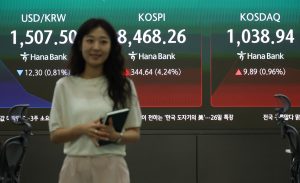
South Korea’s stock market is poised for a significant rerating, moving beyond its historical emerging market valuations, driven by record profitability, robust shareholder returns, and strong AI-led semiconductor earnings, Nomura analysts affirmed on Friday.
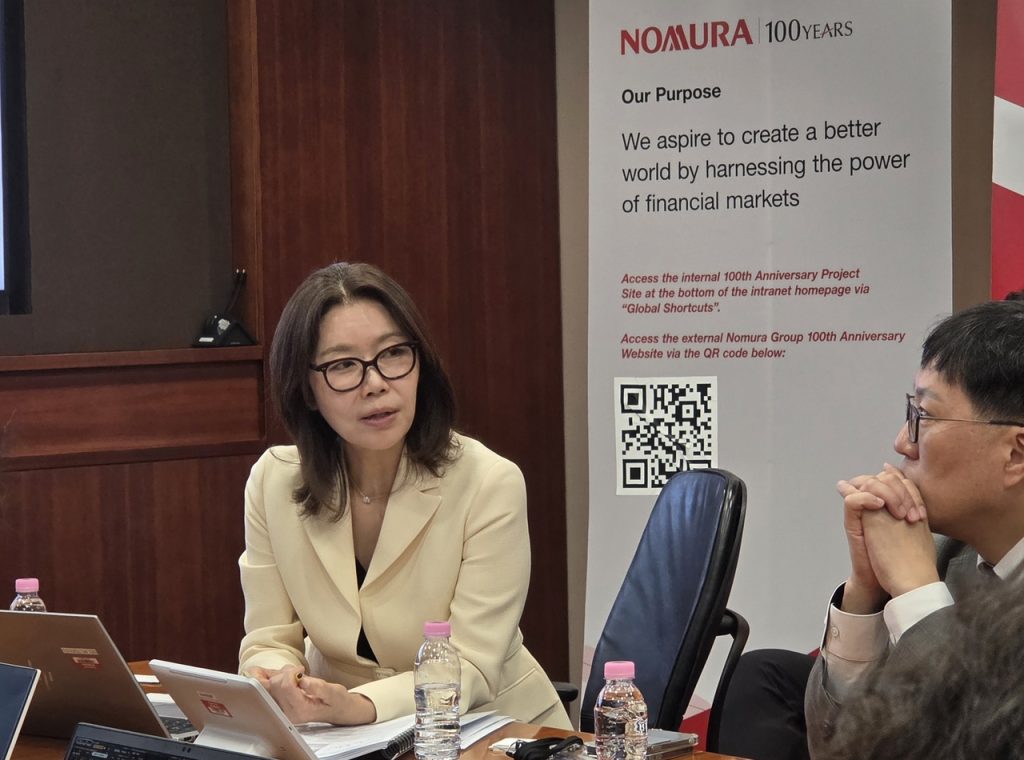
During Nomura’s Korea Equities & Economy Media Briefing in Seoul, Cindy Park, Head of Korea Equity Research at Nomura, highlighted that the benchmark Kospi index continues to be profoundly undervalued, even amidst its recent sharp rally and a brightening earnings outlook.
“Currently, South Korea’s equity market trades at valuation multiples akin to emerging markets like the Philippines and Indonesia,” Park explained. “Considering Korea’s advanced industrial structure and its significantly improving corporate earnings, we believe these low multiples are simply not justified.”
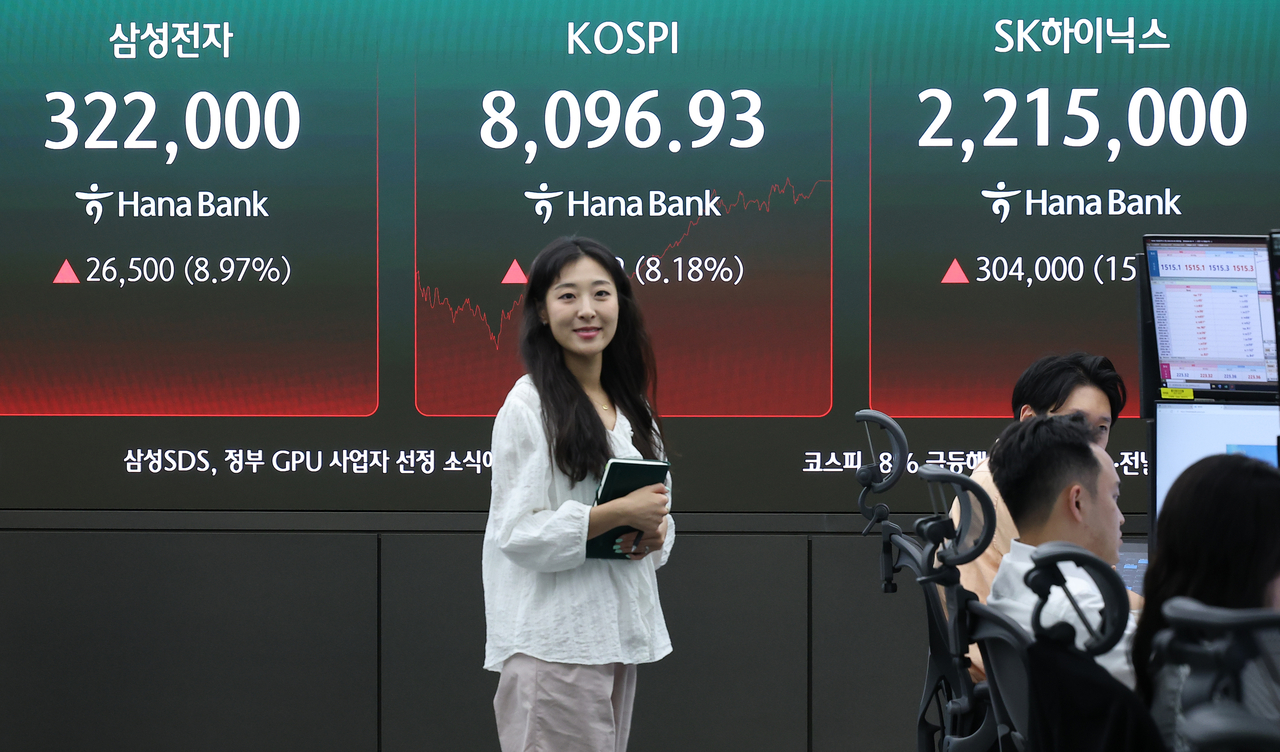
Nomura recently increased its Kospi target to 11,000 by the end of May, primarily driven by a robust earnings outlook in the semiconductor sector. However, Park emphasized that the compelling investment case for South Korea extends far beyond just chip-related earnings.
The brokerage projects a substantial rise in Kospi earnings per share (EPS) of 20.8 percent this year, followed by an additional 27 percent increase next year. Furthermore, Nomura anticipates the market’s return on equity (ROE) to hit a record-breaking 24 percent this year for South Korea, escalating to 25 percent next year, a stark contrast to its historical average of under 10 percent.
Even with Nomura’s optimistic 11,000 target, the Kospi would still trade at a modest 13.5 times forward earnings and 2.9 times book value, Park noted. This stands in contrast to Taiwan, which trades around 22 times earnings and nearly five times book, while the US market averages about 21 times earnings and Japan at 17 times.
While semiconductors undeniably remain the primary growth driver, contributing approximately 67 percent of South Korea’s total corporate earnings and half of its overall market capitalization, Park highlighted that earnings strength is now noticeably broadening beyond the two dominant chip manufacturers.
“Indeed, semiconductors represent a significant 67 percent of South Korea’s total earnings and roughly 50 percent of its market capitalization,” Park reiterated. “However, other sectors such as banking, automotive, shipbuilding, transformers, and even consumer brands are now generating substantial and meaningful earnings. The narrative for Korea is clearly expanding beyond just chips.”
Chung Chang-won, Joint Head of Asia-Pacific Equity Research at Nomura, observed that global investors are increasingly scrutinizing whether South Korean memory chipmakers should persist in trading at such a steep valuation discount compared to Taiwan Semiconductor Manufacturing Co. (TSMC).
“When we poll foreign investors on whether industry giants Samsung Electronics and SK hynix should genuinely trade at just three to four times book value, a growing number are expressing that such a valuation appears incorrect,” Chung stated.
Nomura has set ambitious target prices of 500,000 won (approximately $330 USD) for Samsung Electronics shares and 4 million won for SK hynix. Chung characterized this as a “midway” valuation scenario, rather than a full convergence with TSMC’s premium multiples. He suggested that if investors begin to perceive SK hynix as warranting at least half of TSMC’s valuation, it could unlock substantial foreign investor demand.
Park further highlighted South Korea’s ongoing corporate “value-up” campaign as a crucial catalyst for narrowing the persistent valuation gap. She noted that an impressive 730 listed companies have already made value-up disclosures, a significant leap from 170 at the close of 2025. This initiative has coincided with an 11 percent rise in dividends and approximately a 40 percent increase in share buybacks and cancellations.
“South Korean listed companies are demonstrating significantly greater commitment to the ‘value-up’ initiative than the market might currently appreciate,” Park asserted. “These firms are actively communicating their plans to align with evolving commercial law, restructure their boards, and substantially improve shareholder returns.”
Despite these advancements, South Korea still faces considerable work to fully converge with Japan, which serves as a key benchmark for successful “value-up” reforms, Park cautioned. She cited that since the Tokyo Stock Exchange initiated its comprehensive market reforms in 2022, nearly 90 percent of its listed companies have already made extensive disclosures, with the exchange diligently publishing a progress matrix biannually.
Looking ahead to Morgan Stanley Capital International’s (MSCI) developed market review scheduled for later in June, Park emphasized that improved foreign exchange market accessibility and streamlined registration procedures for foreign investors remain critical variables for South Korea’s potential inclusion on the watch list.
“We estimate approximately a 60 percent probability that South Korea will be added to the MSCI watch list,” Park stated. She further clarified that, historically, a country typically requires around two years post-watch list inclusion before achieving actual developed market reclassification.
Chung added that such a reclassification shift could also fundamentally alter the profile of foreign investors targeting South Korea.
“Global investment funds have become increasingly US-centric following years of exceptionally strong performance in the US market,” Chung explained. “However, if South Korea successfully enters Developed Market (DM) indices, it would provide a compelling new reason for Japanese investors, among others, to scrutinize the Korean market more closely.”
Nonetheless, this robust market rally has not been without its concerns, including heightened volatility. Chung acknowledged that investors “will have to contend with this to some extent,” particularly given the South Korean market’s substantial exposure to the semiconductor sector.
“Semiconductors alone constitute over 50 percent of the market capitalization, and when including related companies, more than 60 percent of the entire market is directly influenced by the semiconductor industry,” he elaborated.
Park also mentioned that foreign investors have voiced concerns regarding the increasing trend of margin trading among retail investors. However, she reassured that the current level does not appear excessive. Margin balances in South Korea currently represent approximately 0.9 percent of the market’s total capitalization, significantly lower than roughly 2 percent in the US and 4 percent in China, she explained.
Furthermore, the Kosdaq market is increasingly appearing on the radar of foreign investors, with a noticeable rise in inquiries concerning policy support and high-growth sectors such as biotechnology, semiconductor equipment, and robotics, Park noted. She anticipates that the South Korean government will unveil additional supportive measures for the secondary market around September.
“While Kosdaq currently constitutes only about 10 percent of South Korea’s total market capitalization, it boasts approximately 1,800 listed companies, significantly more than the roughly 830 found on the Kospi,” Park elaborated. “We believe there are numerous companies whose valuations remain unduly low, and the implementation of stronger delisting discipline could ultimately prove beneficial for the overall market health.”
jwc