Leading Korean chipmaker, SK hynix, is actively exploring the integration of external **generative artificial intelligence (AI) models**, including advanced platforms like **ChatGPT**, into its internal operations. This strategic move signals a broader industry trend as major chipmakers in Korea aim to embed **AI technology** more deeply into their daily workflows and core business functions.
The push for **AI adoption** extends beyond simple productivity enhancements. Companies now envision AI as a transformative force for **research and development**, critical **decision-making processes**, and comprehensive **internal management** strategies.
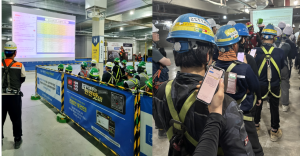
According to recent industry insights from Friday, **SK hynix CEO Kwak Noh-jung** officially outlined the company’s plans to evaluate the incorporation of **external generative AI models**. This announcement was made during a CEO town hall event held on Thursday at the **SKMS Research Institute in Icheon, Gyeonggi Province**.
This significant event, which spans from Thursday to Saturday, is a key component of the **New Icheon Forum**. The forum serves as a vital platform for **SK Group executives and employees** to strategize on survival in the rapidly evolving **AI era** and to formulate comprehensive **AI transformation plans** across the entire conglomerate.
During his address, CEO Kwak highlighted a crucial challenge: striking the right balance between safeguarding sensitive **industrial technologies** and maximizing the extensive utility of **AI applications**. He further detailed the company’s intentions to scrutinize the implementation of various **external generative AI models**.
“We are currently assessing the adoption of **Microsoft 365 and Copilot**, alongside an internal review of **ChatGPT Enterprise** for potential company-wide use. This includes thorough evaluations of both **security protocols** and **system architecture**,” Kwak stated. “Our strategy involves a phased rollout, commencing with areas unrelated to **national core technologies** and progressively broadening the application of these **external AI tools**.”
Currently, **SK hynix** operates its own proprietary **in-house AI service**, leveraging **open-source generative AI models**. The company’s objective in embracing external services is to provide its employees with access to a significantly wider and more diverse spectrum of **AI capabilities**.
Employee feedback from the town hall emphasized critical considerations such as potential **security risks**, the need for robust **AI training programs**, and demands for enhanced **computing resources**. Additionally, employees advocated for expanded access to **external AI models**, substantial upgrades to the company’s existing **internal AI platform**, and more intensive **AI education initiatives**.
“In this transformative **AI era**, true advantage isn’t about who possesses the most knowledge, but who demonstrates the ability to learn and adapt with greater speed,” Kwak remarked. “It is imperative for each of us to fundamentally **redesign our work methodologies with AI** as an integral partner.”
He further stressed that practical, **hands-on experience with AI** and a willingness to evolve **work practices** would emerge as a new cornerstone of **competitiveness for SK hynix**. Kwak affirmed the company’s commitment to supporting employees in their exploration of innovative **new ways of working** powered by AI.
Meanwhile, industry competitor **Samsung Electronics** is also significantly ramping up its internal utilization of **generative AI tools**. Both Samsung’s **Device eXperience (DX) division**, which oversees consumer electronics and mobile devices, and its **Device Solutions (DS) division**, responsible for semiconductors, are actively working to grant employees broader access to various **external AI models**.
These parallel advancements at **Samsung and SK hynix** underscore a widespread initiative among Korea’s premier **chipmakers** to deeply embed **generative AI** into their daily operations. This push is carefully managed alongside rigorous efforts to mitigate potential **security risks** associated with highly **sensitive technologies**.
However, at the broader **SK Group** level, the adoption of **external generative AI tools** has not yet been formalized as a unified, group-wide policy.
“No official decision has been made at the group level concerning the widespread adoption of **external AI tools**,” an **SK Group official** commented. The official added that each affiliate is independently addressing the matter, guided by its unique **security standards** and specific **work environment**.
Despite the absence of a group-wide mandate, **SK Group** consistently encourages its employees to become more proficient and comfortable with integrating **AI into their daily work routines**.
“**Chairman Chey Tae-won** has frequently articulated that employees should naturally incorporate **AI into their everyday tasks**, rather than viewing it merely as a subject to be learned through formal training,” the official further elaborated.
yeeun