
FSS reviews W10tr debut trading as ETF giants battle for market share
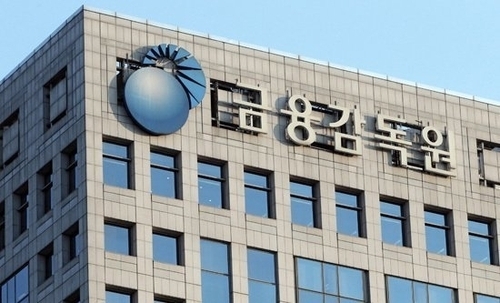
South Korea’s financial watchdog, the Financial Supervisory Service (FSS), has initiated a fact-finding review into the debut trading of newly listed single-stock leveraged exchange-traded funds (ETFs) linked to Samsung Electronics and SK Hynix. This action follows concerns raised by unusually heavy trading, where these products collectively generated over 10 trillion won ($6.65 billion) in turnover on their first day.
Industry sources on Monday revealed that the FSS recently contacted various brokerages operating as liquidity providers (LPs), alongside several asset managers, to gather comprehensive information regarding the trading practices associated with these new ETF products.
This ongoing review by the FSS has significantly highlighted a crucial, yet often overlooked, aspect of the dynamic ETF market: the vital role played by liquidity providers (LPs). These specialized firms are essential for ensuring that investors can seamlessly buy and sell ETF shares.
LPs are tasked with continuously posting both buy and sell quotes to maintain market liquidity and ensure ETF prices closely reflect the value of their underlying assets. Due to their continuous activity throughout the trading day, LPs frequently contribute a substantial portion to the overall ETF trading volume.
The core issue under investigation, in this particular case, is whether some of this trading activity might have intentionally overstated the perception of genuine investor demand.
Industry scrutiny has specifically centered on several brokerages, namely Yuanta Securities, LS Securities, SK Securities, and Daol Investment & Securities, all of whom recorded unusually large trading volumes during the products’ debut.
While exchange rules explicitly prohibit LPs from direct self-trading, market participants indicate that transactions can sometimes happen via “cross-matching.” This involves one brokerage’s LP selling simultaneously as another brokerage’s LP buys, often at nearly the same moment.
Such “cross-matching” transactions are not inherently illegal and can naturally arise within standard market-making activities. Nevertheless, critics contend that an excessive volume of LP-to-LP trading has the potential to artificially inflate turnover figures, failing to represent authentic investor demand.
This intense scrutiny arrives amidst a period of escalating competition within South Korea’s burgeoning ETF industry.
The domestic ETF market has now exceeded 500 trillion won in total assets, driving major asset managers like Samsung Asset Management and Mirae Asset Global Investments into aggressive competition for market share. The recent introduction of South Korea’s inaugural single-stock leveraged ETFs, linked to Samsung Electronics and SK Hynix, marks the newest battleground in this fierce competitive landscape.
While LP activity has long been a recognized and accepted component of ETF trading, the distinguishing factor in this particular situation was the sheer scale of volume generated on the launch day. Turnover surpassed 10 trillion won, with certain brokerages managing tens of millions of ETF shares.
Sources indicate that a significant portion of the FSS review is concentrating on Samsung Asset Management, whose products registered the highest trading volume during their debut, alongside various brokerages that performed the role of LPs.
Despite this, industry officials suggest that demonstrating actual wrongdoing could prove challenging, even if regulators successfully identify unusual trading patterns.
“The central question isn’t whether the trades technically constituted self-dealing, but rather if they transpired organically or were intentionally orchestrated,” explained a senior asset management executive, who chose to remain anonymous. “Should participants assert that the matching was merely coincidental, conclusively proving otherwise would present extreme difficulty.”
The FSS, adopting a cautious stance, clarified that elevated trading volumes alone do not necessarily signify wrongdoing or prearranged trading. The regulator further reiterated that LPs are inherently expected to consistently supply liquidity by actively posting both buy and sell quotes.
ch0221


