
South Korea’s National Growth Fund Sparks Retail Interest, Directing W150 Trillion Towards AI Chips, Biotech, and Key Growth Industries
South Korea’s ambitious National Growth Fund is capturing significant attention across various market segments. Both individual retail investors, eager to participate in a new state-backed investment product, and equity investors, closely monitoring the government’s strategic allocation of substantial policy funding, are keenly observing its developments.
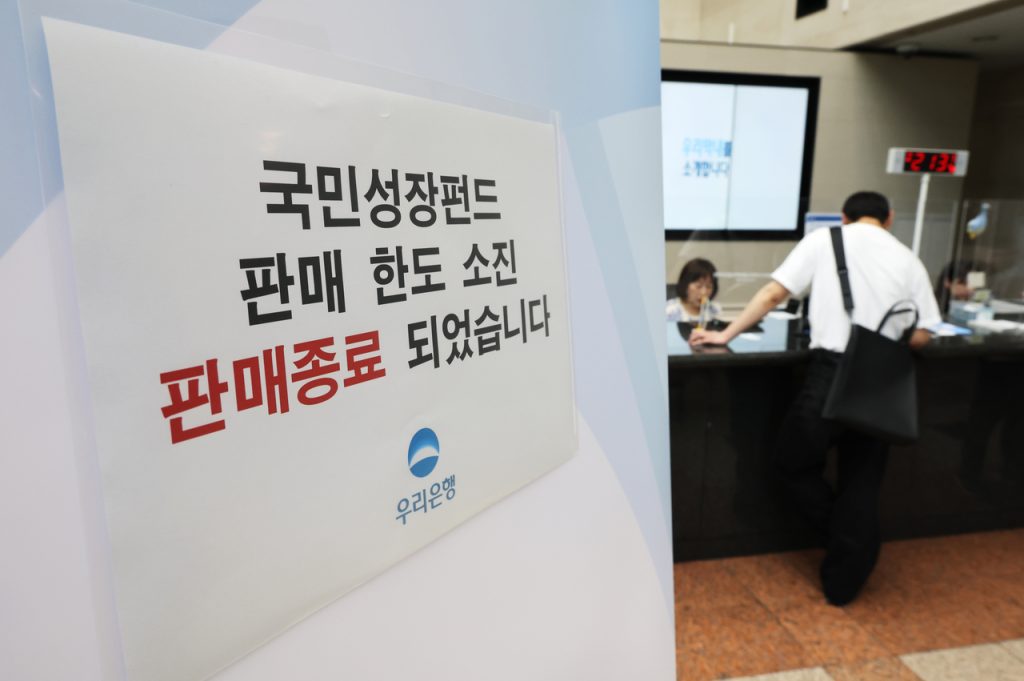
The retail-oriented component of this initiative demonstrated remarkable success, with 99.9 percent of its 600 billion won ($400 million) allocation being subscribed within just four selling days as of Thursday, according to reports from the Financial Services Commission.
However, this retail enthusiasm represents merely the most visible aspect of a much broader strategic investment program. By late May, the National Growth Fund had already greenlit 16 projects, committing capital worth 12.5 trillion won. These significant investments are strategically channeled towards critical sectors such as advanced AI chips, cutting-edge data centers, biotech innovations, essential battery materials, and vital semiconductor infrastructure development.
This substantial government-backed endeavor is precisely why financial markets are paying close attention. The fund is an integral part of a larger 150 trillion won, five-year blueprint designed to strategically deploy household savings, government policy financing, and private capital into industries identified as South Korea’s next crucial growth engines.
Furthermore, this initiative arrives at a pivotal juncture for the Korean stock market. While the benchmark Kospi index is extending an impressive rally, primarily propelled by leading chipmakers, the tech-heavy secondary Kosdaq market has historically received less global recognition. Market analysts view the National Growth Fund as a fresh catalyst encouraging investors to explore investment opportunities beyond the main board, specifically focusing on South Korea’s innovative smaller tech-driven enterprises and advanced manufacturing firms.
Understanding the South Korea National Growth Fund’s Structure
The headline figure for this strategic initiative is 150 trillion won, representing the total investment the South Korean government aims to inject over five years into advanced strategic industries. These key sectors include artificial intelligence (AI), semiconductors, batteries, defense, robotics, and future mobility solutions.
For the current year, the National Growth Fund’s allocation stands at 30 trillion won, funded through a combination of public and private capital. This substantial sum is distributed via four distinct channels: 3 trillion won allocated for direct investments, 7 trillion won for indirect investments, 10 trillion won dedicated to infrastructure financing, and another 10 trillion won provided through ultra-low-rate loans.
The “public participation growth fund” serves as the retail-facing segment of this elaborate structure, aiming to collect 600 billion won from individual investors this year. With an additional 120 billion won in subordinated capital provided by the government, the total pool for public participation reaches 720 billion won.
These funds are then channeled into public funds, distributed through commercial banks and securities firms, which subsequently invest in 10 privately managed sub-funds. A minimum of 60 percent of this capital must be directed towards strategic industries and their extended value chains, encompassing exposure to both unlisted companies and technology-specialized firms listing on the Kosdaq, while investments in Kospi-listed companies may be held for market stability.
Strategic Allocation: Where Major Investment is Directed
The larger pool of South Korea’s policy money is already actively deployed, demonstrating the government’s investment priorities.
By late May, the National Growth Fund had given its approval to 16 critical projects, totaling an impressive 12.5 trillion won. This comprehensive list clearly indicates South Korea’s primary long-term capital investment targets: cutting-edge AI chips, sovereign AI initiatives, expanding semiconductor manufacturing capacity, developing advanced data centers, fostering battery materials innovation, strengthening bio manufacturing capabilities, and investing in renewable energy solutions.
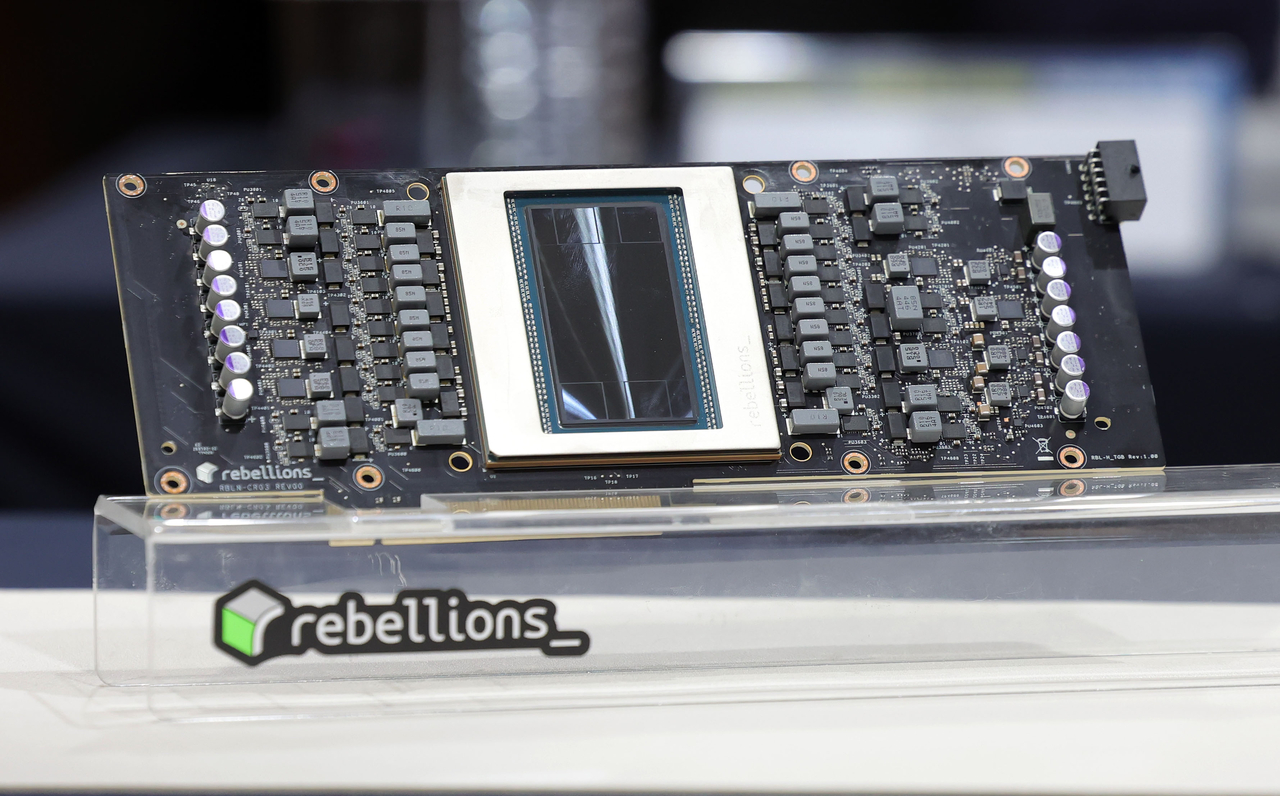
Among these, AI chips have garnered the most significant attention. Recently, the fund approved approximately 800 billion won in direct investment for FuriosaAI, including 370 billion won in policy funding from the Advanced Strategic Industry Fund. This investment aims to support mass production of Neural Processing Units (NPUs) and the development of next-generation AI chips. Previously, Rebellions secured 250 billion won from the fund, while Upstage has been linked to a 560 billion won direct investment as part of South Korea’s overarching sovereign AI push.
The program also extends its reach to South Korea’s larger industrial conglomerates. Samsung Electronics is set to receive 2.5 trillion won in low-rate financing to support its Pyeongtaek Line 5 AI semiconductor cluster, while Naver is benefiting from 400 billion won in loans for its data-center expansion and crucial GPU server acquisitions.
Recent approvals further broaden the scope, now including investments in Smilegate’s AI data centers, SK Bioscience’s vaccine production expansion, and L&F Plus’ advancements in battery materials technology, underscoring a diverse strategic investment approach.
For ordinary investors, the appeal of this fund notably begins with a perceived layer of protection. Although the product itself is not principal-guaranteed, the 120 billion won in fiscal money is strategically designed to absorb initial losses at the subfund level, covering up to 20 percent of the retail investment amount. This structural feature has endowed the fund with a safer public image compared to typical growth funds, even though actual returns remain contingent on the performance of underlying investments.
Attractive tax benefits have further amplified its appeal. Investors are eligible to receive income deductions based on their investment size, and dividend income from the fund is subject to separate taxation, offering a distinct advantage. Furthermore, the timing of the fund’s launch has been fortuitous, coinciding with AI, semiconductors, and biotech already being among South Korea’s most dynamic and sought-after investment themes.
Seo Ji-yong, a business professor at Sangmyung University, suggests that the strong retail participation was largely fueled by heightened market expectations amidst the Kospi’s impressive rally. “Expectations for the overall stock market were a significant contributing factor,” Seo commented. “Similar state-backed products have existed previously. While there may be differences in their specifics, the current market frenzy appears to be driving this surge more than the inherent policy design or the fund structure itself.”
However, a key consideration for investors is the five-year lockup period, which could potentially expose them to risks if interest rates or inflation trends shift unfavorably against growth stocks during this tenure.
Significance for Global Investors and Korean Markets
For financial markets, the National Growth Fund holds significant importance as it serves as a clear indicator of where substantial policy-backed capital is likely to flow next within South Korea’s economy.
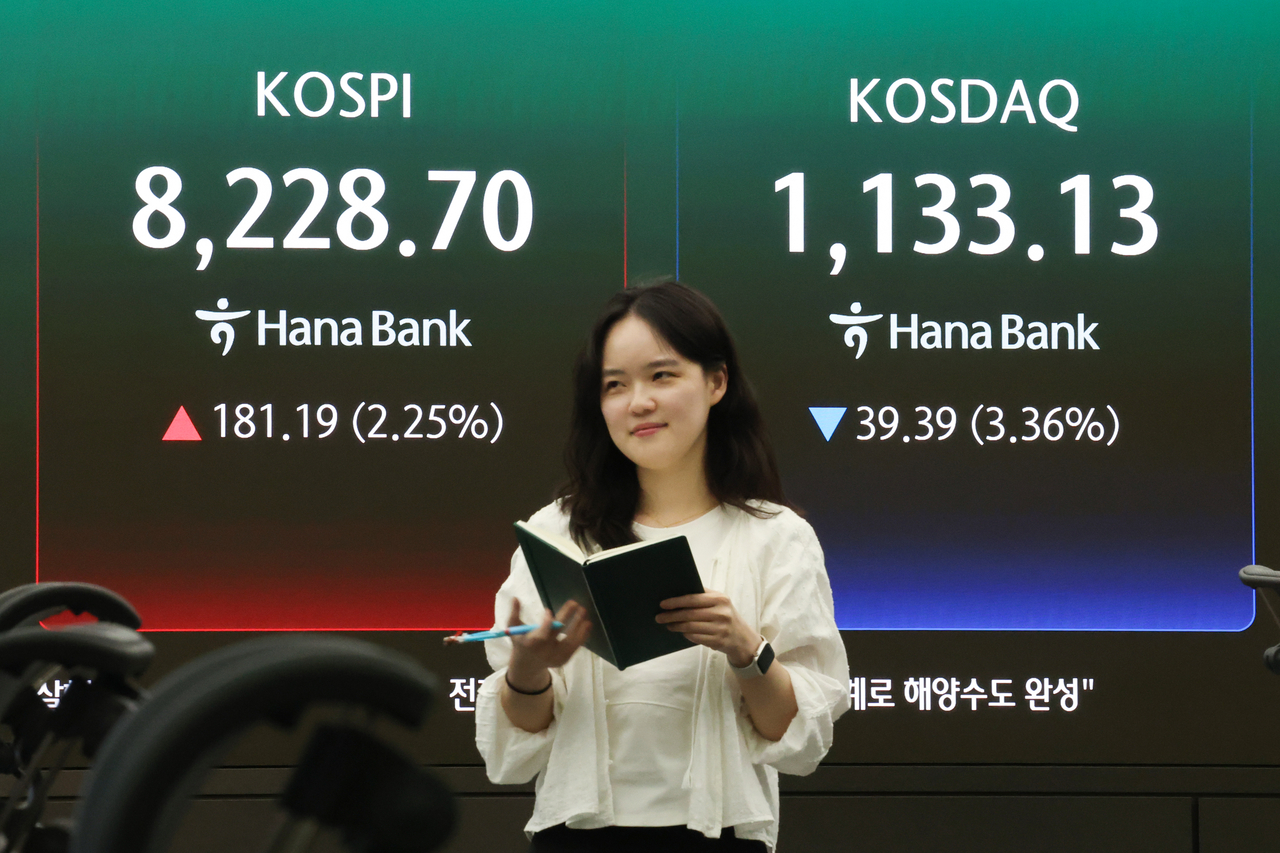
The Kospi has seen a remarkable surge of nearly 90 percent this year, driven by a historic rally led by semiconductor giants Samsung Electronics and SK Hynix, as global investors increasingly buy into South Korea’s pivotal role in the AI memory-chip cycle. In contrast, the Kosdaq has presented a more challenging proposition for investors, highlighting its comparatively weaker global visibility and greater reliance on favorable funding conditions.
The Kosdaq commenced Friday trading at 1,112, marking a 20 percent increase for the year from its previous year’s close of 925, yet it still remains below its 52-week high of 1,229.
The National Growth Fund offers a compelling new narrative for the Kosdaq market. It is poised to significantly enhance funding conditions for both unlisted firms and Kosdaq-listed technology companies operating in high-potential sectors such as biotech, artificial intelligence, robotics, aerospace, and advanced manufacturing. This renewed focus could unlock substantial growth for these Korean innovators.
These positive expectations have already been reflected in market prices. On the fund’s launch day, the Kosdaq index surged by approximately 5 percent, triggering a buy-side sidecar for a second consecutive session. Foreign investors and institutions responded by net buying around 600 billion won and 290 billion won, respectively, underscoring strong confidence in the fund’s potential impact.
For global investors, the National Growth Fund is less about a direct product purchase and more about understanding a comprehensive policy map. It clearly delineates where the South Korean government intends to channel long-term capital, providing invaluable insights into the nation’s future economic development strategy and priority investment areas.
Professor Seo emphasized that the long-term viability of the fund hinges on its ability to consistently generate returns beyond the immediate policy momentum. “For it to be truly sustainable, it must continue producing positive returns even after a change in administration,” he stated.
“To avoid repeating past patterns of government-led initiatives, the government’s role should be primarily that of a catalyst, while the generation of returns should fundamentally emerge from a robust private-sector-led investment structure,” he concluded, advocating for market-driven success.
jwc


