Shinsegae Group Chairman Chung Yong-jin Apologizes for Starbucks Korea “Tank Day” Controversy Amidst Ideological Echoes
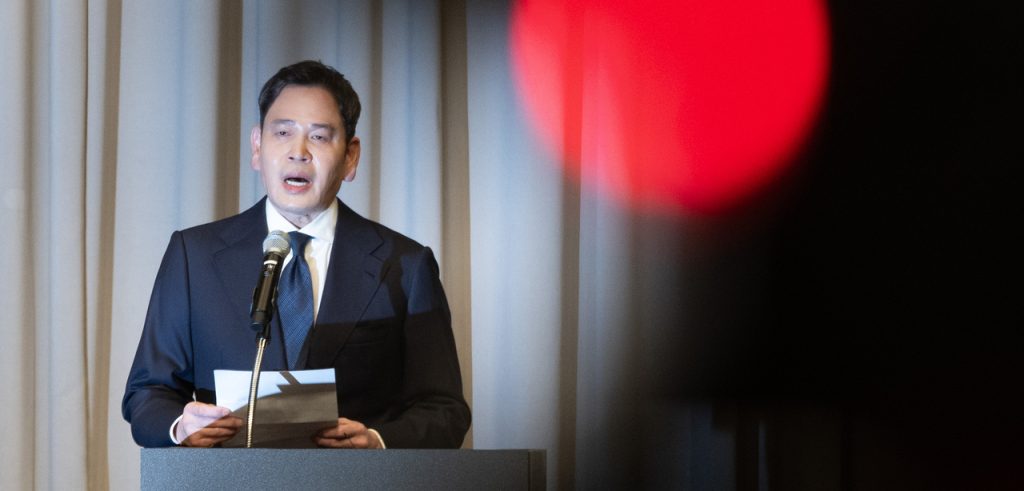
Shinsegae Group Chairman Chung Yong-jin publicly apologized on Tuesday, taking full responsibility for the recent Starbucks Korea “Tank Day” marketing controversy. Standing before numerous cameras, Chung bowed three times, addressing the growing public outcry surrounding the incident.
This in-person apology followed a written statement released a week prior, on May 19. The Starbucks Korea controversy erupted after marketing slogans were widely criticized for perceived links to South Korea’s pro-democracy movements of the 1980s, specifically the May 18 Democratic Uprising.
Both apologies from the Shinsegae chairman acknowledged the profound impact of the incident on the victims and bereaved families of the May 18 Democratic Uprising, as well as on the broader Korean public. They also included pledges for a comprehensive overhaul of internal review processes across Shinsegae Group affiliates, aiming to establish higher standards for corporate social responsibility and prevent future missteps.
However, subtle distinctions between the two apologies were noted.
In his initial written letter, Chung stated that Shinsegae would implement “education” for all employees, including himself, to foster strict “historical consciousness” and “ethical standards.” Interestingly, these specific commitments were omitted during his subsequent in-person apology.
Instead, during the public address, Chung remarked, “I think now is the time that requires more efforts to understand each other and try to move forward together. We may have different ideas, but I believe we all feel the same way: That we want to make Korea better and leave a better world for future generations.”
While Chung did not elaborate on his statement about having “different ideas,” these comments echoed his past outspoken ideological views, particularly on anti-communism, which have resurfaced as political discourse intersects with the “Tank Day” marketing scandal.
Notably, in January 2022, Chung Yong-jin posted an image on his Instagram account featuring a Chosun Ilbo article. This report discussed perceived disrespect from the Chinese government towards the Korean government, with Seoul allegedly not lodging a complaint. His post was accompanied by controversial hashtags such as “Annihilate communism,” “Unification through the defeat of communism,” and “Anti-communism and counter-espionage.”
These public remarks by the then-Shinsegae vice chair and de facto leader of E-mart, a rare instance of a chaebol figure openly expressing personal political ideology, quickly went viral across South Korea. Conservative political figures openly expressed their support. Then-presidential candidate Yoon Suk Yeol, for example, posted a picture of himself shopping at an E-mart in Seoul, using hashtags that aligned with Chung’s anti-communism sentiments.
Chung subsequently deleted the controversial Instagram post after a public boycott of Shinsegae brands began to gain traction. E-mart’s labor union also issued a statement, highlighting concerns that his comments were damaging the brand’s image, causing customer dissatisfaction, and potentially impacting the livelihoods of tens of thousands of Shinsegae and E-mart employees.
In a later, also-deleted Instagram post, Chung wrote, “If a single colleague or customer turns away from us because of me, nothing can be justified. If my freedom has caused pain to anyone, it is entirely due to my own inadequacies.”
Following this, the Shinsegae chairman gradually removed other Instagram posts containing the “Annihilate communism” hashtag, softening his previously more adamant stance. Currently, his Instagram account contains no content linked to anti-communism.
The recent “Tank Day” incident has reignited this long-standing ideological controversy. Right-wing politicians have once again expressed support for Chung, advocating for consumer freedom in coffee brand choices, while left-wing groups have urged the public to boycott Starbucks Korea.
Kang Gi-jung, the mayor of Gwangju – a city tragically associated with the 1980 democratic uprising where military forces suppressed civilians – strongly criticized Chung’s apology. Mayor Kang stated that the Shinsegae chairman’s “empty” words provided justification for far-right extremists and users of Ilgan Best (Ilbe), a controversial far-right online community, to denigrate the historical significance of the Gwangju Democratic Uprising.
Chung’s outspoken approach has drawn comparisons to global figures like Tesla CEO Elon Musk, known for his increasingly active and public political commentary in recent years.
A January Harvard Business Review article, titled “When the CEO Becomes the Brand,” examined how Musk’s political stance negatively impacted Tesla’s brand. The article noted a slowdown in Tesla’s growth, with yearly deliveries falling for the first time in 2024, followed by an 8.5 percent decline the subsequent year. This coincided with Musk publicly endorsing then-US presidential candidate Donald Trump in July 2024.
However, the HBR analysis also highlighted that this decline wasn’t uniform; consumers were politically divided. Right-leaning drivers reportedly showed increased affinity for the Tesla brand, while left-leaning consumers felt alienated by Musk, who had previously supported Democratic presidents.
In such scenarios where a brand becomes politically polarized due to CEO activism, HBR suggests three strategic options: reversing course, betting on a prevailing political shift, or significantly enhancing product performance.
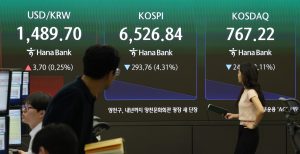
The financial implications for Shinsegae are already evident; the stock price of E-mart, which holds a 67.5 percent stake in Starbucks Korea, has dropped by over 10 percent since the controversy emerged last week. Despite his dual apologies, Chung Yong-jin’s underlying political stance remains an open question.
“From an ESG (environmental, social, and governance) perspective, this incident is deeply disappointing as it once again underscores the critical issue of owner risks within Korean society,” commented Park Jong-ryul, an analyst at Heungkuk Securities, in his Wednesday report on E-mart.
Park further emphasized, “Management must acknowledge the gravity of this situation and commit to fundamental corporate transformation. The boycott movement initiated against Starbucks Korea is highly likely to directly impact sales across other Shinsegae-affiliated companies.”
hwkan