
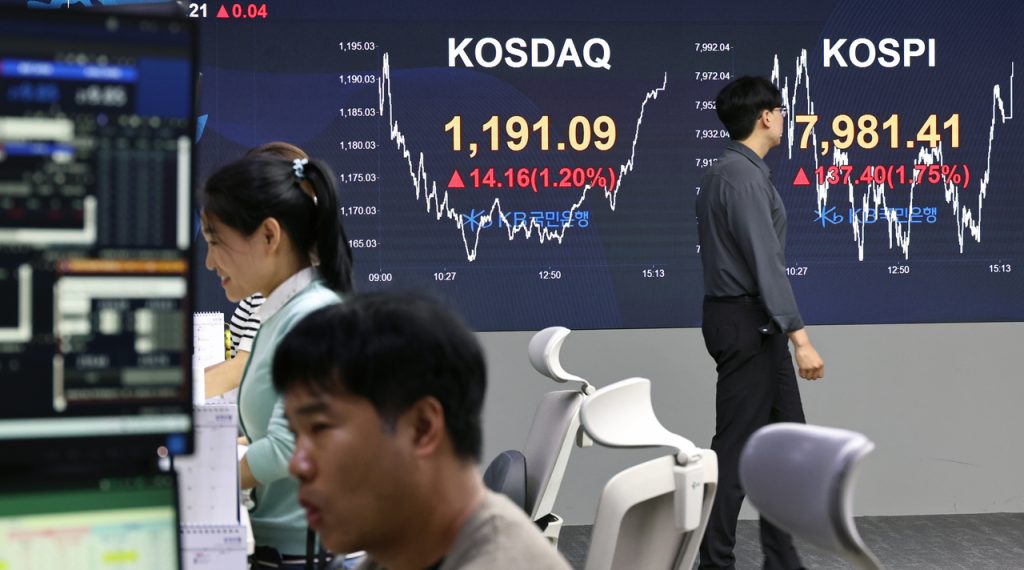
Analysts say policy reforms will test Kosdaq momentum in H2
Foreign investors have significantly increased their net buying of Kosdaq shares this year, a stark reversal from last year’s substantial selling. This shift is driven by growing expectations that rigorous delisting rules and comprehensive capital market reforms will enhance the integrity of South Korea’s junior bourse and effectively address the persistent “Korea discount.”
According to Korea Exchange data released on Thursday, foreign investors have net bought 2.7 trillion won ($1.81 billion) worth of Kosdaq stocks year-to-date. This contrasts sharply with net sales of 2.6 trillion won recorded during the same period last year, highlighting a significant change in investment sentiment towards the Kosdaq market.
Lee Geon-jae, head of research at IBK Investment & Securities, observed that foreign investors are no longer aggressively divesting Kosdaq shares. This change reflects increasing optimism for a strong rebound in the second half of the year for the South Korean junior stock market.
“While buying interest in small-cap stocks on the Kosdaq still lags behind Kospi-listed equities, the notable easing of selling pressure compared to last year is a positive indicator,” Lee noted.
He added, “The latter half of the year will serve as a crucial test to determine if the government’s ambitious policy reforms can successfully revitalize and restore confidence in the Kosdaq market.”
This positive shift coincides with the government and financial regulators actively advancing the “value-up program.” This comprehensive initiative encompasses critical corporate governance reforms, shareholder-friendly policies, and strategic tax measures, all designed to significantly boost investor confidence. These efforts are integral to broader national strategies aimed at attracting foreign capital and ultimately reducing the pervasive “Korea discount” in the South Korean stock market.
A fundamental pillar of these ongoing reforms is the tightening of both listing and delisting standards. This strategic move aims to significantly improve overall market quality and enhance shareholder value within the Kosdaq and broader Korean stock market.
Further underscoring these efforts, the Financial Services Commission on Wednesday officially approved crucial revisions to the Korea Exchange’s listing rules. This decision marks a key component of a sweeping overhaul designed to refine delisting processes and improve market standards.
Effective July, the revised regulations introduce new delisting criteria for stocks trading below 1,000 won. Concurrently, minimum market capitalization requirements will be progressively increased every six months, reaching 50 billion won for Kospi-listed firms and 30 billion won for Kosdaq companies. These adjustments aim to ensure only robust companies remain listed.
Moreover, these significant reforms expand the scope of delisting targets to encompass firms experiencing full capital impairment during semiannual financial reviews. The disclosure penalty threshold will also be lowered to 10 points, fostering greater transparency. Regulators are also committed to implementing tighter scrutiny of any attempts to circumvent delisting procedures, such as through reverse stock splits and comparable manipulative measures.
Although the Kospi market has delivered a sharp outperformance this year, gains on the Kosdaq junior market have been comparatively more muted. The Kospi has surged by over 85 percent since the year’s commencement, whereas the Kosdaq has seen a rise of approximately 30 percent.
A significant portion of this rally in the broader South Korean stock market has been concentrated within heavyweight semiconductor stocks, including industry giants like Samsung Electronics and SK hynix. This concentration is largely fueled by strong optimism surrounding burgeoning artificial intelligence investment and technological advancements.
To mitigate this concentration in the Kospi and strategically revive the Kosdaq market, South Korean authorities are fundamentally shifting their approach. They are moving away from traditional liquidity-focused support measures towards comprehensive policies specifically designed to improve the overall quality and competitiveness of smaller listed firms on the Kosdaq.
Past efforts primarily centered on providing tax incentives and direct liquidity support. However, critics often contended that these measures inadvertently allowed financially weak companies to persist on the exchange for an extended duration, hindering market efficiency and investor trust.
Kim Dae-jun, a respected researcher at Korea Investment & Securities, highlighted that these latest reforms mark a significant departure from previous measures. He emphasized that the current focus is squarely on improving overall market quality and integrity, rather than merely boosting the number of listed companies.
“The most impactful changes are undoubtedly the comprehensive reforms to both listing and delisting systems,” Kim stated. “By enabling the more swift removal of financially weak companies, concerns regarding Kosdaq undervaluation can significantly diminish, concurrently reducing investors’ opportunity costs and fostering a healthier investment environment.”
ch0221


