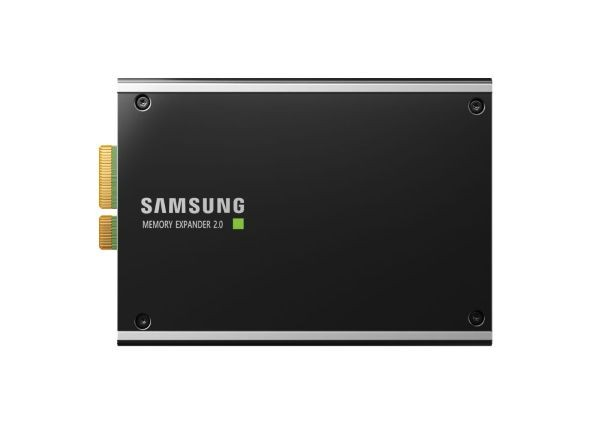
Samsung Electronics is poised to commence mass production of its cutting-edge Compute Express Link (CXL) memory modules as early as the fourth quarter of this year. This strategic move aims to address the rapidly escalating demand for flexible, high-performance memory solutions in advanced AI data centers, extending beyond traditional DRAM and HBM technologies.
According to insights from industry sources on Wednesday, the prominent chipmaker plans to distribute samples of its CXL 3.1-based CMM-D memory modules to key server manufacturers and hyperscale cloud customers during the third quarter. Full-scale mass production is anticipated to commence later in the year, contingent upon these innovative products successfully passing customer qualification tests.
CXL, or Compute Express Link, is an industry-standard interface based on PCIe (Peripheral Component Interconnect Express). This technology facilitates significantly faster and more efficient data sharing capabilities among CPUs, GPUs, and various memory components. PCIe itself represents a crucial high-speed connection standard essential for modern data transmissions.
Distinguishing itself from conventional server memory architectures, CXL enables multiple processors to access and share pooled memory resources with unparalleled efficiency. This advanced memory pooling capability is increasingly recognized as indispensable for robust AI infrastructure and high-performance computing environments.
“The fundamental role of CXL lies in its memory pooling functionality,” commented an executive within the memory industry. “It serves as a vital complement to HBM solutions, rather than a replacement.”
While specific customer names for the CXL 3.1 modules were not disclosed, Samsung has previously provided CXL 2.0 samples to over 40 diverse companies. These include industry giants such as Microsoft, Google, Amazon, Meta, Dell, and Supermicro, according to reliable industry reports.
Samsung’s new CMM-D 3.1 module represents a significant leap forward, integrating high-density DRAM chips and a dedicated CXL controller onto a single printed circuit board. This advanced module offers an impressive capacity of up to 1 terabyte and delivers a bandwidth of up to 72 gigabytes per second, leveraging the power of PCIe 6.0. This performance effectively doubles the capabilities seen in previous CXL 2.0 iterations.
Furthermore, this innovative CXL technology offers enhanced flexibility for memory expansion, akin to seamlessly adding SSD storage, without necessitating extensive server redesigns or hardware overhauls. This simplifies upgrades and improves scalability for data centers.
Samsung had initially targeted a product launch last year. However, the unprecedented demand surge for conventional DRAM and HBM solutions appears to have temporarily reordered priorities, shifting the commercialization timeline for CXL memory.
Meanwhile, crosstown competitor SK hynix is also intensifying its efforts in the CXL market. During its recent earnings call last month, the company announced its strategy to reinforce its leadership position in this burgeoning segment with a second-generation CXL product. This upcoming offering will support the CXL 3.0 standard, promising substantial improvements in both capacity and overall performance compared to its initial CXL 2.0 product.
Market research firm Yole Group forecasts robust growth for the global CXL market, projecting an expansion from $2.1 billion this year to an estimated $16 billion by 2028. This rapid growth is primarily driven by AI data centers’ urgent need to overcome persistent memory bottlenecks and enhance overall system efficiency.