Chinese electric vehicle manufacturers are making significant inroads into the Korean market, intensifying the competitive landscape. Premium EV brand Zeekr is poised to challenge Hyundai Motor’s Ioniq lineup in the premium mainstream segment, while BYD is escalating price competition against Kia’s popular mass-market models.
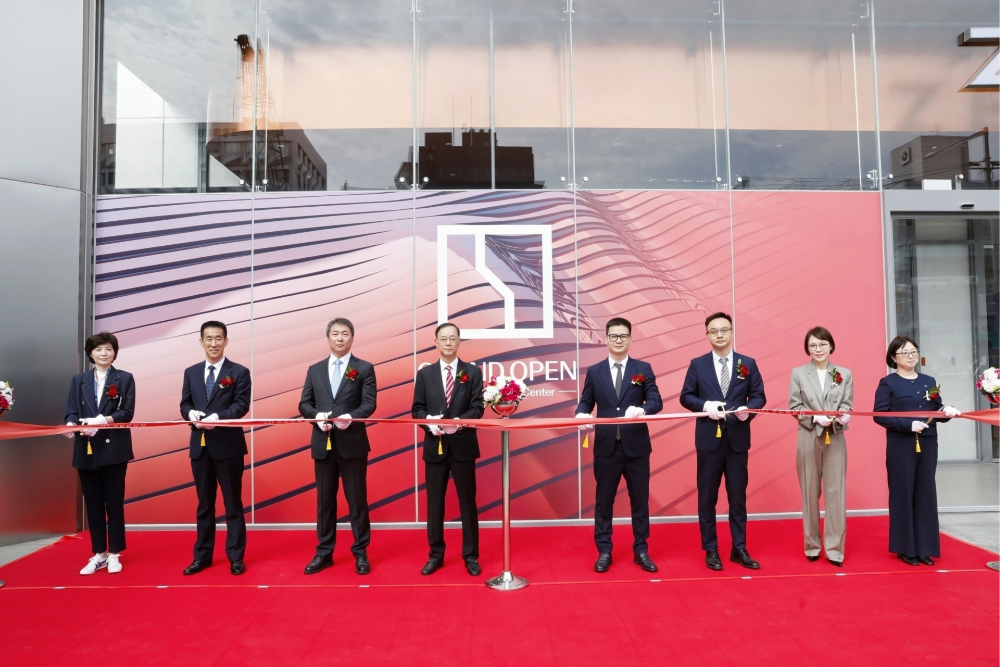
Zeekr Korea marked its official debut on Friday with the grand opening of its inaugural brand showroom in Gangnam, Seoul. The event was graced by prominent executives, including Zeekr Korea CEO Lim Hyun-ki, Zeekr International Chief Operating Officer Jeff Cao, and Zeekr International CEO Chen Yu, underscoring the brand’s commitment to the market.
Spearheading Zeekr’s strategic entry into the dynamic Korean market will be the midsize 7X SUV, a choice reflecting the strong local consumer preference for sport utility vehicles. This eagerly anticipated model, slated for launch in the latter half of this year, will also be the first facelifted version of the 7X introduced outside of China, showcasing Zeekr’s latest advancements.
The Zeekr 7X is engineered on Geely’s advanced 800-volt Sustainable Experience Architecture (SEA) platform, a versatile foundation supporting Zeekr’s diverse vehicle range from compact to large models. Key highlights of the 7X include its ultrafast charging capabilities, enabling a 10 percent to 80 percent charge in approximately 10.5 minutes. Furthermore, it boasts an impressive driving range of up to 615 kilometers under European WLTP standards and features a sophisticated intelligent software architecture, enhancing the overall driving experience.
Positioned within the estimated price range of 50 million won to 60 million won ($34,000-$40,900), the Zeekr 7X is set to directly compete with Hyundai’s highly successful Ioniq 5 SUV. The Ioniq 5, a flagship battery-powered vehicle, was Hyundai’s bestselling EV in Korea last year, recording sales of over 10,000 units and establishing a strong market presence.
Concurrently, BYD Korea, building on its successful market entry last year, is exerting significant pressure from the mass-market end of the EV spectrum. Leveraging its robust price competitiveness, BYD is rapidly emerging as a formidable direct challenger to Kia’s comprehensive EV lineup, reshaping the affordable electric vehicle landscape.
The BYD Atto 3 compact crossover SUV finds itself in direct competition with the Kia EV3, while the BYD Seal mid-size sedan is strategically positioned against the Kia EV6. Furthermore, the BYD Dolphin hatchback aims to rival models such as the Kia Ray EV and Niro EV. In the burgeoning entry-level EV segment, with prices ranging from 10 million won to 20 million won, the BYD Seagull is also expected to go head-to-head with the Hyundai Casper Electric, diversifying affordable options for Korean consumers.
An industry insider commented, “Both Zeekr and BYD are demonstrating a strong strategic commitment to penetrate Korea’s electric vehicle market, a landscape traditionally dominated by local giants Hyundai and Kia.”
The source further added, “Executives at their Korean operations are actively negotiating highly competitive pricing specifically for Korea, aiming to be more attractive than in other Asia-Pacific markets to effectively draw in local consumers. Bolstered by advanced EV technologies, these brands, once they establish an initial customer base, could significantly benefit from strong customer loyalty and rapidly expand their market share within Korea.”
According to data from the Korea Automobile & Mobility Association, a total of 220,177 electric vehicles were newly registered in Korea last year. In terms of automaker performance, Kia secured the leading position with 60,609 units sold, capturing 27.5 percent of the market share. Tesla followed closely, registering 59,893 units and a 27.2 percent share, while Hyundai ranked third with 55,461 units, accounting for 25.2 percent.
Significantly, sales of Chinese-made EVs experienced a dramatic surge of 112.4 percent year-on-year, reaching 74,728 units and commanding a substantial 33.9 percent of the Korean EV market share. KAMA attributed this sharp increase to a combination of rising imports of China-produced Tesla Model Y vehicles and the expanding presence of brands with significant China-based production operations, including powerhouses like BYD and Polestar.
hyejin2