
South Korea achieved its largest-ever monthly current account surplus in March, propelled by robust exports amidst surging global demand for semiconductors, according to central bank data released Friday.
The nation’s current account surplus reached an impressive $37.33 billion in March, a significant increase from $23.19 billion recorded in February, as detailed by the Bank of Korea’s latest figures.
This figure represents a historic monthly high, surpassing the previous record set just the month prior.
Marking an extended period of strong economic performance, South Korea has consistently maintained a current account surplus every month since May 2023. This remarkable streak now extends to 35 consecutive months, ranking as the second longest in the country’s history.
In a testament to its long-term economic strength, the country registered its largest annual surplus on record in 2025, reaching $123.05 billion. This comfortably exceeded the prior peak of $105.1 billion achieved in 2015.
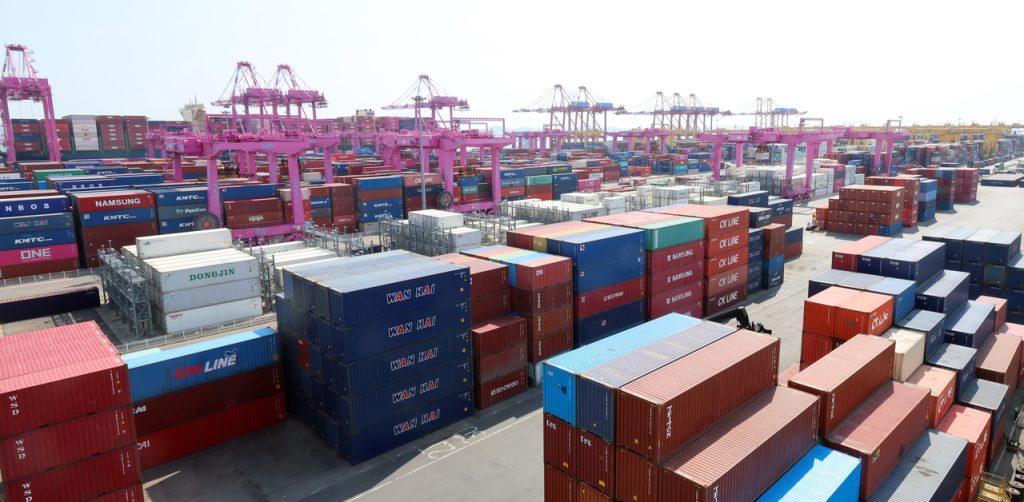
A key driver of this success was the goods account, which recorded a record-setting surplus of $35.07 billion in March. This was a result of exports soaring by 56.9 percent year-on-year to an unprecedented $94.32 billion, while imports also grew by 17.4 percent, totaling approximately $59.24 billion.
The stellar performance in exports was significantly boosted by information technology (IT) products, which saw shipments jump by an astounding 111.7 percent from a year earlier. Within this sector, chip shipments surged by 149.8 percent, and computer peripherals experienced a remarkable 167.5 percent rise.
Conversely, the services account registered a deficit of $1.29 billion in March, primarily attributed to increased payments for other business services.
The primary income account, encompassing wages for foreign workers alongside dividend and interest income from overseas, posted a healthy surplus of $3.58 billion, largely propelled by strong dividend earnings.
The secondary income account, however, recorded a deficit of $790 million.
Turning to the financial account, South Korea’s net assets saw a substantial increase of $36.99 billion in March, a sharp escalation from the $22.8 billion rise observed in the preceding month.
This growth in net assets was further supported by overseas direct investment from South Korean residents, which rose by $8.89 billion, coupled with a notable increase of $3.77 billion in foreign direct investment into South Korea.


